Situation Summary
The Philippines faces sustained state-level security pressures centered on maritime disputes in the South China Sea, coupled with domestic political tensions and ongoing defense modernization debates. Recent escalations in Chinese Coast Guard harassment of Philippine fishing crews near Batanes and Scarborough Shoal, combined with territorial sovereignty claims by Chinese scholars, have elevated national security concerns and prompted official policy responses. The country ranks #41 globally on composite threat (score 44), with Metro Manila and the Cordillera Administrative Region presenting the highest sub-national risk profiles, though maritime incidents now dominate the security brief.
Key Developments
- Batanes Province, northern Philippines (10 July 2026): Philippine National Security Council issued a public statement expressing "serious concern" over Chinese scholars' claims that Batanes could be part of Chinese territory, framing this as a direct national security issue and signaling heightened vigilance on the northern frontier.
- South China Sea / Scarborough Shoal area (10 July 2026): Philippine fishermen reported new harassment incidents by Chinese Coast Guard vessels, including water cannon use and anchor-cutting, directly threatening crew safety and access to traditional fishing grounds in disputed waters.
- Manila (national policy, 10 July 2026): Defense Secretary Gilberto Teodoro Jr. called for a sharp increase in defense spending to 2–4% of GDP, explicitly linking the proposal to ongoing external security challenges and the need to protect Philippine territory and offshore assets.
- Philippines (space and defense infrastructure, within 48 hours): Authorities announced plans for a dedicated military space center to support national defense, surveillance, and communications, citing regional lessons and emphasizing space-based capabilities as critical to strategic deterrence.
- Philippines–Japan bilateral security (10 July 2026): New defense agreements between the Philippines and Japan were highlighted as part of Manila's strategy to strengthen security partnerships amid rising regional tensions, particularly in the maritime domain.
- West Philippine Sea (national policy, 10 July 2026): Official and expert commentary marking the 10-year anniversary of the 2016 arbitral ruling emphasized a whole-of-society approach to asserting Philippine maritime rights, with messaging focused on asymmetric security challenges and sustained legal and defense preparedness.
Highest-Risk Areas
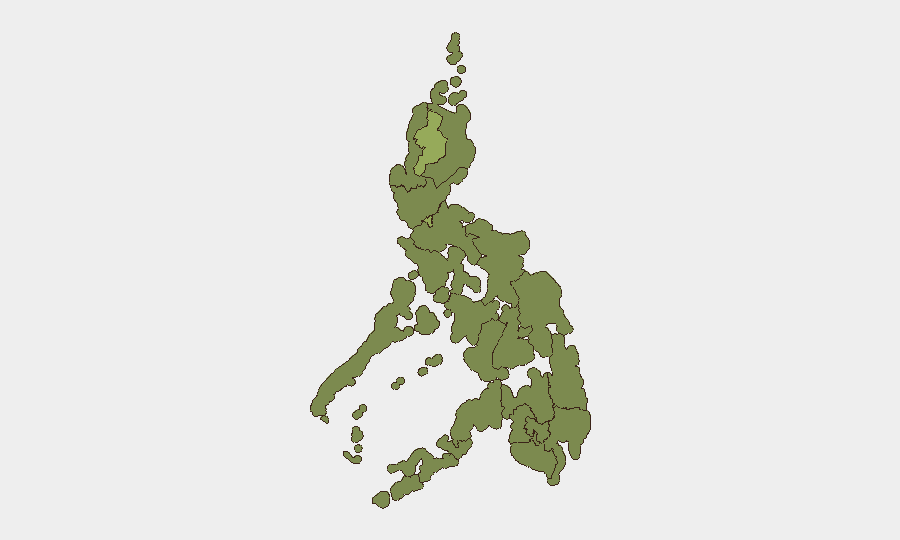
Metro Manila (57.9) and the Cordillera Administrative Region (53.1) are the dominant risk drivers, with Metro Manila likely reflecting political-institutional risk, organized crime, and protest activity, while the Cordillera's elevated score points to resource-competition tensions, indigenous-rights disputes, and mining-related security concerns. Mimaropa (35.1) and Cagayan Valley (32.7) follow, indicating dispersed risk vectors across maritime zones and northern territorial areas. The near-parity of lower-ranked regions (all scoring 27.9–29.1) suggests that localized crime, trafficking, and low-intensity conflict are relatively diffuse rather than geographically concentrated outside Metro Manila and the north.
How GeoBit Would Assist
Security teams with operations or personnel in the Philippines should employ AOI Monitoring & Early Warning (persistent watch on Batanes, the West Philippine Sea, and Metro Manila with real-time alerting on state-level incidents and maritime confrontations), Maritime & Aviation Tracking (monitoring fishing vessel and Coast Guard activity near disputed shoals), and Conflict & Military Intelligence (force-structure analysis and defense-spending trend tracking to anticipate operational capability shifts). These capabilities enable rapid detection of escalation, early warning of travel-risk changes, and horizon-scanning on policy announcements affecting offshore operations.
7-Day Outlook
Maritime tensions in the South China Sea are likely to persist or intensify as enforcement of Philippine fishing rights and Chinese Coast Guard operations remain fundamentally incompatible. Defense policy announcements and Japan–Philippines bilateral initiatives suggest a slower institutional response; immediate tactical risk will concentrate on offshore areas, particularly Batanes and Scarborough Shoal, where crew safety and asset protection require active monitoring. Metro Manila security risk remains stable but elevated due to ongoing political turbulence and institutional scrutiny.
Highest-Risk Areas — Ranked
| # | State / Region | Risk |
|---|---|---|
| 1 | Metro Manila | 57.9 |
| 2 | Cordillera Administrative Region | 53.1 |
| 3 | Mimaropa | 35.1 |
| 4 | Cagayan Valley | 32.7 |
| 5 | Ilocos Region | 31.5 |
| 6 | Western Visayas | 29.1 |
| 7 | Bangsamoro | 27.9 |
| 8 | Caraga | 27.9 |
| 9 | Northern Mindanao | 27.9 |
| 10 | Soccsksargen | 27.9 |
| 11 | Davao Region | 27.9 |
| 12 | Central Luzon | 27.9 |
Sources
Previous Daily Briefs
A new Philippines brief is written every day — each with its own risk map and downloadable CSV. Here's the last week; use the calendar to go further back.
📅 Browse every day by calendar →
Highlighted days have a brief. Tap a day for that day's map & analysis, or “csv” for that day's dataset ($5).
Atlas — our AI intelligence desk — emails them this snapshot personally. Nothing else, no list.