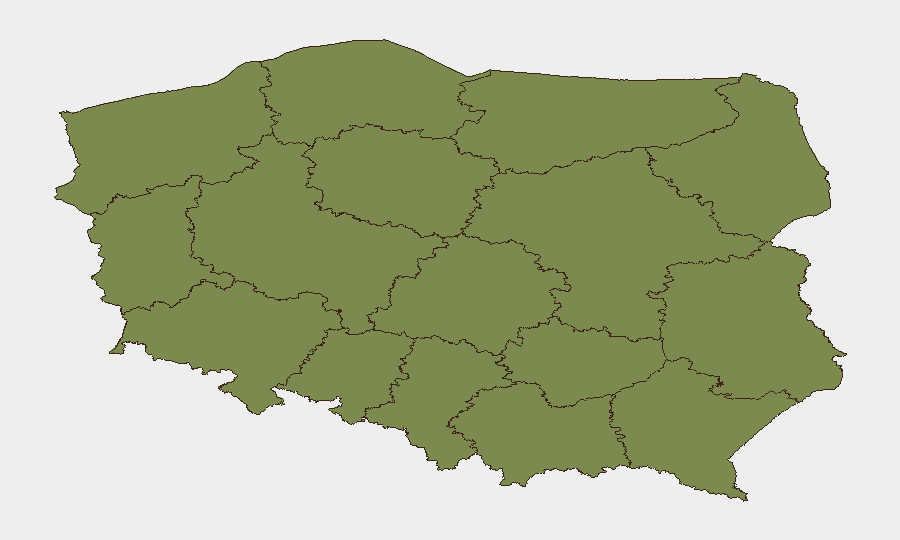
Situation Summary
Poland faces elevated near-term security risk primarily concentrated in Lublin Voivodeship and Masovian Voivodeship (Warsaw region), driven by airspace incursions and cross-border spillover from ongoing Russian strikes on Ukraine. A confirmed Russian Kh-101 cruise missile detonated in a field near Tarnawa-Kolonia (Lublin Voivodeship) on 30 July 2026, marking the first confirmed strike on Polish territory in the current conflict cycle and triggering air-defense activation across the eastern region. Concurrent with this incident, domestic counter-terrorism investigations in northern Poland (Warmian-Masurian Voivodeship) indicate sustained internal security concerns. Overall threat severity remains moderate, but the accidental incursion demonstrates escalation risk and operational gaps requiring heightened monitoring.
Key Developments
- Tarnawa-Kolonia, Lublin Voivodeship (30 July, ~04:00 local): Confirmed Russian Kh-101 cruise missile detonated in a field approximately 2 km from residential areas, creating a ~10 m crater. No casualties reported; Polish air defense and NATO forces detected the object at ~03:30 and scrambled F-16 fighters before impact. Pyrotechnic experts and police secured the site for forensic examination.
- Lublin city and region (night 29–30 July): Air-raid sirens activated across Lublin Voivodeship and city of Lublin in response to Polish detection of approximately 20 objects near or crossing Polish airspace during Russian missile barrage on Ukraine. No strikes on populated areas confirmed.
- Eastern Polish airspace (overnight 29–30 July): NATO and Polish forces coordinated response to airspace incursion, including fighter jets, aerial refueling aircraft, and airborne early-warning assets. Polish Prime Minister Donald Tusk stated Polish forces were prepared to engage the missile if it had remained on trajectory toward populated areas.
- U.S. Embassy Warsaw (30 July): Formal Security Alert issued to U.S. citizens in Poland regarding the Tarnawa-Kolonia incident and advising monitoring of local media and official guidance; reflects U.S. assessment of elevated travel and security risk in southeastern Poland.
- Olsztyn, Warmian-Masurian Voivodeship (30 July, reported): Regional prosecutors charged four individuals with planning terrorist attacks, indicating active domestic counter-terrorism investigation in northern Poland unrelated to the missile incident.
Highest-Risk Areas
Masovian Voivodeship (Warsaw, composite risk 31.3) and Lublin Voivodeship (composite risk 1.9 baseline, now elevated by 30 July incident) drive Poland's national risk profile. Masovian concentration reflects Warsaw's status as political and economic center; Lublin risk is now driven by demonstrated airspace vulnerability and proximity to active Russian strike operations against Ukraine. Border voivodeships (Warmian-Masurian, Podlaskie, Pomeranian) show lower composite scores but warrant monitoring for cross-border military spillover and internal extremism indicators (as evidenced by the Olsztyn terrorism charges). Western and southern regions remain comparatively lower-risk.
How GeoBit Would Assist
Security teams should deploy AOI Monitoring & Early Warning on Lublin Voivodeship, Masovian Voivodeship, and border regions to detect airspace anomalies and military activity; complement with Aviation tracking to correlate Polish and NATO air-defense responses with hostile object trajectories. Conflict & Military battle mapping and weapons-capability tracking enable correlation of Russian strike patterns on Ukraine with spillover risk to Poland. OSINT fusion (X/Twitter, Telegram, local media, Polish authority statements) provides real-time incident corroboration and sentiment analysis of public response.
7-Day Outlook
Russian mass-strike operations on Ukraine will likely continue through early August, sustaining elevated probability of additional airspace incursions or near-misses in eastern Poland. Polish air defenses and NATO coordination appear effective; no escalation to intended strikes on Polish territory is assessed, but accidental impacts remain possible. Domestic counter-terrorism activity (Olsztyn charges) suggests parallel internal security pressure independent of border incidents.
Highest-Risk Areas — Ranked
| # | State / Region | Risk |
|---|---|---|
| 1 | Masovian Voivodeship | 31.3 |
| 2 | Lesser Poland Voivodeship | 9.3 |
| 3 | Warmian-Masurian Voivodeship | 3.6 |
| 4 | Podlaskie Voivodeship | 3.6 |
| 5 | Pomeranian Voivodeship | 3 |
| 6 | Lubusz Voivodeship | 2.5 |
| 7 | Lublin Voivodeship | 1.9 |
| 8 | West Pomeranian Voivodeship | 1.9 |
| 9 | Subcarpathian Voivodeship | 1.3 |
| 10 | Lower Silesian Voivodeship | 1.3 |
| 11 | Kuyavian-Pomeranian Voivodeship | 1.3 |
| 12 | Greater Poland Voivodeship | 1.3 |
Sources
Previous Daily Briefs
A new Poland brief is written every day — each with its own risk map and downloadable CSV. Here's the last week; use the calendar to go further back.
📅 Browse every day by calendar →
Highlighted days have a brief. Tap a day for that day's map & analysis, or “csv” for that day's dataset ($5).
Atlas — our AI intelligence desk — emails them this snapshot personally. Nothing else, no list.