Situation Summary
South Korea remains a low-threat environment globally (composite score 18, rank #null), with no verified security incidents, civil unrest, or infrastructure disruptions reported in the last 24–48 hours. The security picture is dominated by routine political and diplomatic activity rather than acute threats to personnel or assets. Seoul carries elevated composite risk (31.2) relative to other regions, driven by concentration of government, media, and diplomatic activity rather than violent incidents or organized instability. The trajectory remains stable absent new developments.
Key Developments
- Jeju Island, South Korea – June 24, 2026. A North Korean UNESCO education official was removed from the speaker lineup for the Jeju Forum for Peace and Prosperity; UNESCO replaced him with an alternative representative, reportedly due to diplomatic sensitivities over North Korea's participation in a South Korea–hosted event. This is a programmatic adjustment with no reported security impact, protests, or travel disruption.
No other verified security, unrest, or incident-level developments have been corroborated in the last 24–48 hours from available open-source and social-media feeds. Recent event signals flagged by GeoBit (investigations, appeals, public statements, disapprovals) reflect routine political discourse and inter-agency activity, not acute threats.
Highest-Risk Areas
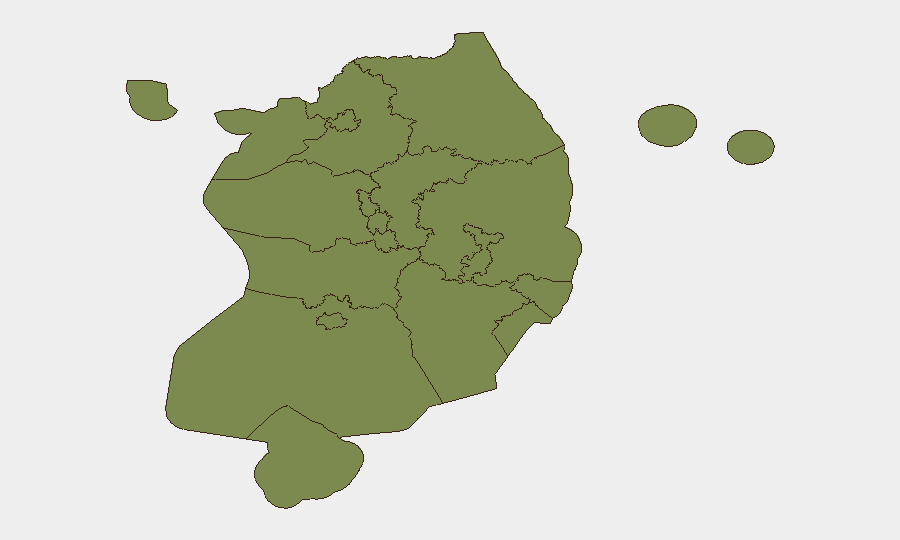
Seoul (risk 31.2) substantially outweighs all other regions and accounts for the majority of tracked events; this reflects the concentration of political institutions, diplomatic missions, media operations, and protest activity in the capital rather than endemic instability or violence. North Chungcheong (risk 14.1) shows secondary elevation, though granular incident drivers are not yet clear from available data. Busan (9.3), Gangwon (7.7), and remaining regions all register below 2.0, indicating dispersed, low-level baseline risk. Corporate security teams should prioritize Seoul-based operational continuity, communications, and personnel movement protocols; other regions pose minimal incremental risk relative to national baseline.
How GeoBit Would Assist
Intel Sweep and multi-language search capabilities would establish real-time monitoring of Korean-language police, emergency, and broadcast feeds to surface incident-level granularity (protests, transportation disruptions, localized crime) that open English-language web data does not reliably capture. AOI Monitoring & Early Warning with persistent Seoul and Busan area-of-interest watches would trigger alerts on civil unrest, security force mobilization, or infrastructure events before they impact corporate operations. Sentiment & Temporal Analysis on social-media and news feeds would enable early detection of emerging political or labor tensions that may precede disruption to business continuity or travel routes.
7-Day Outlook
No acute escalation is forecast over the next seven days based on available signals. Diplomatic activity around the Jeju Forum and routine inter-agency investigations will likely continue. Security teams should maintain standard Seoul protocols and monitor for any unannounced labor actions or political developments that could affect metro, port, or airport operations; however, probability of material disruption remains low absent new information.
Highest-Risk Areas — Ranked
| # | State / Region | Risk |
|---|---|---|
| 1 | Seoul | 31.2 |
| 2 | North Chungcheong | 14.1 |
| 3 | Busan | 9.3 |
| 4 | Gangwon State | 7.7 |
| 5 | Jeonbuk State | 1.9 |
| 6 | South Gyeongsang | 1.9 |
| 7 | Gyeonggi | 1.5 |
| 8 | South Jeolla | 1.5 |
| 9 | Jeju | 1.5 |
| 10 | Incheon | 1.2 |
| 11 | South Chungcheong | 1.2 |
| 12 | Sejong | 1.2 |
Previous Daily Briefs
A new South Korea brief is written every day — each with its own risk map and downloadable CSV. Here's the last week; use the calendar to go further back.
📅 Browse every day by calendar →
Highlighted days have a brief. Tap a day for that day's map & analysis, or “csv” for that day's dataset ($5).