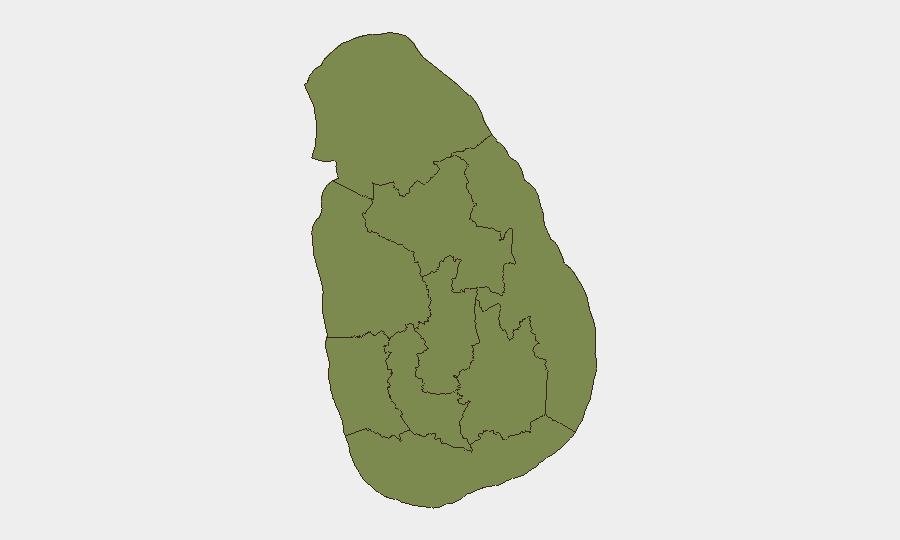
Situation Summary
Sri Lanka faces a compound threat environment marked by escalating financial crime, persistent public-health risk, and underlying institutional strain. The composite national threat score remains moderate (#121 globally, score 10), but recent developments—including a USD 2.5M government cybercrime loss, a USD 715M money-laundering investigation, and an active dengue outbreak (77,028 cases, 56 deaths)—signal vulnerabilities in critical infrastructure and governance. The Western Province dominates sub-national risk (35.3), driven by concentration of government, finance, and population in Colombo. Trajectory is toward increased operational friction for multinational entities and heightened scrutiny of cross-border financial flows.
Key Developments
- Devinuwara, Matara District (22 July, 0600h approx.) – Armed shooting at residential property; no casualties reported. Classified as criminal incident; investigation ongoing by local police.
- Sri Lanka Treasury, Colombo (reported 22 July) – Parliamentary Committee on Public Finance confirmed USD 2.5M loss in Australia debt-repayment transaction caused by email compromise and payment-instruction fraud. Indicates active exploitation of government financial systems.
- National CID Investigation (disclosed 22 July) – Criminal Investigation Department opened formal probe into suspected USD 715M financial crime scheme involving false import declarations and illicit fund transfer. Scale and coordination suggest organized financial crime network.
- SriLankan Airlines (effective 20–26 July) – Suspension of all Sri Lanka–Kuwait flights due to Middle East military escalation. Affects passenger connectivity and repatriation routes; extension possible if regional conflict persists.
- National Health (status 20–22 July) – Dengue outbreak: 77,028 confirmed cases and 56 deaths; >50% concentrated in Western Province. Operational impact on workforce availability, medical-supply chains, and travel health.
- Civil Aviation Authority Advisory (ongoing July) – Reiteration of Kuwait flight suspension and passenger advisory. Reflects institutional focus on regional security spillover and aviation-system vulnerability.
Highest-Risk Areas
The Western Province (score 35.3) is the primary driver of national risk, accounting for the majority of reported financial crime, government institutional activity, and disease burden. The 4:1 risk ratio between Western Province and the next-ranked region (Uva, 8.6) reflects concentration of critical infrastructure, financial hubs, and population density in Colombo and suburban districts. Secondary clusters in Uva (8.6) and North Western Province (6.9) show diffuse lower-level activity; remaining provinces cluster below 6, indicating geographically dispersed, lower-intensity threats. Risk in Western Province is tied to cyber-enabled financial crime, governance friction, and health-system strain rather than armed conflict or terrorism.
How GeoBit Would Assist
Intel Sweep & OSINT Fusion would track emerging actor networks and financial-crime indicators across government, banking, and telecommunications sectors to detect additional compromise. Cyber & Financial-Crime Search capabilities would correlate the USD 2.5M and USD 715M incidents, identify shared infrastructure or perpetrator profiles, and forecast secondary targets. AOI Monitoring & Early Warning on Colombo financial district and critical government facilities would provide persistent alerting on institutional instability, protest activity, or further regulatory action—enabling duty-of-care teams to anticipate operational disruptions.
7-Day Outlook
Financial-crime investigations are expected to broaden, with high likelihood of additional arrests or asset freezes affecting business counterparties and payment systems. The Kuwait flight suspension will likely extend if Middle East tensions persist, constraining labor mobility and supply-chain routing. Dengue case growth will continue to strain healthcare capacity in Western Province; organizations should plan for workforce availability loss and supply-chain delays through end-July.
Highest-Risk Areas — Ranked
| # | State / Region | Risk |
|---|---|---|
| 1 | Western Province | 35.3 |
| 2 | Uva Province | 8.6 |
| 3 | North Western Province | 6.9 |
| 4 | Central Province | 6.9 |
| 5 | Sabaragamuwa Province | 5.9 |
| 6 | Northern Province | 5.3 |
| 7 | North Central Province | 5.3 |
| 8 | Eastern Province | 5.3 |
| 9 | Southern Province | 5.3 |
Sources
Previous Daily Briefs
A new Sri Lanka brief is written every day — each with its own risk map and downloadable CSV. Here's the last week; use the calendar to go further back.
📅 Browse every day by calendar →
Highlighted days have a brief. Tap a day for that day's map & analysis, or “csv” for that day's dataset ($5).
Atlas — our AI intelligence desk — emails them this snapshot personally. Nothing else, no list.