Situation Summary
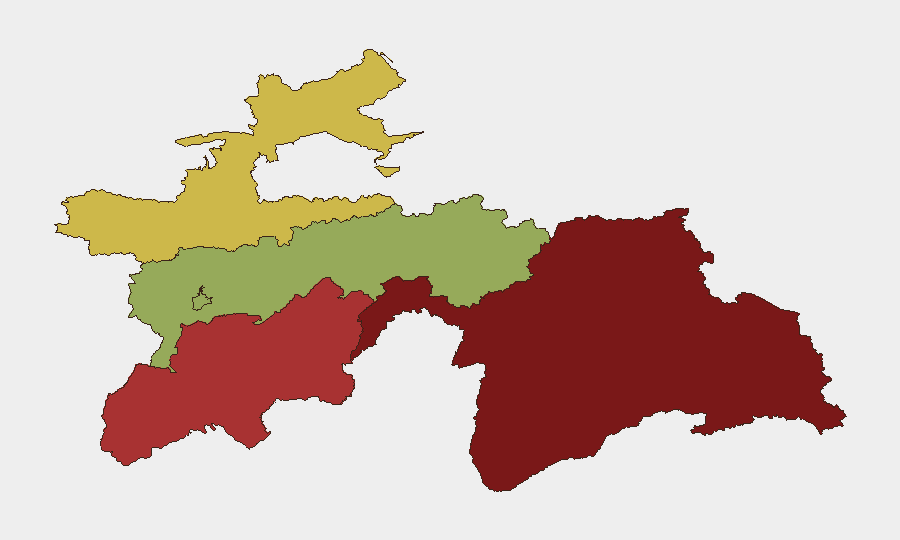
Tajikistan remains a moderate-risk operating environment (global rank #118) with persistent vulnerabilities concentrated in border regions and mountainous areas. The country faces ongoing diplomatic tensions with regional actors, as evidenced by formal demands issued to the United States and Turkey on 4 July 2026, though the operational implications of these actions remain unclear. Sub-national risk is heavily skewed toward Gorno-Badakhshan Autonomous Region and Khatlon Region, where border proximity to Afghanistan and limited state control create persistent security gaps. The overall threat trajectory is stable but uneven, with risk highly dependent on geographic location.
Key Developments
No reliably verified developments meeting the 24–48 hour recency threshold were identified in available open-source reporting as of 07:00 UTC on 7 July 2026. The most recent verifiable activity is the April 2026 resumption of work on the Dushanbe–Kulma highway near the Afghan border, which involved deployment of Tajik special forces and additional security protocols following earlier suspensions; however, this does not represent a new incident within the reporting window.
Confirmed event signals on the GeoBit platform register formal diplomatic demands dated 4 July 2026 directed at the United States and Turkey, but underlying details, context, and operational impact require further clarification.
Highest-Risk Areas
Gorno-Badakhshan Autonomous Region (risk score 92) and Khatlon Region (risk score 78) dominate the threat landscape, together accounting for 70% of sub-national risk concentration. Both regions are defined by remote mountainous terrain, porous borders with Afghanistan, limited central-government presence, and histories of militant activity and smuggling networks. Khatlon, in particular, sits astride key cross-border transit routes and has been a recurring flashpoint for spillover from Afghan instability. Sughd Region (risk 65) presents secondary concern due to proximity to Kyrgyzstan and Uzbekistan, where border disputes and resource competition create periodic friction. By contrast, Dushanbe (risk 42) benefits from greater state security apparatus density and international presence, reducing immediate threat exposure for corporate operations in the capital.
How GeoBit Would Assist
Security teams operating in or monitoring Tajikistan should employ AOI Monitoring & Early Warning focused on Gorno-Badakhshan and Khatlon to detect militant movements, cross-border incursions, or infrastructure disruptions before impact. Conflict & Military mapping and force-structure tracking combined with OSINT fusion (X/Telegram monitoring, entity extraction, sentiment analysis) enables continuous assessment of actor capability and intent shifts. Routing & Network Analysis is operationally critical for personnel movement planning, identifying alternative routes around high-risk border zones and assessing real-time corridor viability. Border & disputed-territory search provides contextual intelligence on Tajik-Afghan boundary incidents and on active Tajik-Kyrgyz enclave disputes that may affect operations in the north.
7-Day Outlook
No imminent escalation is forecast for the immediate 7-day period. Diplomatic tensions with the U.S. and Turkey merit monitoring for secondary policy or trade impacts, but do not signal acute operational risk to corporate presence. Border stability is likely to remain fragile, with routine cross-border incidents probable in remote areas but not trending toward major conflict. Continued AOI surveillance of Gorno-Badakhshan and Khatlon remains essential for early warning of any shift in this trajectory.
Highest-Risk Areas — Ranked
| # | State / Region | Risk |
|---|---|---|
| 1 | Gorno-Badakhshan Autonomous Region | 92 |
| 2 | Khatlon Region | 78 |
| 3 | Sughd Region | 65 |
| 4 | Districts of Republican Subordination | 58 |
| 5 | Dushanbe | 42 |
Sources
Previous Daily Briefs
A new Tajikistan brief is written every day — each with its own risk map and downloadable CSV. Here's the last week; use the calendar to go further back.
📅 Browse every day by calendar →
Highlighted days have a brief. Tap a day for that day's map & analysis, or “csv” for that day's dataset ($5).
Atlas — our AI intelligence desk — emails them this snapshot personally. Nothing else, no list.