Situation Summary
The UAE remains stable domestically with no confirmed attacks or civil unrest in the last 24–48 hours; however, regional tensions persist following Iranian missile and drone strikes on Bahrain and Kuwait, which prompted official UAE condemnation and diplomatic engagement. Dubai (composite risk 31.5) accounts for the majority of tracked threat events nationally, though most recent activity reflects policy adjustments and political statements rather than direct security incidents. The threat environment is characterized by elevated regional volatility rather than imminent domestic threat to UAE territory or institutions.
Key Developments
- Abu Dhabi (Federal Level) – July 1, 2026: UAE Ministry of Foreign Affairs issued a public condemnation of Iranian missile and drone attacks on Bahrain and Kuwait, citing threats to regional security, critical infrastructure, and Strait of Hormuz transit.
- Abu Dhabi–Tehran Diplomatic Channel – June 26 (reported prominently in last 24–48 hours): UAE Foreign Minister Sheikh Abdullah bin Zayed conducted a rare telephone call with Iran's Foreign Minister Abbas Araqchi to discuss Strait of Hormuz security, freedom of navigation, and cessation of regional hostilities.
- UAE Domestic Travel Policy – Effective June 29, 2026 (communicated June 30–July 1): Federal authorities lifted a two-month travel ban on Lebanon for UAE nationals, citing improved security conditions; travel advisories remain in effect pending ongoing regional developments.
- Dubai Government Sector – June 29 onward: Dubai authorities launched "Our Flexible Summer 2026" program offering public employees reduced hours, four-day work weeks, and remote-work options; official briefings confirm no major security incidents or civil unrest in the emirate.
- Nationwide Security Narrative – Last 24 hours: Verified official and social-media reporting confirms calm conditions across UAE cities with no confirmed new missile, drone, or terrorist incidents; standard traffic and heat-safety reminders issued by police and transport authorities.
- Information Environment – Last 24 hours: Public-health and security communications emphasize reliance on official sources and warn against unconfirmed rumors of attacks or civil unrest, reflecting heightened public vigilance to regional tensions.
Highest-Risk Areas
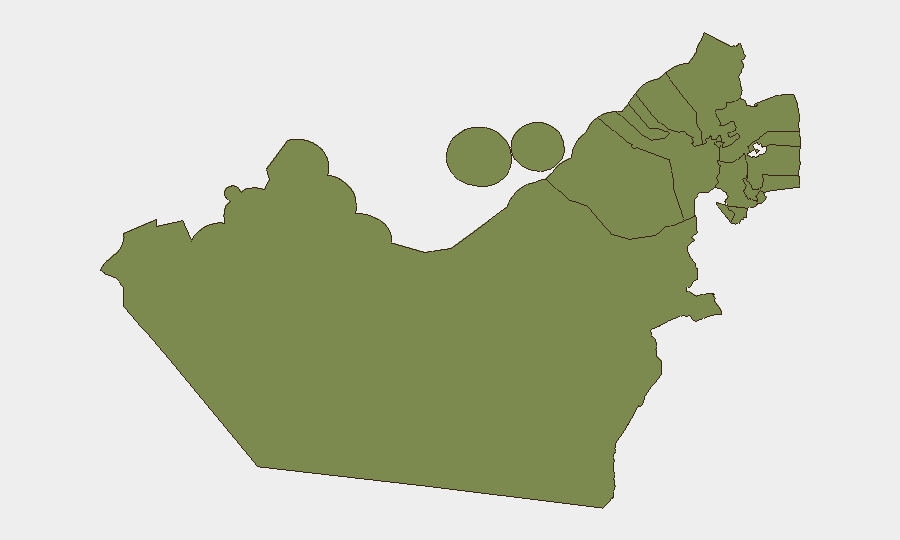
Dubai dominates the national risk profile (31.5 of 36 composite score), reflecting its role as the UAE's largest commercial, financial, and expatriate hub and thus the primary focus of threat-event tracking and reporting activity. Abu Dhabi Emirate (11.5) shows secondary risk, consistent with its status as the federal capital and seat of national security institutions. The remaining five emirates (Sharjah, Ajman, Ras al-Khaimah, Fujairah, Umm al-Quwain) each register minimal risk (1.5), indicating low event frequency and localized, low-severity incidents. Risk concentration in Dubai reflects both genuine exposure (international business, transport, tourism) and reporting density rather than uniform national threat.
How GeoBit Would Assist
Security teams should deploy AOI Monitoring & Early Warning on Dubai and Abu Dhabi to detect emerging protest, protest-adjacent, or policy-related activity; Intel Sweep and multi-language OSINT (including X/Telegram) to track Iranian and regional proxy messaging that could signal escalation; and Conflict & Military monitoring of Strait of Hormuz and regional force postures to provide advance notice of maritime or air threats that could affect UAE logistics and expatriate safety.
7-Day Outlook
No imminent domestic security crisis is forecast for the UAE; however, diplomatic and military signaling between Iran and Gulf states will likely persist, maintaining pressure on UAE institutions to calibrate messaging and security posture. Travel advisories and regional tension may produce minor disruptions to business continuity and expatriate confidence but are unlikely to materially affect core infrastructure or population safety in the near term. Continued monitoring of Iranian statements and Gulf Cooperation Council coordination is warranted.
Highest-Risk Areas — Ranked
| # | State / Region | Risk |
|---|---|---|
| 1 | Dubai | 31.5 |
| 2 | Abu Dhabi Emirate | 11.5 |
| 3 | Sharjah Emirate | 1.5 |
| 4 | Ajman Emirate | 1.5 |
| 5 | Ras al-Khaimah | 1.5 |
| 6 | Fujairah Emirate | 1.5 |
| 7 | Umm al-Quwain | 1.5 |
Sources
Previous Daily Briefs
A new United Arab Emirates brief is written every day — each with its own risk map and downloadable CSV. Here's the last week; use the calendar to go further back.
📅 Browse every day by calendar →
Highlighted days have a brief. Tap a day for that day's map & analysis, or “csv” for that day's dataset ($5).