Situation Summary
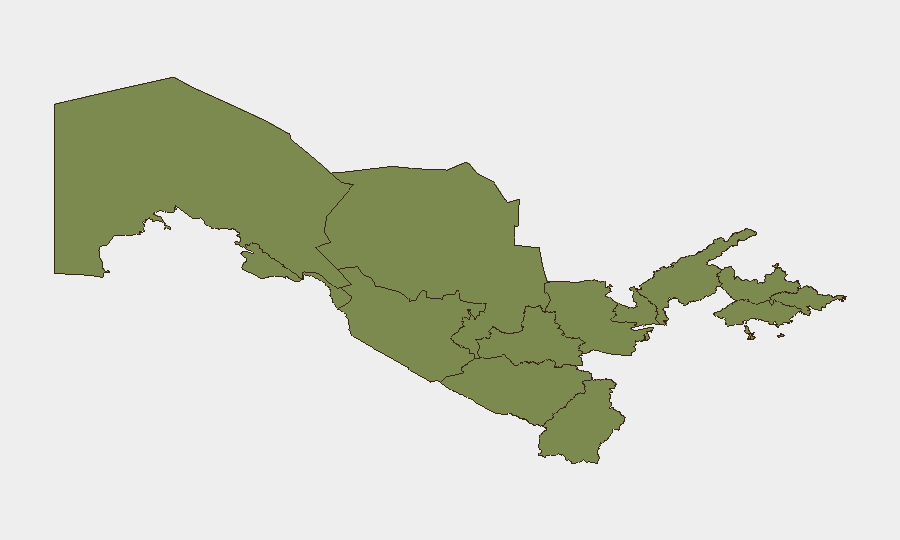
Uzbekistan remains a low-threat environment (global rank #190, composite score 3) with no credible reports of active security incidents, civil unrest, armed conflict, or terrorism in the past 24–48 hours. The country is focused on domestic governance improvements—water security, industrial safety accreditation, and counter-terrorism capacity-building—rather than managing acute crises. Sub-national risk is heavily concentrated in Namangan Region (score 31.8), while Tashkent carries elevated but manageable urban risk (16.8); all other regions score below 2.0.
Key Developments
- Tashkent, 30 June–1 July 2026 – National meetings at the Ministry of Water Resources endorsed a roadmap on water security and industrial accident prevention, including steps toward UNECE accession. This reflects proactive infrastructure-risk governance, not a disruptive incident.
- Tashkent, 2 July 2026 – Uzbekistan and the UN Office of Counter-Terrorism signed a 2026–2027 cooperation roadmap focused on counter-terrorism capacity-building, rehabilitation, research, and institutional strengthening.
- Tashkent, 26 June 2026 (disclosed late June) – The National Anti-Corruption Council reported 243 corruption-related crimes by 301 Ministry of Water Resources employees over 2.5 years, causing ~70 billion som in damages. The Anti-Corruption Agency was ordered to produce a corrective roadmap within ten days.
- No acute incidents reported, 1–2 July 2026 – Open-source monitoring found no corroborated armed conflict, cross-border threats, large-scale protests, terrorist plots, kidnappings, or infrastructure failures in the past 48 hours.
Highest-Risk Areas
Namangan Region dominates the threat landscape with a composite score of 31.8—nearly twice the next-highest area—and requires sustained monitoring. Tashkent (16.8) carries urban concentration risk typical of a capital with significant expat and business populations; incidents there would have disproportionate economic and media impact. The remaining ten regions cluster at 1.8, indicating either low intrinsic risk or sparse event reporting. The Fergana Valley's traditional role as a jihadist recruitment zone justifies continued awareness of Namangan and Fergana Region, although current activity levels are subdued.
How GeoBit Would Assist
Security teams protecting personnel or assets in Uzbekistan should deploy AOI Monitoring & Early Warning on Namangan, Tashkent, and Fergana Region to establish persistent watch with automated alerting; couple this with Intel Sweep (multi-language OSINT, X/Telegram monitoring, and sentiment analysis) to detect shifts in rhetoric or organizing before incidents materialize. Network & Actor Analysis can map recruitment and trafficking networks in the Fergana Valley and border zones, while Routing & Network Analysis supports contingency planning for personnel evacuation or supply-chain rerouting should localized instability emerge.
7-Day Outlook
No acute threat escalation is forecast over the coming week. Governance initiatives (anti-corruption, industrial safety, counter-terrorism capacity) are likely to continue, reinforcing the picture of a state consolidating institutional controls rather than facing instability. Monitoring should remain routine, with heightened sensitivity to any sharp increase in Namangan-region event frequency or cross-border rhetoric toward Tajikistan.
Highest-Risk Areas — Ranked
| # | State / Region | Risk |
|---|---|---|
| 1 | Namangan Region | 31.8 |
| 2 | Tashkent | 16.8 |
| 3 | Qashqadaryo Region | 1.8 |
| 4 | Surxondaryo Region | 1.8 |
| 5 | Fergana Region | 1.8 |
| 6 | Republic of Karakalpakstan | 1.8 |
| 7 | Xorazm Region | 1.8 |
| 8 | Navoiy Region | 1.8 |
| 9 | Bukhara Region | 1.8 |
| 10 | Jizzakh Region | 1.8 |
| 11 | Tashkent Region | 1.8 |
| 12 | Sirdaryo Region | 1.8 |
Sources
Previous Daily Briefs
A new Uzbekistan brief is written every day — each with its own risk map and downloadable CSV. Here's the last week; use the calendar to go further back.
📅 Browse every day by calendar →
Highlighted days have a brief. Tap a day for that day's map & analysis, or “csv” for that day's dataset ($5).