Situation Summary
Venezuela remains under a declared state of emergency following devastating twin earthquakes on June 24, 2026, that have killed at least 2,295 people and injured over 11,000. Current security dynamics are being shaped less by traditional crime or political instability than by earthquake-induced humanitarian collapse, military access restrictions to disaster zones, and rising civil unrest over perceived abandonment and alleged looting by authorities. The composite threat score of 62 reflects a volatile mix of ongoing disaster response, restricted movement, and accumulating public anger in northern coastal and inland regions.
Key Developments
- La Guaira, Vargas State (July 2–3, 2026): A security guard was rescued alive from the collapsed Galerías Playa Grande shopping center basement more than a week after the initial earthquakes, highlighting the scale and duration of active rescue operations in structurally unstable coastal zones.
- Northern Caribbean Coast, Multi-State (July 2–3, 2026): Venezuelan security forces have implemented tight restrictions on civilian and volunteer access to earthquake-devastated coastal areas, with residents alleging the military is preventing entry to safeguard undisclosed caches of gold, weapons, and cash—fueling public distrust and civil unrest.
- Earthquake-Affected Zones, Multiple Northern States (July 2–3, 2026): Confrontations have erupted between residents and security personnel over looting allegations; authorities subsequently announced arrests connected to these incidents, indicating breakdown in law-and-order capacity in disaster zones.
- National Casualty Update (July 2–3, 2026): National Assembly President Jorge Rodríguez released revised figures: 2,295 dead, 11,267 injured, and 6,460+ rescued, underscoring ongoing mass-casualty scale and the continued intensity of search-and-recovery operations.
- Nationwide Civil Unrest (July 2–3, 2026): Public anger is mounting as tens of thousands remain missing and unaccounted for; survivors accuse authorities of abandonment and inadequate rescue response, with military barriers preventing civilian-led rescue efforts and independent verification.
- Cross-Border Humanitarian Response (July 2–3, 2026): Venezuela is actively receiving humanitarian aid and technical support from Brazil, reflecting coordinated regional emergency logistics in quake-affected northern regions.
Highest-Risk Areas
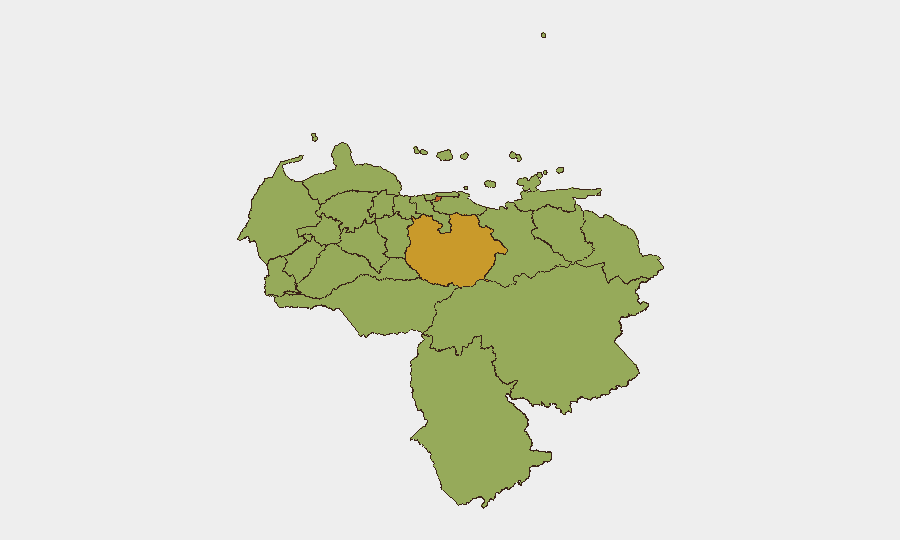
Federal District and Guarico State lead sub-national risk at 73 and 71.6 respectively, driven by earthquake-related infrastructure collapse, displacement, and institutional strain in Caracas and central regions. Vargas State (50.5), Anzoategui (48.7), and Carabobo (45.7) follow, reflecting direct seismic damage to coastal and northern industrial zones, active rescue operations, and the military access restrictions now concentrating public anger. Risk in these areas is currently dominated by disaster-response friction, civil unrest over perceived state negligence, and potential for further confrontations between residents and security forces as missing-person figures remain unresolved.
How GeoBit Would Assist
Security and duty-of-care teams should employ AOI Monitoring & Early Warning to track active rescue zones, military checkpoints, and protest hotspots across northern states in near real-time. Conflict & Military mapping and Force Structure analysis clarify military deployment patterns and access-control tactics in restricted zones, while OSINT Fusion (X/Twitter, Telegram, video feeds) and Sentiment Analysis capture emerging public anger and unrest signals before escalation. Routing & Network Analysis supports alternative journey planning around militarized cordons and structural hazards for personnel transit in affected states.
7-Day Outlook
Earthquake rescue operations will persist, but military restrictions and mounting civil frustration over missing persons and alleged looting create high risk for further confrontations and potential wider unrest over the next week. Infrastructure repairs remain minimal; travel and supply-chain disruption in northern states will likely intensify. Political pressure on authorities over casualty transparency and rescue adequacy is expected to rise, potentially triggering additional security force deployments.
Highest-Risk Areas — Ranked
| # | State / Region | Risk |
|---|---|---|
| 1 | Federal District | 73 |
| 2 | Guarico State | 71.6 |
| 3 | Vargas State | 50.5 |
| 4 | Anzoategui State | 48.7 |
| 5 | Carabobo State | 45.7 |
| 6 | Miranda State | 43.7 |
| 7 | Zulia State | 43.5 |
| 8 | Nueva Esparta State | 43.3 |
| 9 | Barinas State | 43.3 |
| 10 | Aragua State | 43.3 |
| 11 | Lara State | 43.3 |
| 12 | Falcon State | 43 |
Sources
Previous Daily Briefs
A new Venezuela brief is written every day — each with its own risk map and downloadable CSV. Here's the last week; use the calendar to go further back.
📅 Browse every day by calendar →
Highlighted days have a brief. Tap a day for that day's map & analysis, or “csv” for that day's dataset ($5).
Atlas — our AI intelligence desk — emails them this snapshot personally. Nothing else, no list.