Situation Summary
Yemen remains in active civil conflict with renewed front-line intensity as of early July 2026. The past 48 hours have witnessed a significant Houthi offensive in the western Hodeidah sector, resulting in government casualties and mobilization orders across multiple fronts. Maritime threats persist in the southern Red Sea, and tribal-level military mobilization in northern strongholds signals preparation for sustained or expanded confrontation.
Key Developments
- Hays District Offensive, Al-Hudaydah Governorate – 4 July, dawn
Houthi forces attacked pro-government positions south of Hodeidah, killing 14–15 Yemeni government troops and wounding others. Heavy clashes lasted several hours; government forces claim they repelled the assault and inflicted Houthi casualties. This engagement marks a significant break in months of relative calm on the western front.
- Houthi Reinforcements Deployed, Western Front – 4 July
Multiple sources report Houthi deployment of "massive reinforcements" around the Hays area, though they failed to seize strategic positions. Front lines held despite repeated Houthi advance attempts, indicating organized but contested offensive operations.
- Tribal Mobilization Rally, Sa'ada Governorate – 6 July
Armed groups from Kataf and Al-Buqa tribes held a rally declaring "general mobilization" in support of the Houthi movement. The gathering included armed fighters and public statements backing continued confrontation, signaling heightened local military readiness in a key northern stronghold.
- Government Readiness Order – 6 July
Yemen's Presidential Leadership Council chief directed all government forces to maintain "maximum readiness" in response to concerns over possible further Houthi escalation across multiple fronts. The order reflects official assessment of elevated near-term threat.
- Cargo Vessel Attack, Southern Red Sea – 6 July (late report)
A merchant cargo ship transiting near Hodeidah reported coming under attack in adjacent waters. Maritime security monitoring outlets confirm the incident as part of ongoing threats to commercial shipping in the southern Red Sea; attribution and damage details remain limited.
- Casualty Reports, Multiple Fronts – 4–6 July
Regional media report approximately 50 Houthi fighters killed in renewed clashes with government and allied forces over the past two days, linked to western and northern sector fighting coinciding with the Hays offensive.
Highest-Risk Areas
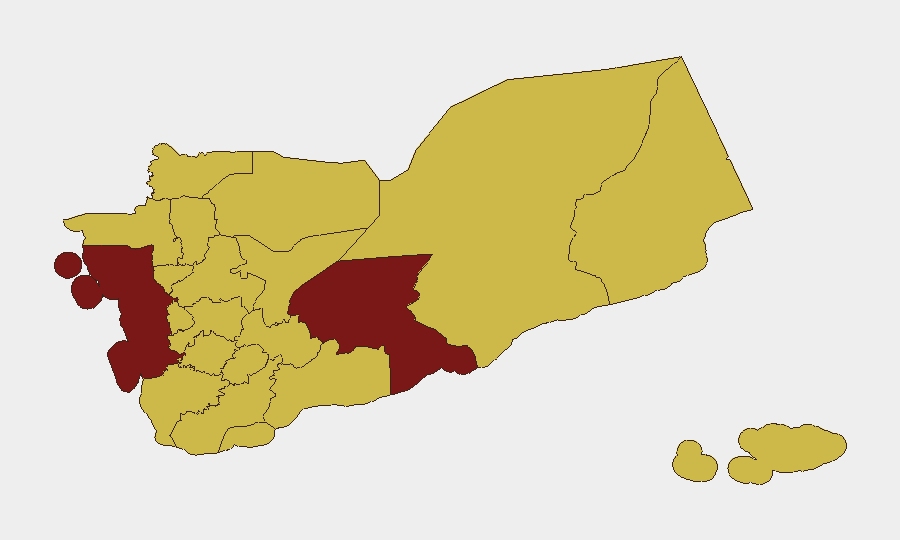
Al-Hudaydah Governorate (risk 93.8) and Shabwah Governorate (risk 91) dominate the sub-national ranking and are primary drivers of Yemen's #14 global threat score. Al-Hudaydah's extreme risk reflects its status as the active western battlefront, where the 4 July Houthi offensive and ongoing maritime threats concentrate military activity and civilian exposure. Amanat Al Asimah (84.9) presents elevated urban risk due to its designation as the capital region. The bloc of central and northern governorates—Sa'ada, Hajjah, 'Amran, Sana'a, and others—all rank 63.8, reflecting sustained Houthi presence, ongoing tribal mobilization, and limited state control.
How GeoBit Would Assist
Teams with personnel or assets in Yemen should employ GeoBit's AOI Monitoring & Early Warning capability to track persistent threat signals in Al-Hudaydah and other high-risk governorates, with alert thresholds set for military mobilization, clashes, and maritime incidents. Battle Mapping and Force Structure tracking provide real-time visibility into front-line positions and unit deployments, enabling route planning via Routing & Network Analysis to avoid active conflict zones. Entity and Actor Network Analysis correlates tribal, militia, and government force movements to forecast escalation and identify safe corridors for personnel movement or supply.
7-Day Outlook
Houthi momentum and tribal mobilization suggest sustained or escalatory pressure on government lines through mid-July. Maritime threats in the Red Sea are likely to persist, affecting shipping and logistics. Government defensive posture and force readiness orders indicate preparation for multi-front engagement rather than de-escalation, with highest intensity expected along the western (Al-Hudaydah) and northern (Sa'ada, 'Amran) sectors.
Highest-Risk Areas — Ranked
| # | State / Region | Risk |
|---|---|---|
| 1 | Al Hudaydah Governorate | 93.8 |
| 2 | Shabwah Governorate | 91 |
| 3 | Amanat Al Asimah | 84.9 |
| 4 | Sa'dah Governorate | 63.8 |
| 5 | Hajjah Governorate | 63.8 |
| 6 | Al Mahwit Governorate | 63.8 |
| 7 | 'Amran Governorate | 63.8 |
| 8 | Sana'a Governorate | 63.8 |
| 9 | Raymah Governorate | 63.8 |
| 10 | Dhamar Governorate | 63.8 |
| 11 | Ibb Governorate | 63.8 |
| 12 | Ta'izz Governorate | 63.8 |
Previous Daily Briefs
A new Yemen brief is written every day — each with its own risk map and downloadable CSV. Here's the last week; use the calendar to go further back.
📅 Browse every day by calendar →
Highlighted days have a brief. Tap a day for that day's map & analysis, or “csv” for that day's dataset ($5).
Atlas — our AI intelligence desk — emails them this snapshot personally. Nothing else, no list.