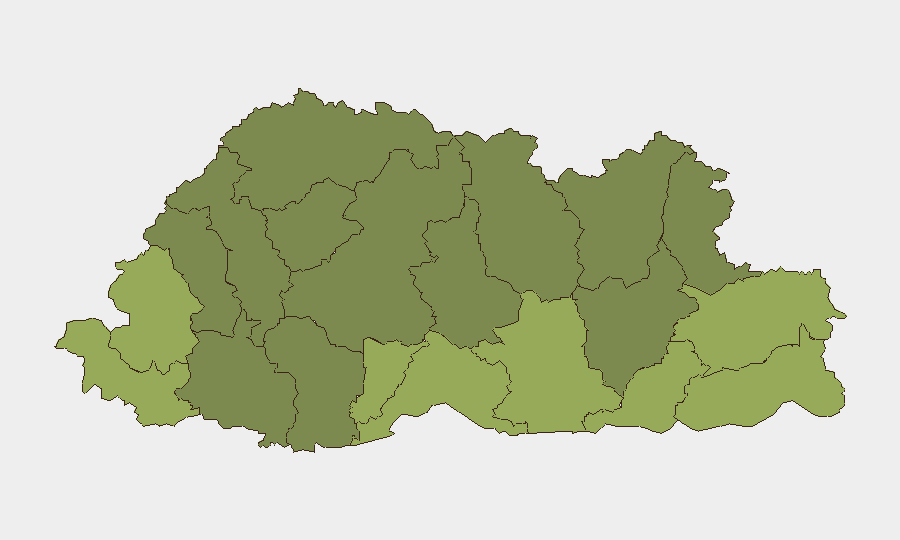
Situation Summary
Bhutan remains a low-threat environment with no verified security incidents, civil unrest, or infrastructure disruptions reported in the last 24–48 hours. National media and official government channels show routine governance and social reporting with no acute security alerts or travel warnings. While neighboring Nepal faces significant communal clashes and security operations, these events remain geographically isolated and have not generated spillover incidents into Bhutanese territory.
Key Developments
- No discrete security events reported nationwide in the last 24–48 hours. Dedicated threat monitoring and cross-checked national media (Bhutan Broadcasting Service, Daily Bhutan, Bhutan Post) confirm absence of protests, political unrest, serious crime spikes, infrastructure failures, or travel-safety incidents during this period.
- Neighboring Nepal experiencing active communal unrest and security operations. Recent clashes and curfews reported in Sunsari, Siraha, and Dhanusha districts; IED incidents and security alerts active in the region. No current evidence of cross-border escalation or impact on Bhutanese territory or nationals.
- Routine governance and infrastructure reporting dominates national media cycle. Recent BBS coverage focuses on road development, ropeway projects, local economic activity, and drug-control initiatives—standard baseline reporting with no indicators of emerging domestic instability.
- Official channels maintain normal posture with no fresh travel or security advisories. Ministry of Foreign Affairs and Ministry of Finance announcements focus on policy and administrative matters; no new guidance on border restrictions, internal security alerts, or civil unrest in the last 24–48 hours.
Highest-Risk Areas
Samtse, Sarpang, and Haa districts drive the sub-national ranking, with composite scores of 58, 55, and 52 respectively. All three border other nations (India and/or Nepal) and historically carry elevated risk due to geographical exposure and cross-border dynamics. The eastern and southern periphery—including Pemagatshel, Samdrup Jongkhar, and Tsirang districts—show consistent mid-range scores (50, 48, 45), consistent with border-adjacent exposure. Central and northern districts (Wangdue Phodrang, Gasa, Lhuntse) record the lowest scores, reflecting distance from international borders and stable local conditions. No current events explain these rankings; scores reflect persistent structural exposure rather than acute incident activity.
How GeoBit Would Assist
Security teams with personnel or assets in Bhutan should employ AOI Monitoring & Early Warning on the border districts (Samtse, Sarpang, Haa) to detect cross-border spillover from Nepal unrest in real time. Multi-language OSINT (Intel Sweep, X/Twitter, national media feeds) provides persistent visibility into Bhutanese governance, security announcements, and regional developments without reliance on single sources. Routing & Network Analysis supports duty-of-care planning by identifying safe corridors and contingency movement patterns around high-risk districts.
7-Day Outlook
Bhutan's security posture is expected to remain stable over the next seven days absent major escalation in neighboring Nepal. Continued monitoring of Nepal's communal tensions and security operations is warranted to detect any cross-border movement or official border restrictions. No indicators currently suggest internal Bhutanese instability or acute threats to corporate operations or personnel.
Highest-Risk Areas — Ranked
| # | State / Region | Risk |
|---|---|---|
| 1 | Samtse District | 58 |
| 2 | Sarpang District | 55 |
| 3 | Haa District | 52 |
| 4 | Pemagatshel District | 50 |
| 5 | Samdrup Jongkhar District | 48 |
| 6 | Tsirang District | 45 |
| 7 | Zhemgang District | 42 |
| 8 | Trashigang District | 40 |
| 9 | Mongar District | 38 |
| 10 | Gasa District | 35 |
| 11 | Lhuntse District | 32 |
| 12 | Wangdue Phodrang District | 30 |
Sources
Previous Daily Briefs
A new Bhutan brief is written every day — each with its own risk map and downloadable CSV. Here's the last week; use the calendar to go further back.
📅 Browse every day by calendar →
Highlighted days have a brief. Tap a day for that day's map & analysis, or “csv” for that day's dataset ($5).
Atlas — our AI intelligence desk — emails them this snapshot personally. Nothing else, no list.