Situation Summary
Bolivia remains in a stabilizing but fragile state following President Rodrigo Paz's declaration of a nationwide state of emergency on 20 June to clear 50+ days of protest roadblocks. No major new security incidents have been independently confirmed in the past 24–48 hours; however, the underlying drivers of civil unrest—economic discontent over fuel-subsidy removal and cost-of-living pressures—remain unresolved. The security environment is elevated but not acutely deteriorating, contingent on successful implementation of a government–labour agreement reached 19 June with the Bolivian Workers' Confederation (COB).
Key Developments
No independently confirmed new security or civil-unrest incidents in Bolivia have been reported in the past 24–48 hours (as of 2026-06-26). Open-source reporting, newswires, and cross-checked social media do not document fresh blockades, clashes, arrests, or infrastructure disruption within this timeframe.
The most recent verified activity—state-of-emergency enforcement and gradual roadblock clearance on routes into La Paz and Cochabamba (since 20 June)—continues to proceed without major reported setbacks or escalation.
Highest-Risk Areas
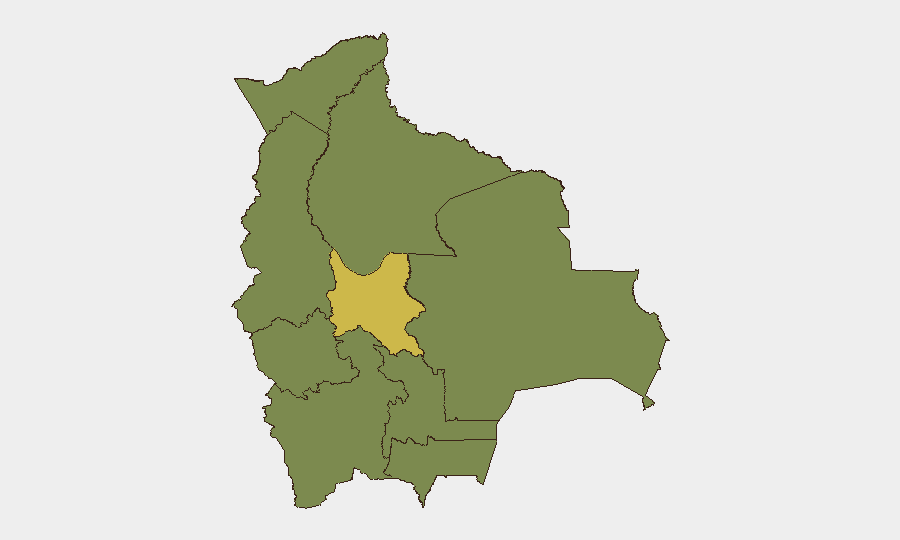
Cochabamba dominates the sub-national risk profile with a composite score of 64.2—nearly two points higher than all other departments—driven by its role as a historic protest hub, transit chokepoint for goods to La Paz, and concentration of informal-sector workers dependent on fuel subsidies. La Paz (37.1) remains elevated as the capital and seat of government, where political demonstrations and labour actions typically concentrate. Potosí, Tarija, Pando, Beni, Oruro, Chuquisaca, and Santa Cruz cluster at 34.2–36.3, reflecting lower but sustained baseline risk tied to economic hardship and periodic localized strikes. The sharp risk differential between Cochabamba and other departments suggests that security planning should prioritize corridor protection and supply-chain continuity through and around Cochabamba during the 90-day emergency window.
How GeoBit Would Assist
Security teams should deploy AOI Monitoring & Early Warning on Cochabamba department (especially major highway junctions and La Paz–Cochabamba corridor) to detect resumption of blockades or unexpected protest mobilization before operational impact occurs. Multi-language OSINT and X/Twitter/Telegram intelligence feeds offer real-time detection of labour calls-to-action and unrest signals ahead of street activity. Routing & Network Analysis can model alternative supply and personnel routes in advance, reducing dependency on primary corridors if disruption recurs after the emergency decree expires.
7-Day Outlook
The immediate 7-day horizon is likely to remain calm to stable, as the state of emergency and COB agreement suppress large-scale mobilization. However, private assessments note that unrest is probable after the 90-day implementation window closes (early September 2026) if core economic demands—fuel-subsidy restoration, wage increases, or inflation relief—remain unmet. Organizations should monitor compliance with the COB agreement and prepare contingency logistics for September onward.
Highest-Risk Areas — Ranked
| # | State / Region | Risk |
|---|---|---|
| 1 | Cochabamba | 64.2 |
| 2 | La Paz | 37.1 |
| 3 | Potosí | 36.3 |
| 4 | Tarija | 34.2 |
| 5 | Pando | 34.2 |
| 6 | Beni | 34.2 |
| 7 | Oruro | 34.2 |
| 8 | Chuquisaca | 34.2 |
| 9 | Santa Cruz | 34.2 |
Sources
Previous Daily Briefs
A new Bolivia brief is written every day — each with its own risk map and downloadable CSV. Here's the last week; use the calendar to go further back.
📅 Browse every day by calendar →
Highlighted days have a brief. Tap a day for that day's map & analysis, or “csv” for that day's dataset ($5).