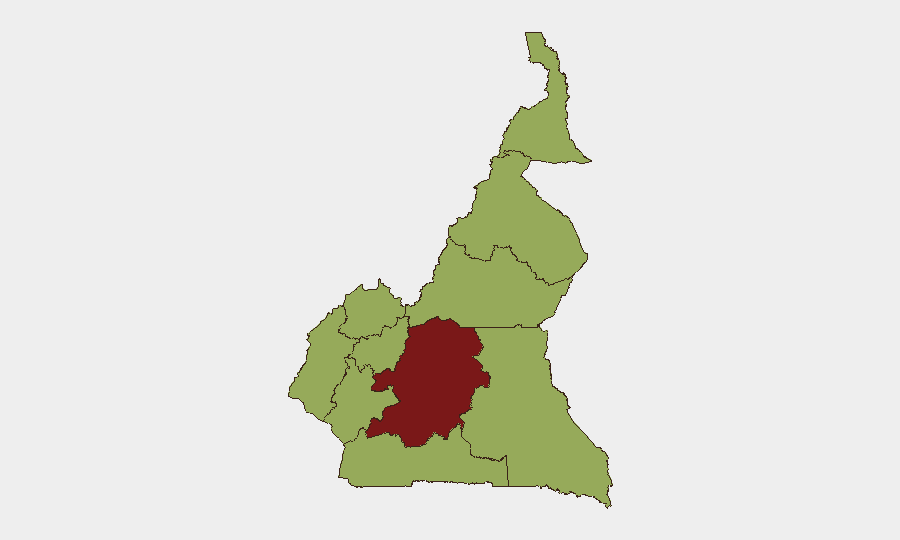
Situation Summary
Cameroon remains a moderate-priority security environment (global rank #28, composite threat score 75) with persistent but manageable risks concentrated in Centre Region and scattered across the Northwest, Southwest, and Littoral zones. No major security incidents have been confirmed in the last 24–48 hours; the security landscape reflects ongoing structural fragility rather than acute escalation. The country continues to experience infrastructure vulnerabilities and localized instability that warrant routine monitoring for corporate operations and personnel.
Key Developments
- Douala, Littoral Region – Scheduled power outages | July 5, 2026
ENEO Cameroon announced planned electricity interruptions across multiple Douala neighborhoods as part of network maintenance. While not a security incident, power cuts can degrade business continuity, compromise backup systems, and reduce situational awareness for personnel in affected areas.
- No additional confirmed security or incident events in the 24–48 hour window
Surveillance of local media, regional press, and social-media geolocation did not yield independent corroboration of discrete security incidents in Cameroon since July 4, 2026. Standard precaution applies: absence of reported incidents does not indicate absence of risk.
Highest-Risk Areas
Centre Region (risk score 82.5) stands as the dominant concern and warrants the tightest monitoring and duty-of-care protocols. The remaining nine regions—Northwest, Southwest, West, Littoral, Adamawa, South, Far-North, North, and East—cluster at identical risk scores (52.5), indicating geographically distributed but non-uniform vulnerability. The Centre-Littoral corridor, encompassing Yaoundé and Douala, carries the highest concentration of corporate activity and therefore the highest exposure to disruption. Underlying drivers include historical separatist sentiment in Northwest and Southwest, cross-border trafficking and militia activity in Far-North and Adamawa, and governance fragility across multiple jurisdictions.
How GeoBit Would Assist
Security teams should deploy AOI Monitoring & Early Warning on high-traffic corporate zones in Yaoundé (Centre) and Douala (Littoral) to detect emerging protests, security force activities, or service disruptions before they affect personnel or supply chains. Multi-language OSINT (X/Twitter, local media, Telegram) and sentiment & temporal analysis enable real-time tracking of social and political friction points that may precede incidents. Routing & Network Analysis supports contingency planning—identifying alternative routes and safe zones in case primary corridors become impassable due to unrest or infrastructure failure.
7-Day Outlook
No imminent security escalation is indicated by current signals, though the structural risks embedded in Centre and the peripheral zones remain constant. Infrastructure disruptions (as evidenced by the power cuts) and periodic localized tension are the most probable near-term scenarios. Continuous monitoring of regional media, security-force activity, and civil-society signals is advisable to provide early warning of any shift in the threat trajectory.
Highest-Risk Areas — Ranked
| # | State / Region | Risk |
|---|---|---|
| 1 | Centre | 82.5 |
| 2 | Northwest | 52.5 |
| 3 | Southwest | 52.5 |
| 4 | West | 52.5 |
| 5 | Littoral | 52.5 |
| 6 | Adamawa | 52.5 |
| 7 | South | 52.5 |
| 8 | Far-North | 52.5 |
| 9 | North | 52.5 |
| 10 | East | 52.5 |
Sources
Previous Daily Briefs
A new Cameroon brief is written every day — each with its own risk map and downloadable CSV. Here's the last week; use the calendar to go further back.
📅 Browse every day by calendar →
Highlighted days have a brief. Tap a day for that day's map & analysis, or “csv” for that day's dataset ($5).
Atlas — our AI intelligence desk — emails them this snapshot personally. Nothing else, no list.