Situation Summary
Eswatini remains at low threat (global rank #129, composite score 9), with no major protests, civil unrest, political violence, or infrastructure disruptions reported in the current 24–48-hour window or the preceding assessment period through 17 August. The most recent security-relevant development is a cross-border narcotics seizure on the South African side of the Oshoek port of entry, involving an Eswatini-registered logistics truck carrying approximately 630 kg of suspected cannabis. Regional engagement—including Eswatini's assumption of the SADC chair for Politics, Defence and Security—indicates active diplomatic posture rather than internal instability.
Key Developments
- Oshoek Border Post (South Africa side), 17 August ~01:30 (local time): South African police seized a Volvo truck with Eswatini registration plates carrying 49 bags of suspected dagga (cannabis, ~630 kg, estimated value R4 million+). One suspect arrested; no violence or traffic disruption reported beyond the enforcement action itself. Truck belongs to an Eswatini-registered logistics company, underscoring narcotics-smuggling risk at this critical land border.
- Mbabane, 18 August: Two third-country nationals voluntarily repatriated to their countries of origin at their request; no coercion or public-order issues indicated. This is routine administrative movement, not a security incident.
- Mbabane, 18 August: Two migrants deported from the United States repatriated to Eswatini. Standard state-to-state deportation with no reported civil unrest or administrative complications.
- SADC Regional (Durban), 15–17 August: Eswatini assumed the chair of the SADC Organ on Politics, Defence and Security Cooperation following Malawi's tenure. Strategic development reflecting active regional security engagement rather than indicating domestic crisis.
- Law-Enforcement Nexus (South Africa investigation, 18 August): Testimony in the South African Madlanga Commission revealed alleged plots by a regional cartel to sell cellphone-grabber surveillance technology to Eswatini using fraudulent SAPS documentation. While a South African legal matter, it signals persistent regional law-enforcement and surveillance-technology risk involving Eswatini as a prospective customer.
Highest-Risk Areas
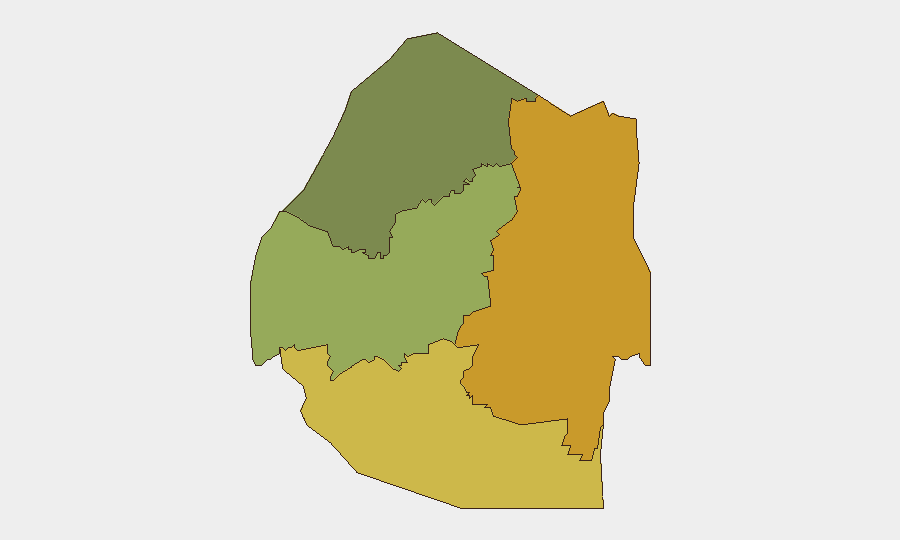
Lubombo Region (risk score 72) and Shiselweni (68) together account for the majority of sub-national threat, likely driven by cross-border criminality, narcotics trafficking, and porous frontier controls—as evidenced by the Oshoek seizure. Manzini Region (55) presents moderate elevated risk. Hhohho Region (35) remains lowest-risk. Border-adjacent areas and logistics hubs merit heightened attention for trafficking and smuggling activity; interior and urban centers (Mbabane, Manzini city) show minimal acute threat at present.
How GeoBit Would Assist
Teams with personnel or assets in Eswatini should deploy AOI Monitoring & Early Warning on Lubombo and Shiselweni border crossings and key logistics nodes to detect disruptions, enforcement activity, or trafficking indicators with minimal latency. Multi-language OSINT (X/Telegram, local media, radio SIGINT) provides persistent township-level early warning of protests or roadblocks that may not surface immediately in mainstream reporting. Network & Actor Analysis linked to the regional surveillance-technology and narcotics supply chains identifies high-risk contacts and routes for duty-of-care assessment.
7-Day Outlook
No acute security escalation is forecast for the near term; Eswatini's low-threat posture and regional diplomatic engagement suggest stability through the current week. Monitoring should remain focused on cross-border narcotics and smuggling activity at land ports and on any spillover from South African enforcement operations. Standard vigilance protocols for crime, petty theft, and road safety remain appropriate for all deployed personnel.
Highest-Risk Areas — Ranked
| # | State / Region | Risk |
|---|---|---|
| 1 | Lubombo | 72 |
| 2 | Shiselweni | 68 |
| 3 | Manzini Region | 55 |
| 4 | Hhohho Region | 35 |
Sources
Previous Daily Briefs
A new Eswatini brief is written every day — each with its own risk map and downloadable CSV. Here's the last week; use the calendar to go further back.
- August 17, 2026
- August 15, 2026
- August 13, 2026
- August 11, 2026
- August 9, 2026
- August 8, 2026
- August 6, 2026
📅 Browse every day by calendar →
Highlighted days have a brief. Tap a day for that day's map & analysis, or “csv” for that day's dataset ($5).
Atlas — our AI intelligence desk — emails them this snapshot personally. Nothing else, no list.