Situation Summary
Georgia faces a complex near-term security environment marked by critical-infrastructure vulnerability, elevated organized-crime enforcement activity, and political tension over territorial and institutional stability. A nationwide power outage on 24–25 July has triggered a state-level sabotage investigation, indicating either deliberate targeting of essential services or systemic infrastructure weakness. Simultaneous law-enforcement operations against organized crime and ongoing civil-unrest reporting reflect sustained pressure on both criminal networks and state institutions, while opposition commentary on regional isolation and political risk suggests elevated political fragmentation ahead of potential governance debates.
Key Developments
- Nationwide (Georgia) – 24–25 July 2026: State Security Service (SSS) opened a criminal investigation for sabotage following multiple emergency power outages that disrupted transport, water supply, and essential services across the country; electricity has since been restored. Authorities are examining whether outages were deliberately targeted at critical infrastructure or reflect systemic vulnerability.[11]
- Nationwide (Georgia) – last 24 hours (statement late July 2026): Ministry of Internal Affairs reported arrest of 29 individuals linked to organized-crime networks ("thieves' world") in a coordinated law-enforcement operation, indicating ongoing crackdown on criminal organizations nationwide.[12]
- Georgia (various regions) – 28–29 July 2026: Security and technical investigations continuing following the 24–25 July power outages; authorities maintaining heightened scrutiny on critical-infrastructure vulnerabilities with further public updates promised as sabotage probe progresses.[11]
- Tbilisi / Gori – late July 2026: Arrests and disciplinary action announced against law-enforcement personnel, including six Gori officers for violent abuse of power and detention of a former deputy head of SSS; contributes to public scrutiny of institutional accountability and political-legal tension.[7]
- National politics / security debate – within last 24 hours (late July 2026): Opposition figures publicly warned of Georgia's potential isolation and security risks around Tskhinvali region's annexation; commentary amplified by local media and social discussion within past hours, raising perceptions of political instability.[4]
Highest-Risk Areas
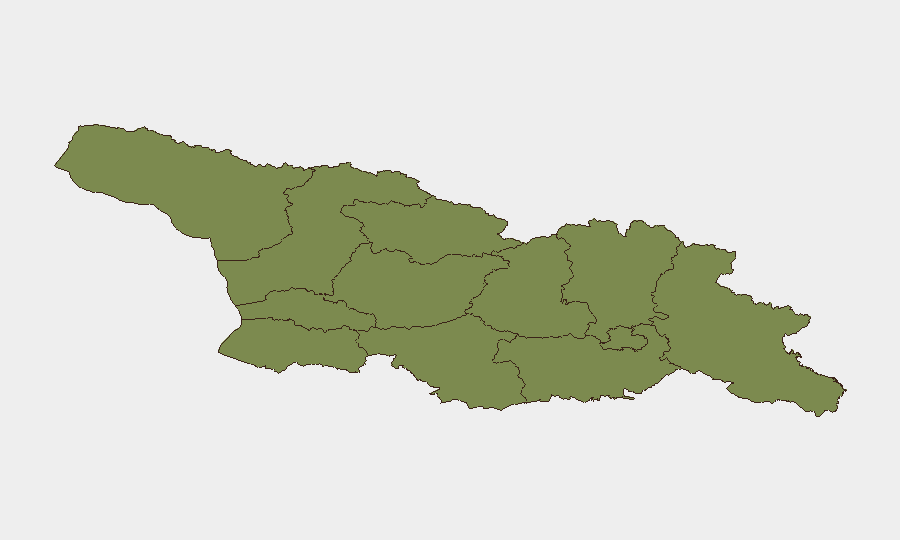
Autonomous Republic of Abkhazia dominates the sub-national risk ranking (31.3), reflecting its de facto independence, unresolved conflict status, and role as a flashpoint in Georgia–Russia tensions. Kakheti region (8.8) registers secondary risk, likely reflecting proximity to Russian territory and historical conflict zones. All remaining regions cluster at baseline (1.3), indicating that current threat concentration is geopolitical and territorial rather than dispersed across the country; however, the nationwide power-outage investigation and organized-crime enforcement activity suggest infrastructure and criminal-justice risks that transcend single regions and may escalate rapidly if the sabotage investigation implicates state or non-state actors with broader reach.
How GeoBit Would Assist
Corporate security teams would employ AOI Monitoring & Early Warning to track critical-infrastructure sites and Abkhazia border zones for indicators of deliberate sabotage, conflict escalation, or Russian military activity. Network & Actor Analysis would map organized-crime arrests and law-enforcement actions to identify whether criminal networks pose operational risks to commercial sites or supply chains. Conflict & Military and Regime-Stability search capabilities would provide structured tracking of political fragmentation and potential governance shifts that could affect business continuity and duty-of-care obligations.
7-Day Outlook
The sabotage investigation outcome will likely shape near-term risk perception; if deliberate targeting is confirmed, expect heightened security measures at critical infrastructure and elevated state-actor rhetoric. Organized-crime enforcement activity suggests possible disruption to criminal supply chains but does not materially reduce overall organized-crime threat. Political commentary on isolation and territorial risk indicates potential for rhetoric escalation but no imminent military activity; however, sustained institutional tension and law-enforcement scrutiny may create operational friction for organizations reliant on state cooperation.
Highest-Risk Areas — Ranked
| # | State / Region | Risk |
|---|---|---|
| 1 | Autonomous Republic of Abkhazia | 31.3 |
| 2 | Kakheti | 8.8 |
| 3 | Mtskheta-Mtianeti | 1.3 |
| 4 | Tbilisi | 1.3 |
| 5 | Lower Kartli | 1.3 |
| 6 | Samegrelo-Upper Svaneti | 1.3 |
| 7 | Guria | 1.3 |
| 8 | Autonomous Republic of Adjara | 1.3 |
| 9 | Racha-Lechkhumi and Kvemo Svaneti | 1.3 |
| 10 | Imereti | 1.3 |
| 11 | Samtskhe-Javakheti | 1.3 |
| 12 | Shida Kartli | 1.3 |
Sources
Previous Daily Briefs
A new Georgia brief is written every day — each with its own risk map and downloadable CSV. Here's the last week; use the calendar to go further back.
📅 Browse every day by calendar →
Highlighted days have a brief. Tap a day for that day's map & analysis, or “csv” for that day's dataset ($5).
Atlas — our AI intelligence desk — emails them this snapshot personally. Nothing else, no list.