Situation Summary
Malta remains a low-threat jurisdiction globally (rank #142, composite score 10), with no tracked discrete security events in the current reporting window. However, the acquittal of businessman Yorgen Fenech on 2 September in connection with the 2017 assassination of investigative journalist Daphne Caruana Galizia has triggered significant political tension, protest activity, and international media focus on rule-of-law and corruption concerns. The primary near-term risk is short-notice demonstrations and heightened public-order activity in central Valletta rather than systemic violence or infrastructure disruption.
Key Developments
- Valletta – 2 September 2026 – High-profile acquittal in journalist assassination case
Criminal court acquitted Yorgen Fenech (8–1 jury vote) of complicity in the 2017 car-bomb killing of Daphne Caruana Galizia after a two-month trial, immediately raising tensions around judicial independence and perceived impunity in corruption cases.
- Valletta – Evening 2 September 2026 – Opposition-led protest outside Parliament
Hundreds of demonstrators, organised by the Nationalist Party, gathered in central Valletta outside Parliament on the night of the verdict; protesters chanted "assassin" and demanded justice with no confirmed serious violence or property damage reported.
- Valletta – 3 September 2026 – Calls for special parliamentary session
Civil-society groups and international press-freedom organisations escalated demands for lawmakers to be recalled from summer recess to convene a special parliamentary session addressing the acquittal and rule-of-law concerns.
- Valletta – 3 September 2026 – Government public appeal for calm
The Maltese government issued a statement calling for "calm and prudence," a signal that cabinet-level authorities assess material risk of escalating protest activity, polarisation, and police resource pressure.
- International – 3–4 September 2026 – Media spotlight on journalist safety and corruption
Major European and global news outlets published analyses linking the Fenech acquittal to broader questions about journalist safety, institutional corruption, and perceived impunity in Malta, amplifying international reputational risk and investor concern.
- National – 1–7 September 2026 – No major violent crime or infrastructure incidents confirmed
No clearly documented large-scale violent crime spikes, terror-related incidents, or infrastructure failures are reported across Malta for the week; routine crime remains outside the scope of this brief.
- Valletta – Ongoing through 8 September 2026 – Civil-society mobilisation and medium-term protest risk
Civil-society and press-freedom groups signalled sustained "outrage," suggesting continued likelihood of recurrent demonstrations, vigils, and symbolic actions in coming weeks around courts, Parliament, and central squares in Valletta.
Highest-Risk Areas
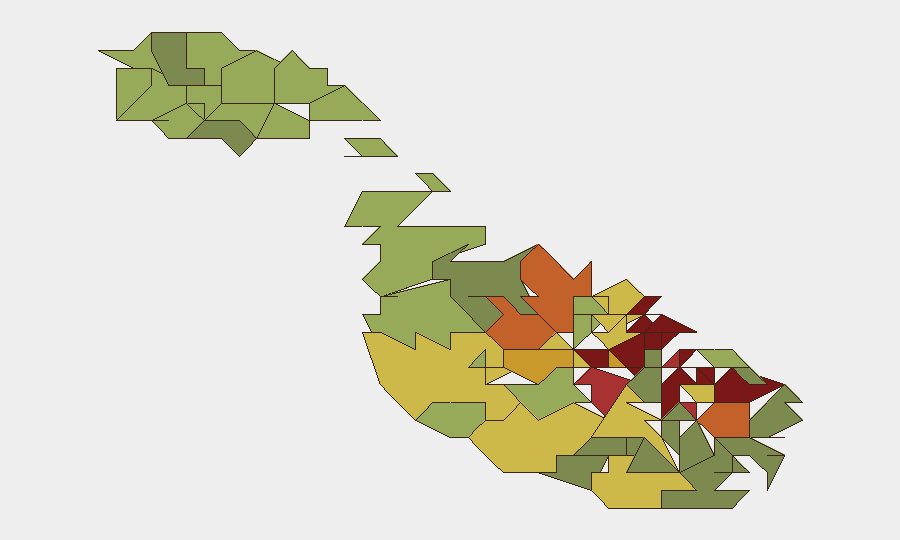
Valletta (risk 95) dominates the sub-national ranking and is the epicentre of current political and public-order risk, driven by the Fenech acquittal, parliamentary proximity, and judicial venues. Sliema, Saint Julian's, and Gżira—all upscale commercial and residential districts with high foot traffic and business concentration—rank second through fourth; their elevated scores reflect baseline urban crime, fraud, and reputational exposure rather than acute political risk. The concentration of risk in the Northern Harbour and central corridor reflects Malta's geographic and economic structure; businesses and personnel in these zones should monitor local advisories and allow flexibility for short-notice gatherings.
How GeoBit Would Assist
Security teams would employ AOI Monitoring & Early Warning on Valletta's parliamentary and judicial precincts to detect recurrent demonstrations and police presence in real time. OSINT fusion (Twitter/X, YouTube, and multi-language search) combined with sentiment analysis would provide advance warning of planned protests, speaker intent, and escalation language. GIS & Spatial Analysis would enable mapping of demonstration footprints, alternative routing around Parliament and court buildings, and identification of safe assembly points for personnel.
7-Day Outlook
Short-notice protests and media activity around Parliament and courts in Valletta are likely to persist through mid-September, particularly if a special parliamentary session is convened. No evidence points to a shift toward violence, but heightened police presence and crowd density near judicial and government buildings should be expected. Personnel with duties in central Valletta are advised to maintain situational awareness, monitor local news daily, and plan extra transit time around affected venues.
Highest-Risk Areas — Ranked
| # | State / Region | Risk |
|---|---|---|
| 1 | Valletta | 95 |
| 2 | Sliema | 92 |
| 3 | Saint Julian's | 90 |
| 4 | Gżira | 88 |
| 5 | Hamrun | 87 |
| 6 | Paola | 86 |
| 7 | Msida | 85 |
| 8 | Birkirkara | 84 |
| 9 | Birgu | 83 |
| 10 | Senglea | 82 |
| 11 | Cospicua | 81 |
| 12 | Żabbar | 80 |
Sources
Previous Weekly Briefs
A new Malta brief is written every Monday, covering the week — each with its own risk map and downloadable CSV. Use the calendar to go further back.
- September 1, 2026
- August 29, 2026
- August 26, 2026
- August 24, 2026
- August 22, 2026
- August 20, 2026
- August 18, 2026
📅 Browse past briefs by calendar →
Highlighted days have a brief. Tap a day for that day's map & analysis, or “csv” for that day's dataset ($5).
Atlas — our AI intelligence desk — emails them this snapshot personally. Nothing else, no list.