Situation Summary
Mauritius remains in a low-threat, stable security environment as of 31 July 2026. Open-source monitoring over the last 24–48 hours has detected no discrete incidents of violence, civil unrest, crime spikes, or infrastructure disruption. The national composite threat score of 3 reflects the baseline risk profile for this Indian Ocean jurisdiction; routine law-enforcement activity continues, but no escalating indicators or policy-level instability are evident.
Key Developments
No verifiable security incidents detected in the last 24–48 hours (29–30 July 2026). Current web research and monitoring feeds confirm a stable operational environment with no flagged events meeting the strict 24–48-hour window. Recent notable incidents—including a tear-gas exposure event in Mahébourg on 24 July (hospitalized 16 civilians) and a narcotics/stolen-uniforms bust in Blue Bay—fall outside this timeframe and are retained as background context only.
Two diplomatic event signals were detected on the platform's global event feed (Colombia vs. Mauritius, 28 July; La Paz vs. Mauritius, 29 July); these are administrative or consular notices rather than acute security incidents and do not indicate instability within Mauritius itself.
Baseline crime and law-enforcement operations continue as routine; no media or social-signal spike is evident.
Highest-Risk Areas
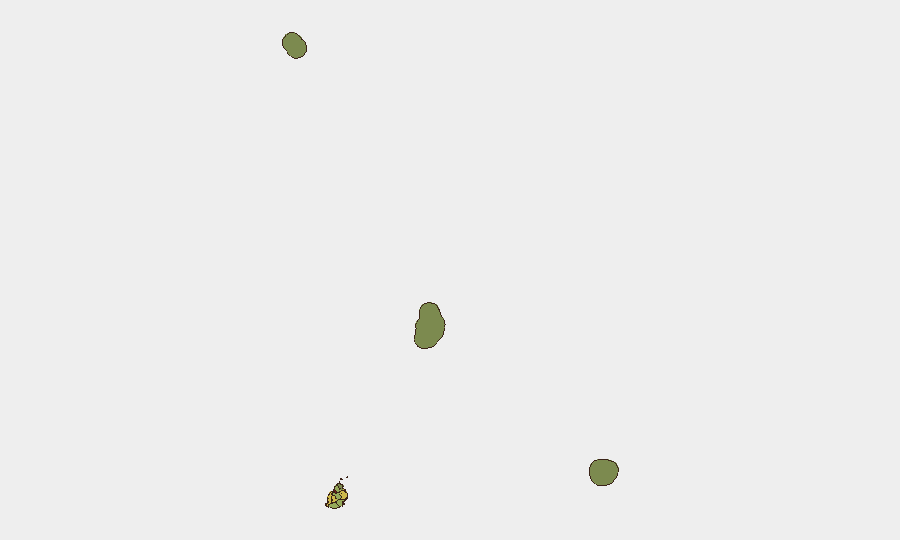
Port Louis (risk 92) dominates the sub-national ranking and represents the primary concentration of recorded security risk, reflecting its role as the capital, primary port, and commercial hub. Plaines Wilhems (68), Black River (65), and Flacq (62) form a secondary tier of moderate concern, likely driven by urban density, commercial activity, and historical crime patterns. By contrast, outer islands and sparsely populated regions—Rodrigues (22), Saint Brandon (8), and Agaléga (5)—present minimal recorded risk, indicating that security pressure is heavily concentrated in the western and central populated corridors. Corporate teams with personnel or assets in Port Louis or the central belt should maintain standard duty-of-care protocols; those in remote or island locations face negligible threat from identified vectors.
How GeoBit Would Assist
A security team monitoring Mauritius would deploy persistent Area-of-Interest (AOI) monitoring and early-warning alerting on Port Louis and other high-risk districts to detect emerging unrest, crime clusters, or infrastructure failures in real time. Multi-language OSINT fusion across local media, social platforms (X, Telegram), and police/emergency announcements would provide early signals of civil disorder, large-scale incidents, or policy changes affecting travel and operations. Routing & network analysis capabilities would allow rapid re-planning of supply chains, personnel movement, and asset access if localized disruption occurs, while satellite and imagery analysis could verify infrastructure integrity or crowd-gathering events during periods of heightened alert.
7-Day Outlook
Mauritius is expected to remain stable over the next seven days absent new diplomatic friction or unforeseen criminal escalation. Routine monitoring should continue; security teams should refresh travel advisory checks and maintain contact protocols with in-country personnel and local security partners. No indicators suggest material change to the current low-threat posture.
Highest-Risk Areas — Ranked
| # | State / Region | Risk |
|---|---|---|
| 1 | Port Louis | 92 |
| 2 | Plaines Wilhems | 68 |
| 3 | Black River | 65 |
| 4 | Flacq | 62 |
| 5 | Grand Port | 58 |
| 6 | Moka | 52 |
| 7 | Savanne | 48 |
| 8 | Pamplemousses | 45 |
| 9 | Rivière du Rempart District | 38 |
| 10 | Rodrigues | 22 |
| 11 | Saint Brandon | 8 |
| 12 | Agaléga | 5 |
Sources
Previous Daily Briefs
A new Mauritius brief is written every day — each with its own risk map and downloadable CSV. Here's the last week; use the calendar to go further back.
📅 Browse every day by calendar →
Highlighted days have a brief. Tap a day for that day's map & analysis, or “csv” for that day's dataset ($5).
Atlas — our AI intelligence desk — emails them this snapshot personally. Nothing else, no list.