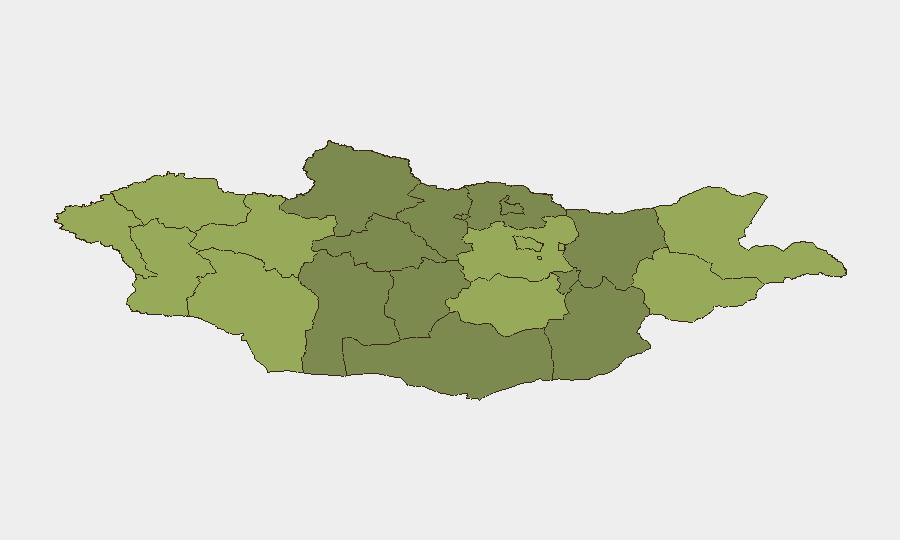
Situation Summary
Mongolia remains a low-threat environment globally (rank #123, composite score 10) with no tracked security incidents in the current reporting cycle. However, a nationwide fuel shortage persisting since early August continues to strain logistics, commerce, and emergency services nationwide, with no resolution expected before late August. Environmental hazards—particularly the 30,000-hectare grassland fire in Dornod Province (ignited 4 August) and ongoing water-incident fatalities—present elevated civil-protection demands. The security picture is stable but operationally constrained by resource scarcity.
Key Developments
- Nationwide fuel shortage (ongoing, peaked Aug. 10). All petrol stations nationwide operating under alternating odd/even license-plate sales windows, with a hard cap of MNT 50,000 per transaction. This measure continues to disrupt commercial transport, supply chains, and emergency-response capacity across all aimags.
- Russian emergency fuel shipment commitment (announced Aug. 11, Moscow Times). Moscow agreed to supply additional AI-92 gasoline and jet fuel to Mongolia by end of August, signaling bilateral energy coordination and partial relief timeline, though arrival and distribution timelines remain unconfirmed.
- U.S. Embassy fuel-shortage tracking (active as of Aug. 7). The embassy confirmed long queues at filling stations and documented the alternating-day fueling regime and purchase caps, indicating diplomatic awareness of supply-chain impact on foreign nationals and mission logistics.
- Grassland fire, Dornod Province (ignited Aug. 4, ongoing containment). Lightning-triggered fire has consumed approximately 30,000 hectares in eastern Mongolia's highest-risk region (Dornod, composite risk 58). Containment status and evacuation scope not yet updated in latest reporting.
- Water-incident fatalities, Capital region (through Aug. 4). Capital Emergency Management Agency reported six deaths from water incidents over a three-day window immediately preceding 4 August, with rescue operations active. Seasonal flooding hazard remains elevated in Ulaanbaatar and Töv.
Highest-Risk Areas
Dornod Province (risk 58) and Sükhbaatar (risk 55) dominate the sub-national ranking and are driving the composite threat score; both are border-adjacent regions in the east, where infrastructure gaps, remoteness, and seasonal environmental hazards compound operational risk. The grassland fire in Dornod has localized containment and evacuation demands. Ulaanbaatar (risk 45) ranks seventh nationally but remains the highest-risk urban center for foreign personnel due to concentration of assets and services; fuel scarcity there directly affects supply-chain resilience and emergency response. Western aimags (Uvs, Khovd, Bayan-Ölgii) show elevated risk likely driven by border-zone complexity and seasonal weather volatility.
How GeoBit Would Assist
Security teams would employ AOI Monitoring & Early Warning to track the Dornod fire perimeter and water-incident hotspots in real time via satellite and public-agency feeds, enabling duty-of-care teams to assess evacuation risk and supply-route viability. Economic & Trade and Routing & Network Analysis capabilities allow corporate logistics to model fuel-cap impacts on supply-chain continuity and calculate alternative transport corridors and timing. Intel Sweep and multi-language OSINT fusion would monitor Russian fuel-shipment progress and official Mongolian fuel-rationing policy updates to anticipate relief timelines and adjust personnel-movement windows.
7-Day Outlook
Fuel shortage will likely persist through mid-to-late August pending Russian shipment arrival; supply-dependent operations should assume continued purchase caps and queue delays. Grassland fire and water-incident hazards will remain seasonal baseline risks, with containment status dependent on weather patterns and emergency-response resource allocation. No new security or political instability signals are evident; the operational environment remains constrained by logistics, not conflict or crime.
Highest-Risk Areas — Ranked
| # | State / Region | Risk |
|---|---|---|
| 1 | Dornod | 58 |
| 2 | Sükhbaatar | 55 |
| 3 | Uvs | 52 |
| 4 | Khovd | 50 |
| 5 | Bayan-Ölgii | 48 |
| 6 | Govi-Altai | 46 |
| 7 | Ulaanbaatar | 45 |
| 8 | Zavkhan | 44 |
| 9 | Töv | 42 |
| 10 | Dundgovi | 40 |
| 11 | Darkhan-Uul | 38 |
| 12 | Ömnögovi | 37 |
Sources
Previous Daily Briefs
A new Mongolia brief is written every day — each with its own risk map and downloadable CSV. Here's the last week; use the calendar to go further back.
📅 Browse every day by calendar →
Highlighted days have a brief. Tap a day for that day's map & analysis, or “csv” for that day's dataset ($5).
Atlas — our AI intelligence desk — emails them this snapshot personally. Nothing else, no list.