Situation Summary
Nepal remains a low-to-moderate global security concern (rank #141; composite threat score 6) but faces acute localized political and labor-relations pressures as of early July 2026. Recent governance changes and federal-restructuring proposals have triggered political polarization and the early stages of civil-service labor organizing, with protest risk concentrated in Madhesh Province. No large-scale violence, armed conflict, or infrastructure attacks have been reported in the last 48 hours; the primary near-term threat is localized protest activity and potential labor disruption.
Key Developments
- Kathmandu, 3 July — Government of Nepal introduced stricter code of conduct for civil servants, including ban on personal social-media use during office hours. Civil-service unions and professional associations have begun organizing informal collective responses, with union-linked accounts warning of potential labor disputes and slowdown actions if implemented without negotiation.
- Janakpur / Madhesh Province, 3 July — Madhesh-based political parties publicly demanded clarity on Rastriya Swatantra Party (RSP) federal-restructuring proposal, characterizing it as a threat to Madhesh autonomy. Regional cadres and local activists called for peaceful demonstrations and potential road blockages (bandhs) in key urban centers (Janakpur, Birgunj) if the government does not clarify or amend the proposal.
- Kathmandu (national), 3 July — RSP governance changes and federal-structure debate escalated in social-media discourse, with party leaders and critics trading accusations. Activists and journalists flagged rising risk of polarized protest activity if proposals advance without broader consensus.
- Nationwide civil-service sector, 3 July — Union-linked X/Twitter accounts emphasized labor-relations risk; no strike actions have been initiated, but planning and organizing phase is active among professional associations.
- Information/Media space, 3 July — Nepali journalists and legal commentators raised concerns that new civil-service restrictions, combined with existing laws, could chill whistleblowing and reduce transparency in politically sensitive procurement and infrastructure-contract decisions.
Highest-Risk Areas
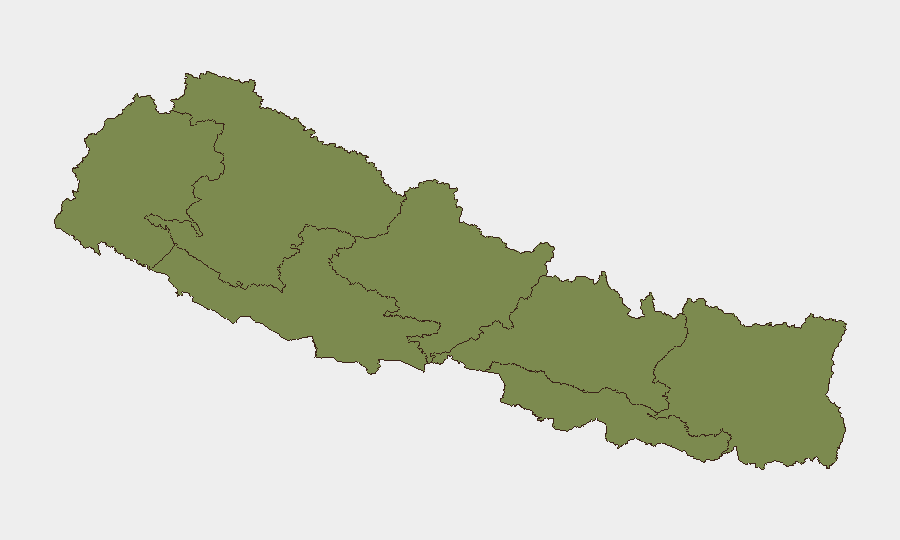
Madhesh Province (risk 30.6) and Bagamati Province (risk 31.8) account for the overwhelming majority of tracked security events and drive the national threat profile. Madhesh is the immediate flashpoint: federalism disputes, calls for localized protest, and road-blockage warnings concentrate risk in Janakpur and Birgunj. Bagamati (containing Kathmandu) reflects broader governance tensions, civil-service labor organizing, and political polarization at the national level. Together, these two provinces account for over 85% of Nepal's composite threat score; the remaining five provinces pose minimal security risk (scores 1.8–7.3).
How GeoBit Would Assist
Monitoring teams should deploy AOI Monitoring & Early Warning on Madhesh urban centers (Janakpur, Birgunj) and Kathmandu to track real-time protest formation and labor organizing. Intel Sweep, X/Twitter & Telegram OSINT, and sentiment analysis will provide 24–48-hour early warning of protest escalation, blockade announcements, and civil-service union coordination. Network & Actor Analysis would map political party, labor union, and activist leadership to anticipate mobilization patterns and blockade timing across the region.
7-Day Outlook
Protest risk will likely materialize within 7–10 days if the central government does not issue a public clarification on the federal-restructuring proposal. Civil-service labor organizing will remain in the planning phase unless formal implementation of social-media restrictions occurs without negotiation. Monitoring for blockade announcements (bandhs) in Madhesh and coordination signals between regional parties and unions will provide operational warning of disruption to road and commercial transport.
Highest-Risk Areas — Ranked
| # | State / Region | Risk |
|---|---|---|
| 1 | Madhesh Province | 31.8 |
| 2 | Bagamati Province | 30.6 |
| 3 | Gandaki Province | 7.3 |
| 4 | Lumbini Province | 5.1 |
| 5 | Karnali Province | 4 |
| 6 | Koshi Province | 2.9 |
| 7 | Sudurpashchim Province | 1.8 |
Sources
Previous Daily Briefs
A new Nepal brief is written every day — each with its own risk map and downloadable CSV. Here's the last week; use the calendar to go further back.
📅 Browse every day by calendar →
Highlighted days have a brief. Tap a day for that day's map & analysis, or “csv” for that day's dataset ($5).