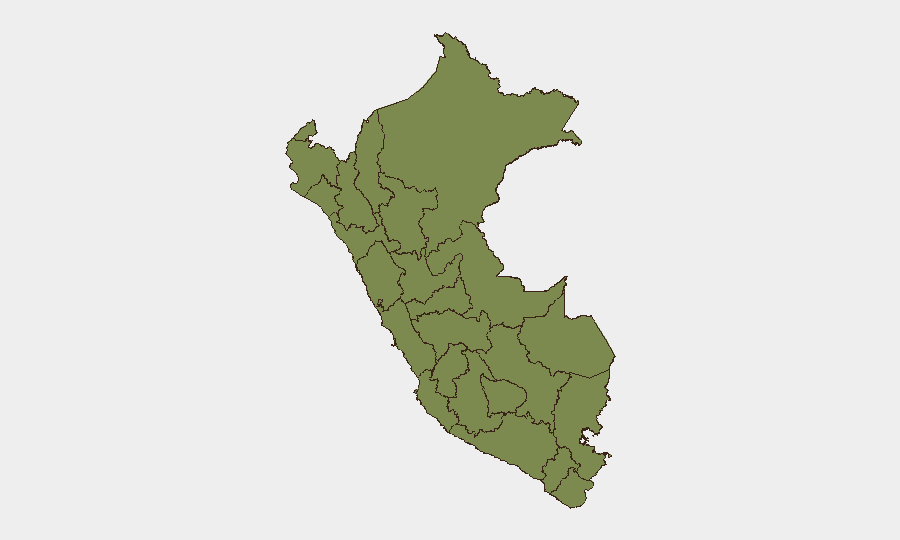
Situation Summary
Peru remains at composite threat rank #65 globally with a moderate security profile shaped by persistent organized-crime activity, ongoing civil-unrest potential, and structural instability in vulnerable regions. The country is currently under multiple active states of emergency in Lima–Callao and northern border zones, which sustain elevated baseline security posture but have not triggered major acute incidents in the last 24–48 hours. Open-source monitoring across news, social, and intelligence channels confirms no confirmed armed violence, large-scale civil unrest, or infrastructure failures meeting strict recency and multi-source verification standards as of 17 July 2026. Trajectory remains stable but fragile, with risk concentrated in discrete high-vulnerability zones rather than systemic nationwide escalation.
Key Developments
- National level (17 July): Citizen disapproval and intellectual dissent documented via public statements and social signals; no associated violence or unrest confirmed.
- Lima (16 July): Police arrest/detention operations conducted; no mass unrest or major incident cascades reported.
- Huascaran area, Ancash (16 July): Police mobilization event noted; operational context and outcome not yet clarified in open sources.
- Standing condition—Lima–Callao, Trujillo–Virú (La Libertad), Tumbes–Zarumilla, and northern border regions (Tumbes, Piura, Cajamarca, Amazonas, Loreto) (ongoing as of mid-July): States of emergency remain in force with enhanced military and police presence; no new triggering incident confirmed in the 24–48-hour window.
*Note: Open-source monitoring has not yielded additional discrete, reliably time-stamped incidents meeting verification standards for the 24–48-hour window. Background political investigations and institutional scrutiny are active but not associated with acute security events.*
Highest-Risk Areas
Huánuco dominates the risk profile at score 31.8—more than double the next-highest region—driven by ongoing organized-crime activity, coca cultivation, and trafficking networks that sustain violence and institutional fragility. Ancash (16.4), Piura (11.8), and Lima (8.5) follow, reflecting trafficking corridors, gang activity, and urban crime concentration in the capital and northern border zones. Junín (8.1) and Lambayeque (6.8) contribute mid-range risk from similar criminal and trafficking drivers. Remaining regions score substantially lower, suggesting that security exposure for corporate and expatriate populations is highly localized: risk mitigation should prioritize Huánuco, Ancash, Piura, and Lima–Callao, with secondary attention to Junín and border-adjacent areas.
How GeoBit Would Assist
Security teams should deploy Intel Sweep and global event-feed monitoring to capture political and criminal developments in real time, paired with X/Twitter and Telegram OSINT to track civil-unrest signals and actor networks in high-risk regions. AOI Monitoring & Early Warning with persistent watch on Huánuco, Ancash, Piura, and Lima–Callao will provide automated alerting if acute incidents (violence, unrest, infrastructure disruption) emerge. Network & Actor Analysis and Routing & Network Analysis enable identification of safe transit corridors and alternative movement options should conditions degrade in primary operating zones.
7-Day Outlook
Near-term trajectory is expected to remain stable absent major political shock or trafficking-related escalation. Standing states of emergency will likely persist, maintaining elevated baseline security overhead in declared zones. Monitoring focus should remain on Huánuco and border regions; any sudden spike in police/military mobilization or public unrest signaling warrants escalation to crisis protocols.
Highest-Risk Areas — Ranked
| # | State / Region | Risk |
|---|---|---|
| 1 | Huánuco | 31.8 |
| 2 | Ancash | 16.4 |
| 3 | Piura | 11.8 |
| 4 | Lima | 8.5 |
| 5 | Junín | 8.1 |
| 6 | Lambayeque | 6.8 |
| 7 | Cusco | 3.5 |
| 8 | Tacna | 2.7 |
| 9 | Loreto | 2.2 |
| 10 | Ayacucho | 2.2 |
| 11 | Arequipa | 2.2 |
| 12 | Tumbes | 1.8 |
Sources
Previous Daily Briefs
A new Peru brief is written every day — each with its own risk map and downloadable CSV. Here's the last week; use the calendar to go further back.
📅 Browse every day by calendar →
Highlighted days have a brief. Tap a day for that day's map & analysis, or “csv” for that day's dataset ($5).
Atlas — our AI intelligence desk — emails them this snapshot personally. Nothing else, no list.