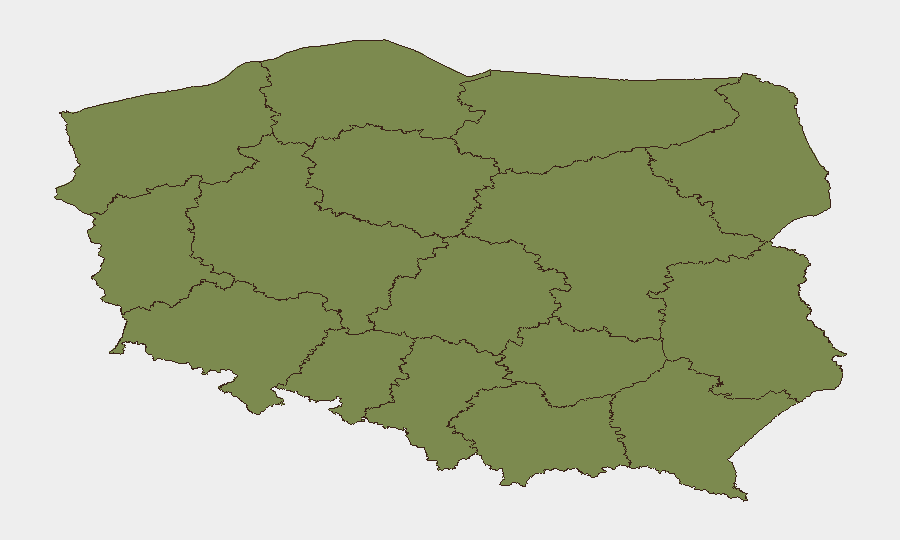
Situation Summary
Poland faces elevated but manageable security risk (global rank #125, composite score 6) driven primarily by a Russian cruise missile incursion on 30 July and ongoing regional tensions tied to the Ukraine conflict. The Kh-101 missile that penetrated Polish airspace near Lublin and impacted a rural area without casualties has triggered heightened NATO coordination and air-defense activation. While no civilian threat materialized, the incident underscores airspace vulnerability and has prompted emergency security mobilization, particularly in eastern border regions. Political and public reaction remains firm but measured.
Key Developments
- Tarnawa-Kolonia, Lublin Voivodeship – 30 July 0340 hrs (approx.)
An unidentified object assessed as a Russian Kh-101 cruise missile breached Polish airspace moving westward, was tracked briefly, then impacted a field ~80–100 km from the Ukrainian border, creating a ~10 m crater with no reported casualties.
- Lublin airspace and city – 30 July 0340 hrs
Air raid sirens were activated across Lublin and surrounding areas following detection of the missile trajectory; Polish Armed Forces Operational Command scrambled at least two F-16 fighters, a NATO A330 refueler, a Saab 340 AEW aircraft, and a Mi-24 helicopter in coordinated response.
- Lublin – 30 July (daytime)
Prime Minister Donald Tusk convened an emergency security meeting, visited the crash site, and publicly confirmed military analysis identifying the object as "in all probability" a Russian Kh-101 missile, while stressing no evidence of Polish targeting.
- Tarnawa-Kolonia area – 30 July–ongoing
Polish counter-terrorism and police units established a security cordon, launched formal investigation, and collected debris for technical analysis; prosecutors noted the missile carried significant explosive payload.
- NATO–Poland coordinated response – 30 July
NATO officials confirmed the missile struck Polish soil and reaffirmed alliance commitment to collective defense; integrated air and ground defenses remained activated throughout the region.
- Public and political statements – 31 July–1 August
Multiple public statements from Warsaw and population-level activity recorded; events logged as "disapprove" (Poland vs. Russia), worker/commander rejections, and population disapproval of authorities—signaling domestic political friction alongside security response.
Highest-Risk Areas
Masovian Voivodeship (Warsaw and surrounding region) dominates the risk ranking at 31.4—substantially higher than all others—reflecting concentration of national government, critical infrastructure, and sustained analyst attention. The four eastern and northeastern voivodeships (Warmian-Masurian, Pomeranian, Lubusz, Lublin) all register scores of 1.6–2.1 and carry heightened exposure to cross-border incidents, missile overflight, and military activity due to proximity to Ukraine and Belarus. The 30 July missile incident centered on Lublin Voivodeship, validating this geographic vulnerability and likely to sustain elevated monitoring there through the near term.
How GeoBit Would Assist
Security teams operating in Poland should deploy Area-of-Interest Monitoring & Early Warning on Masovian, Lublin, and Warmian-Masurian voivodeships to track airspace incursions, military movement, and protest activity with real-time alerting. Conflict & Military capabilities—including force structure, weapons tracking, and battle mapping tied to eastern Ukraine—provide granular intelligence on missile systems, NATO posture, and cross-border activity. OSINT fusion and multi-language event corroboration (drawing on X, Telegram, local news, and radio SIGINT) enable rapid confirmation of threats and clarification of intent, reducing false-alarm exposure and supporting duty-of-care decision-making.
7-Day Outlook
Eastern Poland will likely remain at elevated vigilance for airspace breaches and military activity; NATO presence and Polish air-defense posture should deter repetition but will not eliminate risk given ongoing Russian strike campaigns on Ukraine. Political and public sentiment will swing on follow-on incidents or statements; no immediate escalation is signaled, but border regions warrant continued monitoring through week of 5–9 August.
Highest-Risk Areas — Ranked
| # | State / Region | Risk |
|---|---|---|
| 1 | Masovian Voivodeship | 31.4 |
| 2 | Warmian-Masurian Voivodeship | 2.1 |
| 3 | Pomeranian Voivodeship | 2.1 |
| 4 | Łódź Voivodeship | 2.1 |
| 5 | Lubusz Voivodeship | 1.9 |
| 6 | Lublin Voivodeship | 1.6 |
| 7 | West Pomeranian Voivodeship | 1.6 |
| 8 | Subcarpathian Voivodeship | 1.4 |
| 9 | Podlaskie Voivodeship | 1.4 |
| 10 | Lower Silesian Voivodeship | 1.4 |
| 11 | Kuyavian-Pomeranian Voivodeship | 1.4 |
| 12 | Greater Poland Voivodeship | 1.4 |
Sources
Previous Daily Briefs
A new Poland brief is written every day — each with its own risk map and downloadable CSV. Here's the last week; use the calendar to go further back.
📅 Browse every day by calendar →
Highlighted days have a brief. Tap a day for that day's map & analysis, or “csv” for that day's dataset ($5).
Atlas — our AI intelligence desk — emails them this snapshot personally. Nothing else, no list.