Situation Summary
Saudi Arabia remains at moderate threat level (#103 globally, composite score 7) amid an acute escalation in cross-border missile and drone strikes originating from Yemen's Houthi movement and Iran-aligned actors. The past 48 hours have witnessed multiple coordinated attacks on Red Sea oil infrastructure, military installations, and civilian areas, with significant disruption to aviation and energy operations. Diplomatic tensions are simultaneously rising, evidenced by recent investigative actions and reduced relations with Iran and international bodies. The convergence of kinetic strikes, infrastructure targeting, and diplomatic friction signals a period of elevated operational risk.
Key Developments
- Jazan Province missile strike, 25 July (early morning): Houthis claimed a missile attack on Jazan city; AFP-verified video showed smoke over an Aramco refinery, with multiple explosions, fires, and power outages reported. Disruption to southern Saudi airfields forced aircraft diversions and returns.
- Yanbu Governorate multi-alert, 25 July (early morning): Saudi Civil Defense issued three successive alerts via the National Early Warning Platform warning of "potential danger." Unofficial reports described loud explosions; authorities later declared the threat passed with no confirmed casualties or damage.
- Jeddah and southern airport disruptions, 25 July: Flight tracking data and regional outlets confirmed temporary suspension and chaos at Jeddah Airport and southern airfields following the Jazan and Yanbu incidents; en-route flights to Riyadh diverted.
- Khamis Mushait Air Base alerts, 25 July (early morning): Regional media reported "massive explosions" at the southern air base; Saudi authorities have not publicly confirmed specific impact, but reports are consistent across multiple Arab outlets.
- Broader Red Sea oil infrastructure campaign, 24–25 July: Houthi and aligned media announced coordinated missile and drone strikes explicitly targeting Aramco facilities in Jazan and Yanbu; Saudi authorities claimed interceptions but have not publicly released damage assessments.
- Saudi airstrikes on Hodeidah, Yemen, 24 July (night): Reported approximately seven airstrikes on Hodeidah port and surrounding areas; Houthi retaliation into Saudi territory followed within hours, suggesting tit-for-tat escalation cycle.
- Diplomatic tensions with Iran and international bodies, 28–30 July: Recent events flagged include investigations by Saudi Arabia against IAEA and Iraq, reduced relations with Iran, and military-level threats, pointing to concurrent diplomatic friction.
Highest-Risk Areas
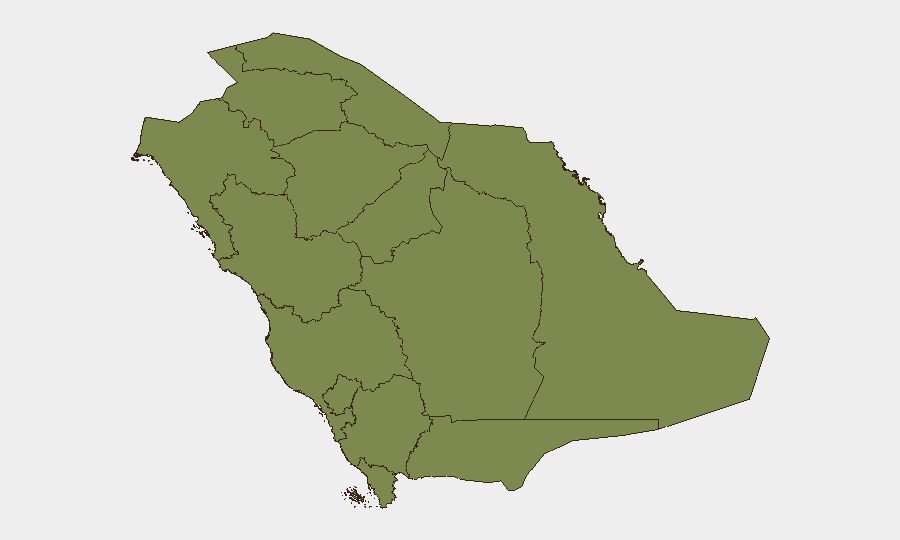
Riyadh Region dominates the risk ranking (34.8), driven by its concentration of government, corporate headquarters, and critical infrastructure; attacks on the capital carry cascading economic and political consequences. Medina Province (22.3) and Eastern Province (15.8) follow, with Eastern Province's oil and gas facilities, ports, and strategic position near Iran making it a persistent target for proxy actors. Jazan Province (8.5), though lower-ranked overall, has emerged as the current acute flashpoint due to Red Sea coastal exposure to Houthi missile and drone capabilities. The clustering of high-risk areas in the west and south reflects geographic vulnerability to maritime and air-launched threats from Yemen and Iran-aligned networks.
How GeoBit Would Assist
Intel Sweep and OSINT fusion would aggregate real-time missile/drone threat indicators from social media, Houthi and Iranian media channels, and regional flight-tracking data to detect attack preparation and timing. AOI Monitoring & Early Warning with persistent watch over Riyadh, Jazan, Yanbu, and Eastern Province oil facilities would provide corporate security teams with automated alerts on incident clustering and emerging patterns. Satellite & Imagery analysis combined with Maritime & Aviation tracking would verify infrastructure damage, assess operational recovery timelines, and monitor movement of hostile platforms in the Red Sea and Gulf regions.
7-Day Outlook
Escalation momentum favors continued Houthi and Iran-aligned strikes on Red Sea and Eastern Province energy infrastructure as tit-for-tat cycles with Saudi airstrikes persist. Aviation and port operations will likely remain periodically disrupted, and diplomatic channels may further deteriorate. Corporate duty-of-care teams should expect sustained elevated alerting across Red Sea zones and southern regions through early August.
Highest-Risk Areas — Ranked
| # | State / Region | Risk |
|---|---|---|
| 1 | Riyadh Region | 34.8 |
| 2 | Medina Province | 22.3 |
| 3 | Eastern Province | 15.8 |
| 4 | Jazan Province | 8.5 |
| 5 | Northern Borders Province | 4.8 |
| 6 | Makkah Region | 4.8 |
| 7 | Al-Bahah Province | 4.8 |
| 8 | 'Asir Province | 4.8 |
| 9 | Najran Region | 4.8 |
| 10 | Tabuk Province | 4.8 |
| 11 | Al Jawf Region | 4.8 |
| 12 | Ḥa'il Province | 4.8 |
Sources
Previous Daily Briefs
A new Saudi Arabia brief is written every day — each with its own risk map and downloadable CSV. Here's the last week; use the calendar to go further back.
📅 Browse every day by calendar →
Highlighted days have a brief. Tap a day for that day's map & analysis, or “csv” for that day's dataset ($5).
Atlas — our AI intelligence desk — emails them this snapshot personally. Nothing else, no list.