Situation Summary
South Korea remains at composite threat rank #99 globally with a score of 11, driven primarily by geopolitical tensions with North Korea, elevated cyber activity in the Asia-Pacific region, and localized security events. The past 48 hours have witnessed heightened diplomatic engagement, border-security incidents involving U.S. nationals, and a confirmed corporate data breach affecting legal-sector operations in Seoul. The threat environment is stable but conditionally elevated, with risk concentrated in Seoul and North Chungcheong; cyber threats pose an expanding operational risk to critical infrastructure and private-sector assets.
Key Developments
- Ganghwa Island, Incheon (June 24, 2026): South Korean authorities detained six U.S. citizens attempting to send humanitarian items (rice, Bibles) across the North Korean border via balloon; the incident underscores persistent cross-border tension and enforcement scrutiny in border zones.
- U.S. National Emergency Renewal (June 24, 2026, published; June 22 declaration): The U.S. formally renewed its national emergency declaration regarding North Korea, citing ongoing nuclear and missile threats; this reinforces elevated political-risk and security-operations posture affecting the peninsula.
- U.S. Diplomatic Travel (June 24–July 1, 2026): Assistant Secretary Johnson initiated high-level security consultations in Seoul and the region, signaling intensified diplomatic engagement on Korean Peninsula stability.
- Regional Cyber-Threat Surge (June 24, 2026): INTERPOL reported heightened ransomware, phishing, and DDoS attack activity across Asia-Pacific, including South Korea; targets include infrastructure and commercial entities.
- Lee International Data Breach (Seoul, June 24, 2026): A major law firm suffered a confirmed breach by Qilin threat actors, exposing confidential corporate and legal data; the incident reflects elevated cyber-risk to professional-services and information-security.
- Hyundai/Kia Cybersecurity Initiative (Seoul, June 24, 2026): Hyundai Motor and Kia announced a cross-border cybersecurity working group focused on connected and electric vehicle security, responding to growing threats to automotive digital infrastructure.
Highest-Risk Areas
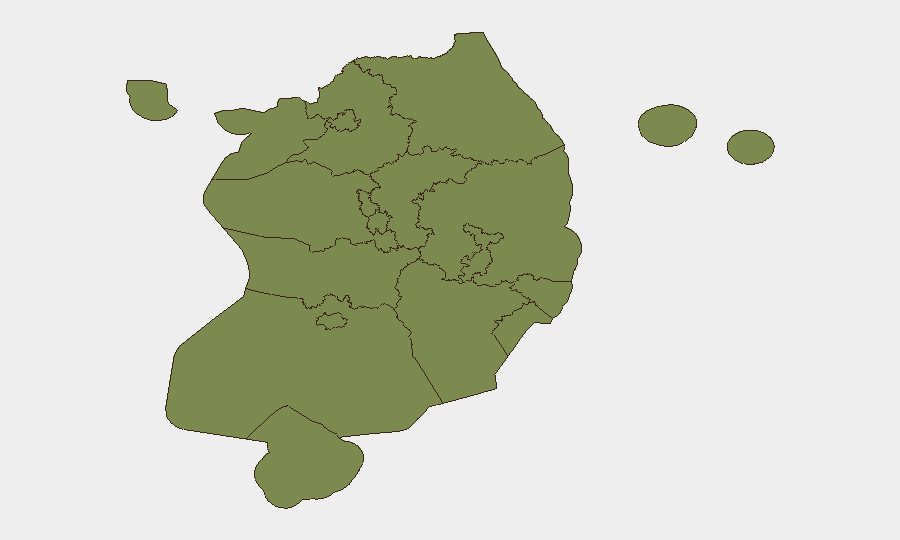
Seoul and North Chungcheong account for the majority of tracked risk (scores 31.9 and 29.1 respectively), driven by geopolitical sensitivity, diplomatic activity, cyber concentration, and proximity to inter-Korean border zones. Busan ranks third (8.3) as a major port and logistics hub vulnerable to regional instability. The remaining eight regions carry significantly lower risk scores (≤4.3), reflecting lower population density, reduced critical infrastructure, and distance from border areas. Organizations with assets in Seoul should prioritize cyber resilience and monitor border-related diplomatic developments; Incheon and Ganghwa Island present specific friction points for border-adjacent operations.
How GeoBit Would Assist
Security teams should deploy Intel Sweep and OSINT fusion to track ongoing U.S.–North Korea diplomatic and military signals, combined with persistent AOI Monitoring on Ganghwa Island and Incheon border zones to detect future cross-border incidents. Cyber threat intelligence and network analysis capabilities enable monitoring of ransomware campaigns and threat-actor activity targeting South Korean infrastructure and private sector. Sentiment and temporal analysis on Korean-language media and messaging platforms (Telegram, X) provide early warning of political instability or security escalation.
7-Day Outlook
Diplomatic engagement will likely intensify as Assistant Secretary Johnson conducts consultations; expect continued public statements and policy reviews from Seoul and Washington. Cyber threats will remain elevated across the region—organizations should anticipate increased targeting of critical infrastructure and professional services. Border-security enforcement is expected to remain heightened; cross-border incidents may continue to trigger localized detention and investigation activity.
Highest-Risk Areas — Ranked
| # | State / Region | Risk |
|---|---|---|
| 1 | Seoul | 31.9 |
| 2 | North Chungcheong | 29.1 |
| 3 | Busan | 8.3 |
| 4 | Gangwon State | 4.3 |
| 5 | Jeonbuk State | 2.7 |
| 6 | South Gyeongsang | 2.7 |
| 7 | Jeju | 2.3 |
| 8 | Gyeonggi | 2.1 |
| 9 | South Jeolla | 2.1 |
| 10 | Incheon | 1.9 |
| 11 | South Chungcheong | 1.9 |
| 12 | Sejong | 1.9 |
Sources
Previous Daily Briefs
A new South Korea brief is written every day — each with its own risk map and downloadable CSV. Here's the last week; use the calendar to go further back.
📅 Browse every day by calendar →
Highlighted days have a brief. Tap a day for that day's map & analysis, or “csv” for that day's dataset ($5).