Situation Summary
Sri Lanka's security environment remains moderate overall (global rank #127, composite threat score 8), but shows acute localized volatility concentrated in the Western Province (Colombo metro area) and emerging governance instability affecting Uva Province. The last 48 hours have recorded three confirmed shooting incidents (Palliyawatta, Piliyandala, Dehiwala) within or near the capital, reflecting persistent organized gun crime rather than sectarian or political violence. Concurrent institutional tensions among senior judiciary, police, and military factions—signaled by conflicting public statements and investigations—create secondary risk to rule-of-law predictability and enforcement consistency. Dengue outbreak pressures (40,000+ cases, sustained fatalities) add strain to health infrastructure and mobility constraints.
Key Developments
- Palliyawatta function-hall shooting (23 July, Western Province). Armed gunman fired on a child's birthday party near Mattakkuliya Bridge in Wattala Police Division; shooter fled. Indicates active gun crime in mixed residential/industrial corridor north of Colombo.
- Piliyandala shooting (within past 24 hours, Western Province). Police headquarters confirmed one shooting incident in Piliyandala Police Division (outer Colombo); investigation active, motive and casualty details pending.
- Dehiwala shooting (within past 24 hours, Western Province). Second confirmed shooting in Dehiwala Police Division (coastal area immediately south of Colombo city); part of 18 shootings nationally in 2026 (13 killed, 10 injured to date).
- Governance friction—Chief Justice, Justice Ministry, Police, Military (last 48 hours, national level with Uva Province focus). Multiple high-level institutional actors issued conflicting public statements and held demonstrations reflecting deep elite fractures. Raises uncertainty around judicial independence, enforcement impartiality, and protest-response predictability.
- Gang arrest operation (24 July). Military/police conducted arrests tied to gang activity; details limited but consistent with ongoing organized-crime enforcement.
- Dengue case and fatality surge (last 24–48 hours, nationwide, 51% concentrated in Western Province). Health system reports new infections and deaths in latest 24–48 hour cycle; vector-control operations and travel disruptions likely in high-incidence areas.
- Police enforcement posture escalation. National police headquarters released updated 2026 shooting statistics and announced continued investigations; checkpoints and stop-and-search activity likely to increase in Piliyandala, Dehiwala, and Wattala divisions.
Highest-Risk Areas
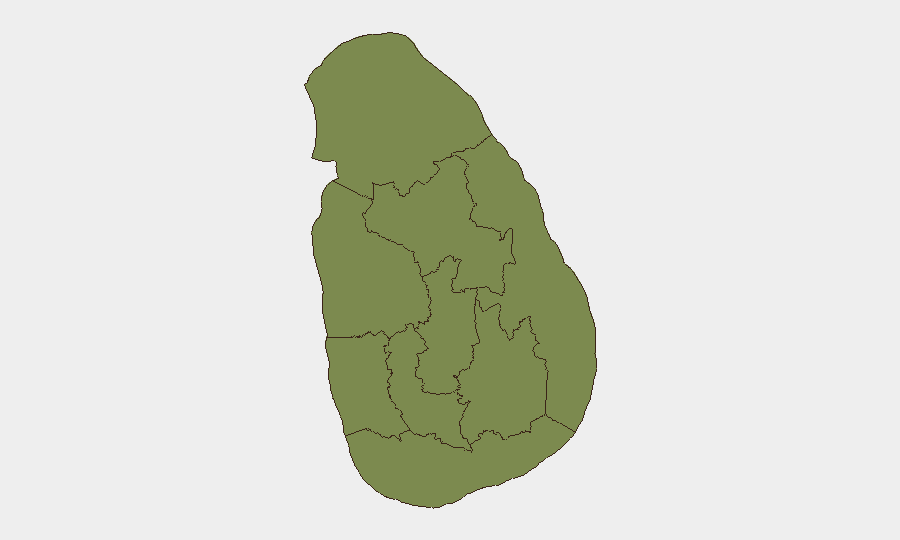
Western Province dominates the risk profile (composite score 35.2), driven by three factors: Colombo's concentration of political, financial, and security institutions; active gun-crime incidents in the last 48 hours; and dengue's highest case load. Sabaragamuwa, North Western, and Eastern provinces show moderate baseline risk (6–7 range) with no acute signals in the last 48 hours. Uva Province has emerged as a secondary flash point due to governance tensions and institutional friction among elites, reflected in recent high-level public disputes and investigations. Risk outside the Western Province perimeter remains contained unless governance fractures deepen or prison-related violence escalates.
How GeoBit Would Assist
Intel Sweep and OSINT fusion would monitor police statements, judicial filings, and military communications to track rule-of-law shifts and enforcement pattern changes. AOI monitoring and early-warning alerts on Colombo's Wattala, Piliyandala, and Dehiwala divisions would flag shooting clusters and gang activity in near-real time. Entity and network analysis would map relationships among police, military, and judiciary factions to anticipate enforcement inconsistency or protest-response volatility. Environmental and health data would correlate dengue case surges with hospital capacity and travel constraints affecting corporate mobility.
7-Day Outlook
Gun violence in the Colombo metro is expected to remain elevated but non-escalatory absent major gang turf confrontation or political incitement. Institutional tensions will likely persist and intermittently surface via public statements or investigative actions; no immediate threat to regime stability is evident. Dengue pressure will sustain and may tighten travel restrictions and increase health-facility congestion through early August.
Highest-Risk Areas — Ranked
| # | State / Region | Risk |
|---|---|---|
| 1 | Western Province | 35.2 |
| 2 | Sabaragamuwa Province | 7 |
| 3 | North Western Province | 6.4 |
| 4 | Eastern Province | 6.1 |
| 5 | Northern Province | 5.8 |
| 6 | Central Province | 5.5 |
| 7 | North Central Province | 5.2 |
| 8 | Southern Province | 5.2 |
| 9 | Uva Province | 5.2 |
Sources
Previous Daily Briefs
A new Sri Lanka brief is written every day — each with its own risk map and downloadable CSV. Here's the last week; use the calendar to go further back.
📅 Browse every day by calendar →
Highlighted days have a brief. Tap a day for that day's map & analysis, or “csv” for that day's dataset ($5).
Atlas — our AI intelligence desk — emails them this snapshot personally. Nothing else, no list.