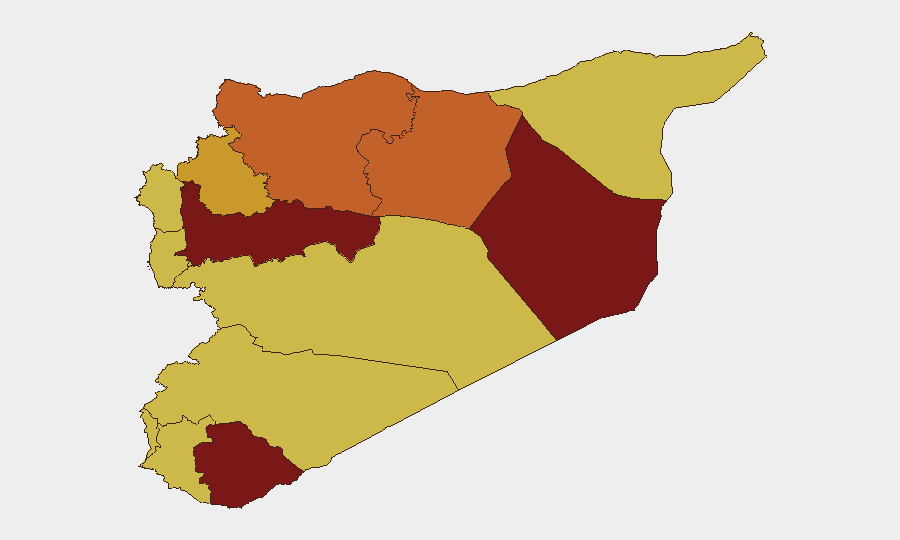
Situation Summary
Syria remains a tier-1 global security risk (rank #3, composite score 100) with active hostilities, terrorism, and regional spillover across multiple governorates. The past 48 hours have seen continued conventional military operations, counter-terrorism sweeps by Syrian authorities, cross-border incursions, and movement restrictions in the south—reflecting a complex, fragmented threat environment with no signs of imminent de-escalation. UK and international travel advisories remain firm against all travel due to unpredictable conditions and persistent terrorist attack potential.
Key Developments
- Nationwide – 25 June 2026 (UK FCDO advisory update): UK Foreign Office reaffirmed travel ban against Syria citing "unpredictable security conditions and threat of terrorist attacks," with explicit warning that attacks could resume at short notice. Reflects international assessment of sustained instability and regional spillover risk.
- Multiple governorates – late June 2026 (hostilities & insecurity): Active hostilities and insecurity reported across Aleppo, Deir ez-Zor, Hama, Homs, Latakia, Quneitra, Rural Damascus, and Tartous, including shelling, small-arms fire, and explosive events affecting civilian movement and infrastructure access.
- Southern Syria (Quneitra & western Daraa) – ongoing through 25 June 2026: Internal Security forces maintain two-tier security cordon around Quneitra border strip with checkpoints extending into western Daraa, restricting civilian movement and cross-border trade to prevent Israeli-response triggers.
- Golan Heights separation zone – near-daily through June 2026: UN reporting confirms ongoing Israeli military activity in southern Syria, including near-daily incursions, temporary checkpoints, civilian detentions, and restrictions on agricultural land access. Some detainees released after IDF interrogation; others remain in custody, prompting local protests.
- Raqqa city – 15 June 2026 (ISIL attack): ISIL attacked internal security facility in Raqqa, killing one security officer and wounding others. Cited in late-June UN briefings as indicator of live militant threat and ongoing security operations in Raqqa.
- Rural Damascus – 16 June 2026 (ISIL attack): ISIL attacked target in rural Damascus, severely injuring judicial official. Underlines elevated risk to governance and judicial infrastructure in Damascus countryside with ongoing security sweeps expected.
- Counter-terrorism operations – March–June 2026 (reported through 25 June): Syrian authorities report 230+ arrests over past three months, dismantling of seven Da'esh-linked cells, and weapons seizures across multiple governorates (Raqqa, rural Damascus prominent). Operations indicate elevated security activity and elevated ISIL retaliation risk.
- Syrian military operations – 25 June 2026 (GEOBIT event signal): Conventional military operations ongoing against Islamic State elements, with public statements from Syrian Home Affairs Ministry (25 June). Reflects sustained counter-terrorism pressure.
Highest-Risk Areas
Deir ez-Zor (risk 100) remains the single highest-risk governorate, followed by Hama (93.1) and Damascus (85), driven by active ISIL networks, Syrian counter-terrorism operations, and frequent armed clashes. The southern tier—Quneitra, Daraa, and the Golan separation zone—faces compounded risk from Israeli military activity, Syrian security cordons, and civilian detention operations. Rural Damascus and Raqqa are specific hotspots for ISIL activity and government counter-operations, elevating judicial and security infrastructure targeting. Lattakia, Tartus, and Aleppo face ongoing hostilities with shelling and small-arms fire affecting civilian access and movement.
How GeoBit Would Assist
Corporate security teams with personnel or assets in Syria should deploy AOI Monitoring & Early Warning on high-risk governorates (Deir ez-Zor, Hama, Damascus, Raqqa, rural Damascus) for persistent alerting on new ISIL activity, security operations, and cross-border incursions. Routing & Network Analysis can identify safe corridor alternatives and movement windows in southern Syria given checkpoint density and Israeli activity. Conflict & Military tracking coupled with Intel Sweep (X/Telegram OSINT, multi-language feeds) provides real-time visibility on counter-terrorism operations and retaliation risk.
7-Day Outlook
No imminent de-escalation is forecast. Counter-terrorism operations will likely sustain or intensify, with elevated ISIL retaliation risk particularly in Raqqa, rural Damascus, and Deir ez-Zor. Southern Syria will remain under heightened security and movement restrictions due to Israeli activity and internal Syrian cordons. Regional volatility and terrorism threat will persist at current levels.
Highest-Risk Areas — Ranked
| # | State / Region | Risk |
|---|---|---|
| 1 | Deir ez-Zor Governorate | 100 |
| 2 | Hama Governorate | 93.1 |
| 3 | Damascus Governorate | 85 |
| 4 | As-Suweida Governorate | 80 |
| 5 | Aleppo Governorate | 75 |
| 6 | Ar-Raqqa Governorate | 75 |
| 7 | Idleb Governorate | 72.1 |
| 8 | Lattakia Governorate | 70.4 |
| 9 | Tartus Governorate | 70.4 |
| 10 | UNDOF | 70 |
| 11 | Al-Quneitra Governorate | 70 |
| 12 | Dar'a Governorate | 70 |
Sources
Previous Daily Briefs
A new Syria brief is written every day — each with its own risk map and downloadable CSV. Here's the last week; use the calendar to go further back.
📅 Browse every day by calendar →
Highlighted days have a brief. Tap a day for that day's map & analysis, or “csv” for that day's dataset ($5).