Situation Summary
Tajikistan remains at moderate composite threat level (#63 globally, score 20) with fragmented but persistent risks in governance, border security, and subnational stability. Two arrest/detention events were flagged on 2026-07-07—involving a journalist and residents—though open-source detail and timing confirmation remain limited. The country's baseline risk profile reflects structural vulnerabilities: political repression of opposition figures, porous Afghan border exposure, and acute instability in Gorno-Badakhshan and Khatlon regions. No major new incidents have been confirmed in the last 24–48 hours from credible time-stamped sources.
Key Developments
- Dushanbe, 2026-07-07 (reported): Journalist arrest/detention incident flagged; specific details and location remain unconfirmed from open sources. Recommend corroboration via Telegram/X OSINT.
- Tajikistan (unspecified), 2026-07-07 (reported): Resident detention incident flagged in brief alert data; location, cause, and affected numbers not yet clarified in available reporting.
- Note on data confidence: No additional discrete security events, conflict activity, crime incidents, or infrastructure failures have been independently verified in the last 24–48 hours. Older material (e.g., the June 20 deportation of opposition activist Boboev) remains relevant for political-risk context but does not constitute a current development.
Highest-Risk Areas
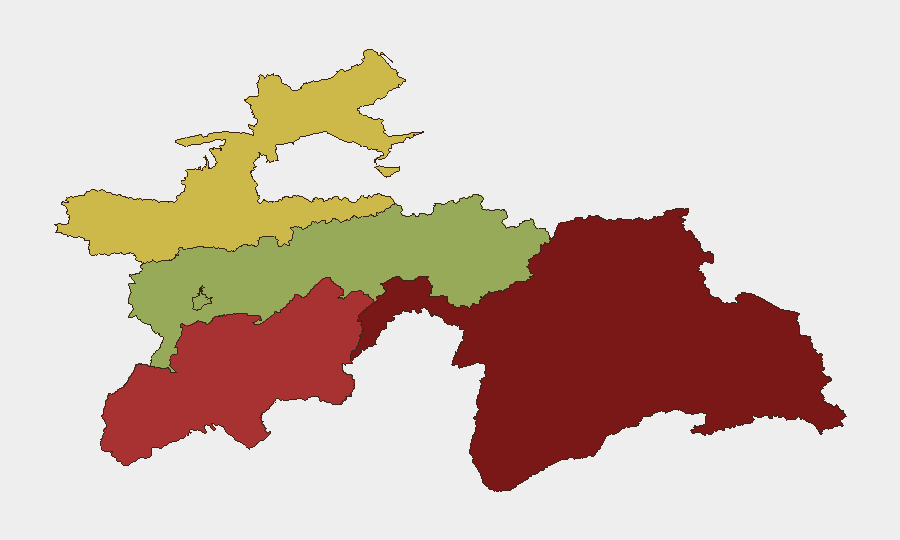
Gorno-Badakhshan Autonomous Region (risk 92) and Khatlon Region (risk 78) drive the country's subnational threat profile, with Sughd Region (risk 65) as a secondary concern. Gorno-Badakhshan's extreme rating reflects its geographic isolation, limited state capacity, cross-border smuggling networks, and proximity to Afghan conflict spillover; Khatlon faces similar Afghan-border vulnerabilities plus organized-crime activity and economic fragility. Dushanbe (risk 42), while lower-risk than border regions, remains the political-repression and detention focal point. Security operations and personnel movement should prioritize avoidance or heightened protocols in the top two regions.
How GeoBit Would Assist
Area-of-Interest Monitoring & Early Warning with persistent watch on Gorno-Badakhshan, Khatlon, and Dushanbe would generate real-time alerting on conflict, border incursions, or security sweeps. Intel Sweep and multi-language OSINT fusion (X/Twitter, Telegram, local media) enable rapid corroboration and attribution of arrest/detention events and opposition figures at risk. Conflict & Military battle mapping and satellite/imagery analysis would provide early warning of border-security escalation or military repositioning near the Afghan frontier.
7-Day Outlook
Near-term risk trajectory is likely stable but fragile. The July 7 arrest signals continued political-security operations; opposition monitoring and regime-stability watch should remain active. Afghan border volatility remains the primary wildcard—any resumption of cross-border military activity or refugee surge would rapidly elevate Khatlon and Gorno-Badakhshan risk. Personnel in Dushanbe should maintain routine duty-of-care vigilance; those in southern and eastern regions should confirm security protocols and maintain communications redundancy.
Highest-Risk Areas — Ranked
| # | State / Region | Risk |
|---|---|---|
| 1 | Gorno-Badakhshan Autonomous Region | 92 |
| 2 | Khatlon Region | 78 |
| 3 | Sughd Region | 65 |
| 4 | Districts of Republican Subordination | 58 |
| 5 | Dushanbe | 42 |
Sources
Previous Daily Briefs
A new Tajikistan brief is written every day — each with its own risk map and downloadable CSV. Here's the last week; use the calendar to go further back.
📅 Browse every day by calendar →
Highlighted days have a brief. Tap a day for that day's map & analysis, or “csv” for that day's dataset ($5).
Atlas — our AI intelligence desk — emails them this snapshot personally. Nothing else, no list.