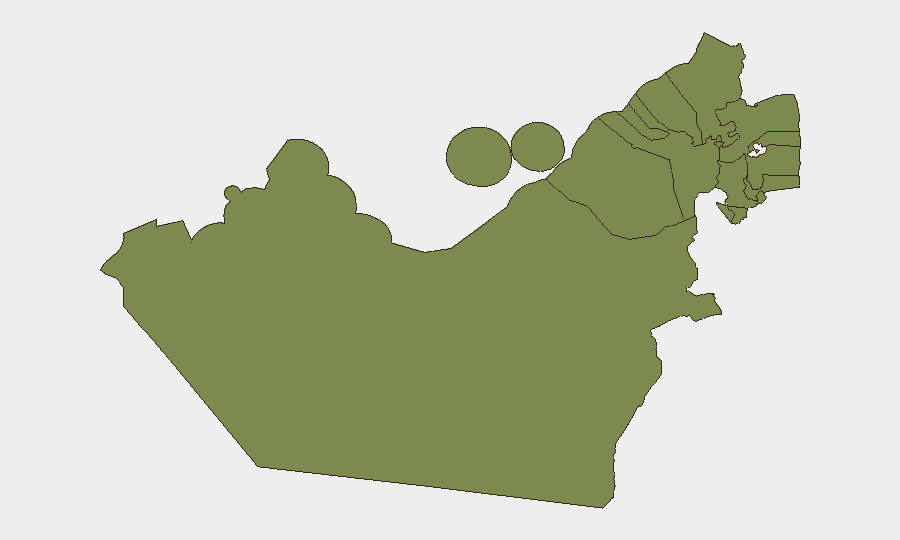
Situation Summary
The United Arab Emirates remains stable internally, with no verified new security incidents reported in Dubai, Abu Dhabi, or other emirates over the past 24–48 hours. Regional tensions related to ongoing Iran–US conflict dynamics have elevated air-defence posture and public vigilance, with recent missile and drone activity documented in neighboring Bahrain and Kuwait; however, this activity has not translated into confirmed fresh attacks on UAE territory during this reporting window. Overall, the composite threat picture for the UAE (rank #57 globally) remains manageable, though regional geopolitical risk warrants continued monitoring of potential spill-over.
Key Developments
- UAE (nationwide) – 1–2 July 2026: Official sources and mainstream media report conditions as calm and stable across Dubai and the emirates, with normal road conditions, routine government operations, and no reported civil unrest or major crime incidents.[2][6][10]
- UAE (diplomatic) – 2 July 2026: The UAE government issued formal condemnation of Iran's renewed missile and drone attacks on Bahrain and Kuwait, reaffirming that primary kinetic activity in the past 24–48 hours remains *outside* UAE territory but underscores heightened regional volatility.[7][9]
- UAE (air-defence posture) – 1–2 July 2026: Social and official-aligned accounts report UAE air-defence systems on elevated alert in response to regional missile and drone activity; however, no new interceptions or impacts on UAE soil have been independently confirmed in this specific timeframe.[5]
- Dubai – 1–2 July 2026: Government of Dubai and Dubai Media Office continue promotion of routine summer work initiatives (e.g., "Our Flexible Summer 2026" programme), signalling no disruption to normal governance or business operations.[6]
- UAE (travel) – 1–2 July 2026: Official announcements confirm resumption of UAE nationals' travel to Lebanon (effective 29 June), consistent with low immediate internal disruption and normal diplomatic/consular activity.[6]
Highest-Risk Areas
Dubai alone accounts for the majority of UAE risk (31.8 of 35 composite points), driven by its status as the country's primary commercial, financial, and aviation hub, concentration of foreign nationals and multinational assets, and exposure to regional spillover via air and maritime vectors. Abu Dhabi Emirate registers the second-highest risk (15.7), reflecting its role as the capital, energy infrastructure, and seat of federal authority. The remaining five emirates (Sharjah, Ajman, Ras al-Khaimah, Fujairah, Umm al-Quwain) carry minimal sub-national risk signals (1.8 each), though Fujairah's proximity to the Strait of Hormuz and oil infrastructure warrants monitoring in the event of regional escalation.
How GeoBit Would Assist
Security and risk teams should employ AOI Monitoring & Early Warning to establish persistent watches over Dubai's critical infrastructure zones, airports, and port facilities, with alert thresholds calibrated to regional event patterns. Intel Sweep and multi-language OSINT fusion enable continuous correlation of official UAE statements, social-media sentiment, and independent conflict reporting to distinguish genuine new incidents from contextual background or unconfirmed claims. Maritime & Aviation tracking and GIS & Spatial Analysis provide real-time visibility of shipping routes, aircraft movements, and strategic industrial sites (EGA, Habshan complex, Fujairah oil zone) that face heightened exposure to regional military activity.
7-Day Outlook
The UAE is likely to maintain current internal stability provided regional Iran–US tensions do not escalate dramatically. Heightened air-defence vigilance and periodic diplomatic responses are expected. Any material shift in threat posture will depend on developments outside UAE borders (Bahrain, Kuwait, broader Gulf dynamics) rather than domestic instability, though corporate and expatriate populations should remain alert to secondary effects (flight disruptions, insurance/supply-chain changes, temporary mobility constraints).
Highest-Risk Areas — Ranked
| # | State / Region | Risk |
|---|---|---|
| 1 | Dubai | 31.8 |
| 2 | Abu Dhabi Emirate | 15.7 |
| 3 | Sharjah Emirate | 1.8 |
| 4 | Ajman Emirate | 1.8 |
| 5 | Ras al-Khaimah | 1.8 |
| 6 | Fujairah Emirate | 1.8 |
| 7 | Umm al-Quwain | 1.8 |
Sources
Previous Daily Briefs
A new United Arab Emirates brief is written every day — each with its own risk map and downloadable CSV. Here's the last week; use the calendar to go further back.
📅 Browse every day by calendar →
Highlighted days have a brief. Tap a day for that day's map & analysis, or “csv” for that day's dataset ($5).