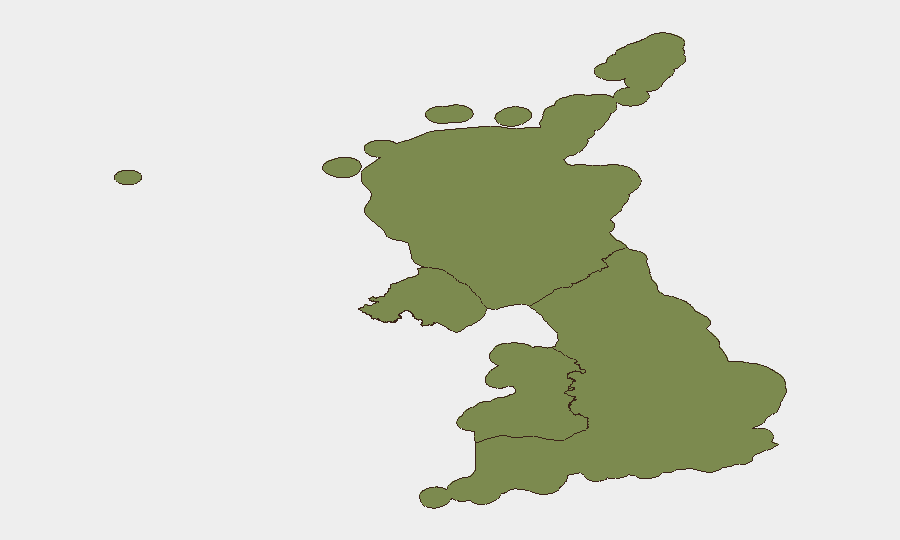
Situation Summary
The United Kingdom faces a composite threat level of 4 (global rank #110), with 309 tracked events indicating low-to-moderate aggregate risk nationally. However, concentrated incidents across England—particularly mass-casualty events, cyber breaches, and active security investigations—have driven significant localized volatility in the last 48 hours. The country remains stable at strategic level, but operational risk to corporate assets and personnel in major urban centers (London, Merseyside) has elevated sharply due to a cluster of violent crime, vehicle-as-weapon incidents, and infrastructure disruption.
Key Developments
- Liverpool, Merseyside – 28 July 2026 – Vehicle-into-crowd incident: A car drove into parade crowds, injuring at least 109 people with multiple serious injuries. Merseyside Police continue investigation into motive (deliberate vs. dangerous driving); incident remains open and circumstances evolving.
- Croydon, south London – 28–29 July 2026 – Fatal stabbing: Metropolitan Police launched a murder investigation following a fatal stabbing of a male in his 20s; case reflects broader knife-crime trends in London and remains under active investigation.
- London central – 27–28 July 2026 – Dual mass protests: Tens of thousands attended rival protests over Middle East/foreign-policy issues; Metropolitan Police deployed ~4,000 officers, deployed facial recognition, and made dozens of arrests; events described as largely peaceful with pockets of disorder.
- North-west London – 28–29 July 2026 – National Security Act searches: Met Police conducted searches at two residential addresses in connection with an active National Security Act investigation (likely foreign interference/espionage); limited public detail released.
- England (national) – Late July 2026 – Department for Education cyber breach: Approximately 607,000 records (phone numbers, email addresses) from Turing Scheme portal and DfE helpdesk accessed; National Crime Agency cyber unit engaged; no banking data compromised; direct risk to individuals assessed as low.
- Golders Green, north-west London – 28 July 2026 – Large fire near kosher supermarket: Fire incident prompted significant London Fire Brigade response and area cordon; police determined cause is not suspicious, reducing hate-crime or arson concern but causing local disruption.
- A13, Newham, east London – 27–28 July 2026 – Fatal traffic collision: Serious crash resulted in two deaths and one 16-year-old in critical condition; ongoing investigation and temporary traffic disruption on key arterial route.
Highest-Risk Areas
England dominates the sub-national risk ranking (31.4) and accounts for the vast majority of tracked events and recent incidents. London and Merseyside have emerged as acute flashpoints within the last 48 hours, with mass-casualty events, active homicide investigations, large public gatherings under police watch, and security service activity (NSA searches) concentrated in these zones. Scotland (2.2), Wales (1.9), and Northern Ireland (1.4) show substantially lower risk profiles and minimal recent event clustering, allowing corporate teams to prioritize mitigation in the south-east and north-west England urban corridors.
How GeoBit Would Assist
Corporate security and duty-of-care teams should deploy AOI Monitoring & Early Warning on high-footfall London and Merseyside locations to alert to emerging protests, emergencies, or incident clustering. OSINT fusion & corroboration (X/Twitter, Telegram, local news feeds) and sentiment & temporal analysis will track public mood and potential secondary incidents around the recent knife-crime and vehicle incidents. Routing & Network Analysis can provide real-time alternative travel planning for personnel in affected areas (A13, parade routes, protest zones).
7-Day Outlook
The operational threat environment is likely to remain elevated across England over the next 7 days as police investigations into the Liverpool vehicle incident and Croydon stabbing continue, potentially generating secondary public-order or media-driven activity. Cyber risk remains diffuse but material following the DfE breach; organizations handling education sector data or portal integrations should monitor for downstream exploitation. No strategic-level escalation is forecast, but tactical vigilance in London and Merseyside corridors is warranted.
Highest-Risk Areas — Ranked
| # | State / Region | Risk |
|---|---|---|
| 1 | England | 31.4 |
| 2 | Scotland | 2.2 |
| 3 | Wales | 1.9 |
| 4 | Northern Ireland | 1.4 |
Sources
Previous Daily Briefs
A new United Kingdom brief is written every day — each with its own risk map and downloadable CSV. Here's the last week; use the calendar to go further back.
📅 Browse every day by calendar →
Highlighted days have a brief. Tap a day for that day's map & analysis, or “csv” for that day's dataset ($5).
Atlas — our AI intelligence desk — emails them this snapshot personally. Nothing else, no list.