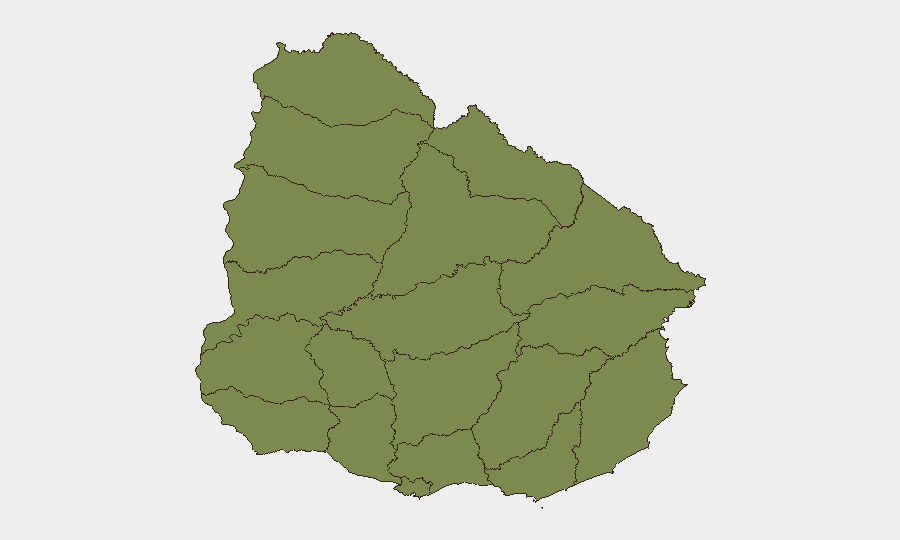
Situation Summary
Uruguay maintains a stable, low-threat security environment with no independently corroborated acute incidents—terrorism, civil unrest, or major crime spikes—reported in the past 48 hours. The country ranks 174th globally (composite threat score 4) and continues routine law-enforcement operations without emergency-level escalation. Government activity centers on institutional crime-fighting measures (announced National Army vehicle deployment in Montevideo, ongoing transnational organized crime cooperation with Chile) rather than crisis response. Near-term trajectory remains stable absent new triggering events.
Key Developments
- Montevideo, 2026-07-03 to 2026-07-05: Government announced imminent deployment of National Army Mamba MK-7 armored vehicles under police command in higher-crime neighborhoods as a policy-driven crime initiative, not a response to an acute incident. Deployment timing remains fluid.
- National level, 2026-07-03 to 2026-07-05: Uruguay and Chile formalized deepened cooperation against transnational organized crime, including intelligence sharing and coordinated border security—continuation of institutional bilateral frameworks, not tied to a specific recent event.
- National level, 2026-07-03 to 2026-07-05: Geobit event signals recorded routine public statements by police and government entities, administrative sanctions in school settings, and diplomatic statements regarding Venezuela; none constitute security incidents or operational threats.
- Durazno department, through 2026-07-05: Elevated composite risk score (31.4 nationally) persists as baseline; no new acute developments or escalation reported in the past 48 hours. Risk remains structural rather than event-driven.
Note: Open-source and monitoring data confirm absence of verified acute-incident activity in Uruguay in the last 24–48 hours. No civil unrest, infrastructure disruption, organized-crime violence spikes, or terrorism-related activity is independently corroborated in the timeframe specified.
Highest-Risk Areas
Durazno department drives the national risk profile significantly (composite score 31.4 vs. 4.0 nationally), with Cerro Largo secondary (7.0). All other departments cluster at baseline (1.4). Durazno's elevated score reflects structural vulnerabilities—organized-crime transit corridors, transnational smuggling activity, and socioeconomic conditions—rather than acute recent events. Cerro Largo similarly reflects persistent cross-border and contraband pressures. Remaining departments present minimal differentiated risk and align with Uruguay's overall stable posture. Corporate teams with operations in Durazno should maintain heightened situational awareness and liaison protocols; elsewhere in Uruguay, standard duty-of-care practices suffice.
How GeoBit Would Assist
Security teams should deploy AOI Monitoring & Early Warning on Durazno and Cerro Largo departments to detect emerging crime-network activity or trafficking shifts before operational impact. Network & Actor Analysis would map organized-crime and smuggling networks active in these corridors to support supply-chain and personnel-routing decisions. OSINT Fusion & Corroboration across news wires, social media (X/Telegram), and radio SIGINT ensures corporate teams receive verified threat intelligence rather than rumor, critical given low baseline noise in Uruguay's information environment.
7-Day Outlook
Uruguay's security trajectory remains flat absent exogenous shocks (regional instability, transnational-crime escalation, or political disruption). Announced police operations in Montevideo are manageable institutional adjustments; routine crime and low-level organized-crime activity will persist in border zones. No travel restrictions, curfews, or emergency-level alerts are anticipated.
Highest-Risk Areas — Ranked
| # | State / Region | Risk |
|---|---|---|
| 1 | Durazno | 31.4 |
| 2 | Cerro Largo | 7 |
| 3 | Artigas | 1.4 |
| 4 | Salto | 1.4 |
| 5 | Paysandú | 1.4 |
| 6 | Rivera | 1.4 |
| 7 | Tacuarembó | 1.4 |
| 8 | Soriano | 1.4 |
| 9 | Colonia | 1.4 |
| 10 | Río Negro | 1.4 |
| 11 | Flores | 1.4 |
| 12 | San José | 1.4 |
Sources
Previous Daily Briefs
A new Uruguay brief is written every day — each with its own risk map and downloadable CSV. Here's the last week; use the calendar to go further back.
📅 Browse every day by calendar →
Highlighted days have a brief. Tap a day for that day's map & analysis, or “csv” for that day's dataset ($5).
Atlas — our AI intelligence desk — emails them this snapshot personally. Nothing else, no list.