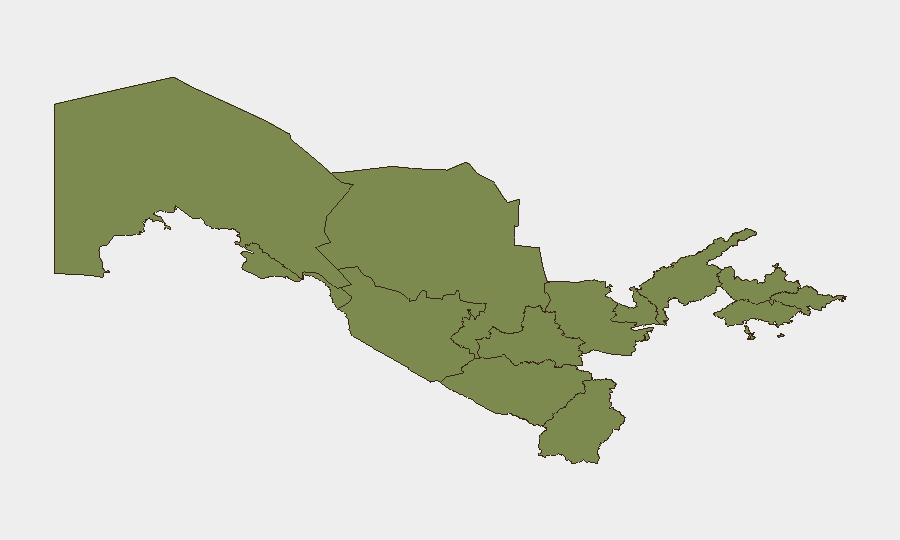
Situation Summary
Uzbekistan remains a low-threat environment with a composite risk score of 3 globally (rank #189). Over the past 24–48 hours, no verified security incidents, civil unrest, or infrastructure disruptions have been reported. A peaceful demonstration and routine political statement were recorded on 1 July in major urban centers, consistent with normal civic activity. The security posture is stable, with risk concentrated in two regions rather than distributed across the country.
Key Developments
- Nationwide (major urban centers) – 1 July 2026 – Peaceful demonstration/rally. A demonstration or rally was observed in Uzbekistan on 1 July, likely in Tashkent or another major city. No violence, security-force confrontation, or disruption to commerce or services was reported. The event is assessed as routine civic or worker assembly activity.
- Tashkent – 1 July 2026 – Public political statement. A public statement of a political or official nature was issued in Tashkent on 1 July 2026. No associated unrest, threat escalation, or restrictive government measures have been reported in connection with the statement.
- No verified security incidents in last 24–48 hours. Open-source monitoring, social-media feeds, and news reporting show no confirmed reports of terrorism, militant activity, large-scale crime, infrastructure failure, or travel-relevant disruptions within Uzbekistan as of 3 July 2026.
Highest-Risk Areas
Namangan Region is the single highest-risk sub-national area, with a composite score of 31.8—substantially above all other regions. Tashkent (score 16.8) is the second-priority area, driven primarily by the concentration of political institutions, diplomatic presence, and visibility rather than acute instability. All other tracked regions (Fergana, Qashqadaryo, Surxondaryo, Karakalpakstan, and others) carry baseline risk scores of 1.8 or below, indicating minimal reported threat activity. The stark concentration of risk in Namangan and Tashkent suggests that monitoring should prioritize these two jurisdictions while maintaining baseline situational awareness in the Fergana Valley more broadly.
How GeoBit Would Assist
Corporate security and risk teams with operations or personnel in Uzbekistan should leverage Intel Sweep and multi-language OSINT feeds to track low-frequency but high-impact developments (terrorism, border incidents, political instability) in real time. Area-of-Interest Monitoring with alerting on Namangan Region and Tashkent would provide early warning of escalation in the two highest-risk zones and flag any change in demonstration frequency or scale. Network & Actor Analysis focused on key political, security-force, and extremist-linked entities would enable duty-of-care teams to detect shifts in regime stability or inter-agency friction before they manifest operationally.
7-Day Outlook
No imminent deterioration in Uzbekistan's security environment is anticipated over the next 7 days. Routine political communication and civic assembly activity are expected to continue in urban centers. Risk remains concentrated in Namangan and Tashkent; any escalation in demonstration activity, security-force deployment, or border-region incidents should trigger immediate team notification and contingency review.
Highest-Risk Areas — Ranked
| # | State / Region | Risk |
|---|---|---|
| 1 | Namangan Region | 31.8 |
| 2 | Tashkent | 16.8 |
| 3 | Qashqadaryo Region | 1.8 |
| 4 | Surxondaryo Region | 1.8 |
| 5 | Fergana Region | 1.8 |
| 6 | Republic of Karakalpakstan | 1.8 |
| 7 | Xorazm Region | 1.8 |
| 8 | Navoiy Region | 1.8 |
| 9 | Bukhara Region | 1.8 |
| 10 | Jizzakh Region | 1.8 |
| 11 | Tashkent Region | 1.8 |
| 12 | Sirdaryo Region | 1.8 |
Sources
Previous Daily Briefs
A new Uzbekistan brief is written every day — each with its own risk map and downloadable CSV. Here's the last week; use the calendar to go further back.
📅 Browse every day by calendar →
Highlighted days have a brief. Tap a day for that day's map & analysis, or “csv” for that day's dataset ($5).