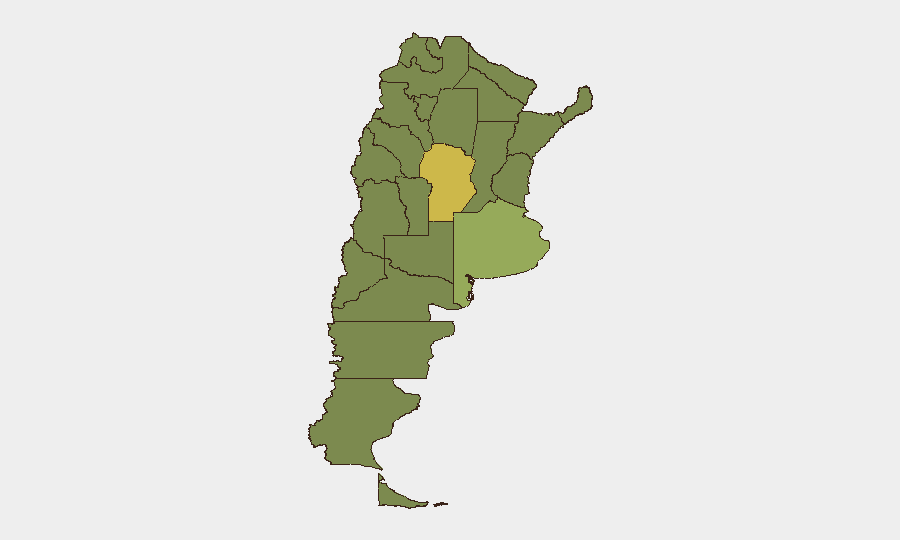
Situation Summary
Argentina remains at composite threat rank #43 globally with a moderate security posture dominated by economic and political instability rather than acute violence or armed conflict. No corroborated security incidents (armed confrontation, civil unrest, infrastructure attack, or major crime event) have been reported in the last 24–48 hours in open sources. The country's risk profile is driven by sustained economic pressures, ongoing anti-corruption investigations, and regional vulnerability to organized crime and resource-linked disputes, particularly in the north and northeast.
Key Developments
No verified, location-specific security incidents were recorded in Argentina in the last 24–48 hours. Recent event signals tracked by GeoBit (2026-07-14) reflect political and institutional activity—statements by deputies, senators, and the central bank; investigation announcements by presidential and magistrate offices; and diplomatic messaging regarding Paraguay—but none constitute acute security events meeting recency and verification thresholds. Open-source monitoring indicates that current news flow focuses on inflation data, legal proceedings, and political economic measures rather than new civil unrest, armed incidents, or crime spikes.
Ongoing conditions (not new 24–48 hour events) include wildfire activity in Patagonia, general strike and protest readiness linked to economic discontent, and elevated national security alert posture, all of which remain background risk factors rather than active incidents.
Highest-Risk Areas
Córdoba Province (risk 64.8) stands significantly above all other regions and is the primary driver of national risk, reflecting chronic organized crime, resource conflicts, and gang activity in the province. Buenos Aires Province (40.7) and the border regions of Misiones (38.1), Jujuy (37.7), and Salta (36.7)—all in the north and northeast—follow, indicating concentrated vulnerability to narcotics trafficking, land disputes, and cross-border criminal networks. The Autonomous City of Buenos Aires (35.8) carries moderate risk despite being the capital, while central and eastern provinces (Santa Fe, Entre Ríos, Corrientes, Chaco) cluster in the 35–36 range, suggesting diffuse but sustained exposure to criminality and resource-linked tensions across the interior.
How GeoBit Would Assist
Corporate security teams should employ AOI Monitoring & Early Warning to track Córdoba and the northern border provinces for emerging unrest, trafficking activity, and protest signals with persistent alerting thresholds. Intel Sweep and multi-language OSINT (X, Telegram, local news) would provide real-time visibility into political developments, strike announcements, and crime-pattern shifts that affect duty-of-care compliance. Risk & Threat Assessment combined with Routing & Network Analysis enables security officers to model alternative travel corridors, supply routes, and office locations away from highest-risk zones, while Conflict & Military and Network & Actor Analysis support longer-term mapping of criminal and protest actor movements in high-volatility regions.
7-Day Outlook
No immediate escalation in acute security incidents is indicated; however, continued economic stress and political investigation activity are likely to sustain underlying volatility. Northern and central provinces will remain focal points for organized crime and resource-related disputes. Corporate teams should maintain standard heightened awareness in Córdoba and Buenos Aires Province and monitor for strike/protest announcements in coming days, which historically cluster around economic policy announcements or court rulings.
Highest-Risk Areas — Ranked
| # | State / Region | Risk |
|---|---|---|
| 1 | Córdoba | 64.8 |
| 2 | Buenos Aires Province | 40.7 |
| 3 | Misiones | 38.1 |
| 4 | Jujuy Province | 37.7 |
| 5 | Salta Province | 36.7 |
| 6 | Santa Fe Province | 36.5 |
| 7 | Santiago del Estero Province | 35.9 |
| 8 | Autonomous City of Buenos Aires | 35.8 |
| 9 | Entre Ríos Province | 35.5 |
| 10 | Corrientes Province | 35.1 |
| 11 | Tucumán Province | 35.1 |
| 12 | Chaco Province | 35.1 |
Sources
Previous Daily Briefs
A new Argentina brief is written every day — each with its own risk map and downloadable CSV. Here's the last week; use the calendar to go further back.
📅 Browse every day by calendar →
Highlighted days have a brief. Tap a day for that day's map & analysis, or “csv” for that day's dataset ($5).
Atlas — our AI intelligence desk — emails them this snapshot personally. Nothing else, no list.