Situation Summary
Argentina remains a moderate-risk environment (global ranking #43, composite threat score 48) with no major security incidents documented in the last 24–48 hours. Event signals tracked on 2026-07-16 through 2026-07-18 reflect institutional and diplomatic tensions—including government investigations, prison-system disputes, and bilateral friction with Bolivia—but no corroborated ground-level unrest or infrastructure disruptions have been confirmed by open sources in this immediate window. The security picture is shaped primarily by economic volatility and localized crime patterns rather than active conflict or mass civil disorder.
Key Developments
- No major, location-specific security incidents confirmed in the last 24–48 hours. Open web research and curated intelligence sources as of 2026-07-17 cutoff have yielded no corroborated unrest, attacks, or structural disruptions with precise timing and cross-source verification. Recent media traffic in Argentina has centered on sports and macroeconomic data (World Cup coverage, inflation reporting) rather than incident-level security reporting.
- Institutional and diplomatic event signals (2026-07-16 to 2026-07-18). GeoBit event tracking has flagged disapprovals relating to Argentina–Bolivia relations, prison-system grievances directed at Argentina, government investigations into parliamentary chambers, and rejections tied to village and administrative matters. These signals indicate friction within government and at bilateral borders but do not yet translate to documented ground-level violence or mass disruption.
- UK public statement on Argentina (2026-07-18). Foreign Office commentary suggests continued international attention to Argentine governance or consular matters; scope and specific focus require additional source confirmation.
- Government demands and threats flagged (2026-07-16 to 2026-07-18). Tracking indicates raised political/institutional tensions; escalation pathways into street-level unrest or security incidents remain unconfirmed.
Highest-Risk Areas
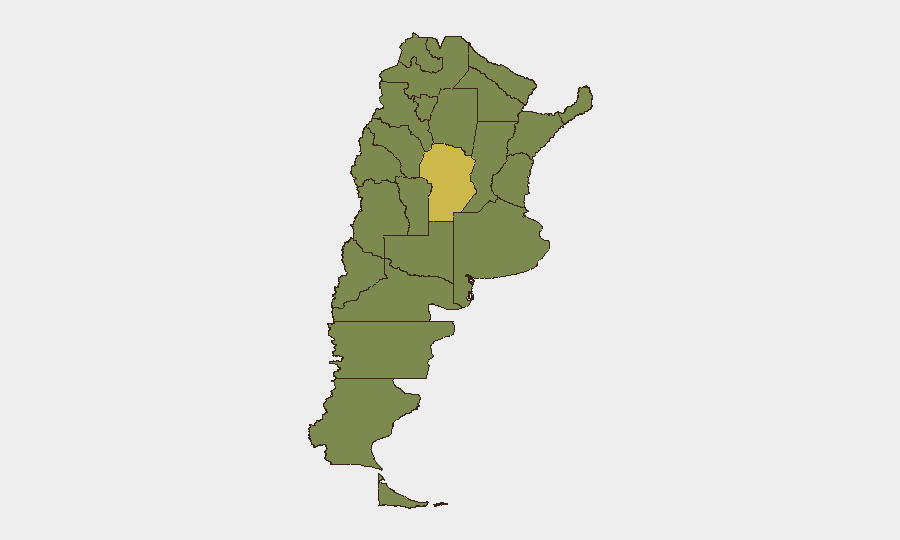
Córdoba Province (risk 63.7) significantly outpaces all other Argentine jurisdictions and drives national composite threat scores. Buenos Aires Province (38.8) and the Autonomous City of Buenos Aires (35.1) together account for the capital region's moderate-to-elevated exposure, reflecting concentration of economic activity, transport hubs, and institutional activity. Río Negro, Santiago del Estero, Jujuy, and Misiones provinces form a secondary tier (risk 34–36) where organized-crime patterns, border dynamics, and resource-conflict drivers maintain persistent pressure. Córdoba's elevated score likely reflects entrenched gang networks, prison overcrowding, and drug-trafficking routes; security teams with assets in or transiting the province should treat it as the highest sub-national priority.
How GeoBit Would Assist
Security teams should deploy AOI (Area-of-Interest) Monitoring & Early Warning on Córdoba, Buenos Aires Province, and the capital city to capture real-time alert thresholds for unrest, crime spikes, or infrastructure failures. Intel Sweep and multi-language OSINT (X/Twitter, Telegram, local news feeds, entity extraction) will disambiguate institutional event signals—currently generic—into actionable risk drivers by location and timeframe. Conflict & Risk Assessment modules provide forward-looking scenario modeling for bilateral tensions (Argentina–Bolivia) and prison-system escalation pathways.
7-Day Outlook
No imminent, large-scale security event is forecast for Argentina as of 2026-07-18. Institutional friction and diplomatic signaling will likely persist, with localized crime and gang activity continuing at baseline levels in high-risk provinces, particularly Córdoba. Monitor government-prison negotiations and Argentina–Bolivia border messaging for escalation cues; any move toward mass protest or security-force mobilization would be preceded by 48–72 hours of social-media and political signaling detectable via OSINT.
Highest-Risk Areas — Ranked
| # | State / Region | Risk |
|---|---|---|
| 1 | Córdoba | 63.7 |
| 2 | Buenos Aires Province | 38.8 |
| 3 | Río Negro Province | 35.9 |
| 4 | Autonomous City of Buenos Aires | 35.1 |
| 5 | Santiago del Estero Province | 35 |
| 6 | Jujuy Province | 34.7 |
| 7 | Misiones | 34.4 |
| 8 | Chaco Province | 34.4 |
| 9 | La Rioja Province | 34.2 |
| 10 | Entre Ríos Province | 34.2 |
| 11 | Tucumán Province | 34.2 |
| 12 | Neuquén Province | 34 |
Sources
Previous Daily Briefs
A new Argentina brief is written every day — each with its own risk map and downloadable CSV. Here's the last week; use the calendar to go further back.
📅 Browse every day by calendar →
Highlighted days have a brief. Tap a day for that day's map & analysis, or “csv” for that day's dataset ($5).
Atlas — our AI intelligence desk — emails them this snapshot personally. Nothing else, no list.