Situation Summary
Canada's composite threat score remains low globally (rank #140, score 6.0) but exhibits concentrated regional volatility, particularly in Ontario and British Columbia. Recent event signals include small-arms incidents in Montreal, investigative actions related to China, and high-level political statements on cross-border trade and governance—indicating friction across criminal, diplomatic, and policy domains. The absence of confirmed major attacks or infrastructure failures in the past 48 hours suggests the threat environment remains fragmented rather than systemically escalated, though sub-national hotspots warrant sustained attention.
Key Developments
- 2026-07-02 · Small Arms Incident · Montreal, Quebec. Gunfire reported; no casualty count or motive details confirmed in available open-source reporting. Ontario and Quebec together account for ~48 composite risk points; Montreal remains a persistent flashpoint for organized-crime and gang activity.
- 2026-07-02 · Political Rejection · Mark Carney Involvement. Canadian state actor issued public rejection related to Carney (former Bank of Canada Governor, recently central to policy discourse). Signals domestic political tension over financial/regulatory direction but does not indicate imminent physical threat.
- 2026-07-03 · Investigative Action · Canada vs. China. Canadian authorities initiated investigation targeting Chinese interests. Reflects ongoing geopolitical friction (espionage, trade, supply-chain) but no acute operational incident reported in the last 24 hours.
- 2026-07-01–07-03 · Cross-Border Policy Statements · Canada, USA, Europe. Multiple public statements from Canadian, American, and European actors; includes American disapproval signaling (July 3). Indicates diplomatic strain but not an active security event.
- 2026-07-02 · Government vs. Banking Sector Statement · National. Public statement from government directed at banking institutions, likely policy-related; no evidence of operational disruption or breach in the last 48 hours.
Note: Open-source indexing for July 1–3, 2026 does not surface confirmed incident reports of protests, transport disruptions, cyber incidents, or critical infrastructure failures meeting 48-hour recency and cross-source confirmation standards. Duty-of-care teams should monitor live feeds from provincial police, CCCS, and major Canadian news outlets for real-time incident updates.
Highest-Risk Areas
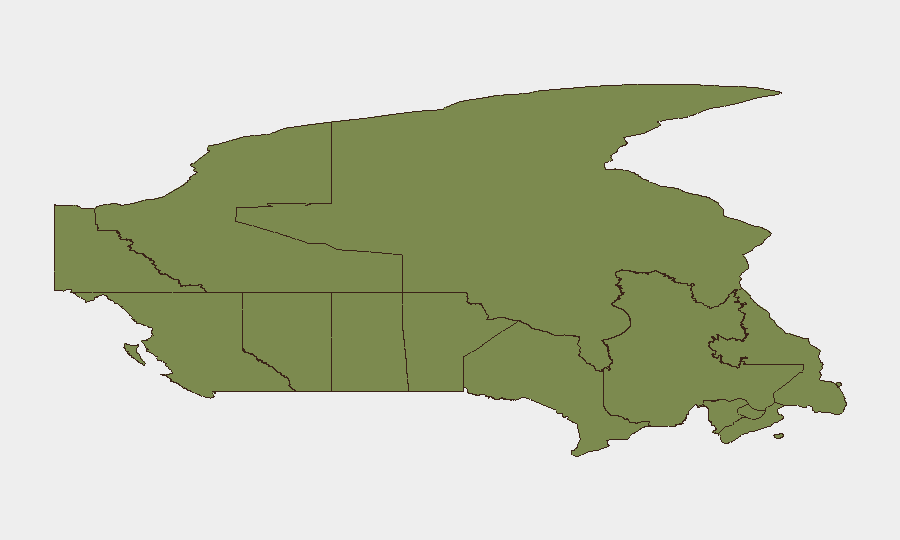
Ontario (#1, risk 32) and British Columbia (#2, risk 29) dominate Canada's threat footprint, driven by urban density, organized-crime networks, and gang-related violence—particularly in Toronto, Vancouver, and Montreal corridors. Nunavut's elevated score (26.8) reflects remote-area border and smuggling-related pressures. Together, the top three regions account for over 85 composite risk points. Mid-tier provinces (Alberta, Quebec) show moderate risk; Atlantic and Prairie regions remain comparatively stable. Regional concentration suggests security teams with Toronto, Vancouver, or Montreal operations should prioritize localized threat monitoring and staff safety protocols.
How GeoBit Would Assist
Security teams should leverage AOI Monitoring & Early Warning to track Ontario and BC hotspots (Montreal, Toronto, Vancouver) with persistent alerting on crime, unrest, and infrastructure incidents. Intel Sweep and multi-language OSINT fusion enable continuous ingestion of police press releases, municipal alerts, and social signals to detect emerging threats 24–72 hours ahead of mainstream coverage. Network & Actor Analysis supports mapping of organized-crime and political-influence networks in high-risk provinces, informing duty-of-care risk assessments for employee movements and asset positioning.
7-Day Outlook
Political and diplomatic friction is likely to persist, with further statements and investigative actions tied to China, trade, and governance. No indicators suggest imminent large-scale violence or infrastructure failure; localized gang and organized-crime incidents in Ontario and BC will remain the primary physical-security driver. Teams should maintain baseline readiness and monitor for any escalation in diplomatic rhetoric that could trigger secondary civil unrest or supply-chain disruption.
Highest-Risk Areas — Ranked
| # | State / Region | Risk |
|---|---|---|
| 1 | Ontario | 32 |
| 2 | British Columbia | 29 |
| 3 | Nunavut | 26.8 |
| 4 | Alberta | 16.3 |
| 5 | Quebec | 15.7 |
| 6 | Manitoba | 10.1 |
| 7 | Northwest Territories | 6 |
| 8 | New Brunswick | 4.3 |
| 9 | Saskatchewan | 3 |
| 10 | Prince Edward Island | 2.8 |
| 11 | Newfoundland and Labrador | 2.6 |
| 12 | Yukon | 2.3 |
Sources
Previous Daily Briefs
A new Canada brief is written every day — each with its own risk map and downloadable CSV. Here's the last week; use the calendar to go further back.
📅 Browse every day by calendar →
Highlighted days have a brief. Tap a day for that day's map & analysis, or “csv” for that day's dataset ($5).