Situation Summary
Cuba faces escalating civil unrest driven by a severe energy crisis, with the national grid experiencing its fifth total collapse in 2026 on 14 July and cascading outages persisting into mid-week. Widespread cacerolazo protests have erupted across Havana and outlying municipalities over power shortages, prompting intensified security responses including at least 14 detentions linked to recent demonstrations. New US sanctions announced on 13 July have compounded economic and political pressures, with official Cuban condemnation continuing through 18–19 July. The combination of infrastructure failure, public discontent, and heightened security action indicates a trajectory toward sustained tension and localized civil disorder rather than acute stability improvement.
Key Developments
- Nationwide power-grid instability persisting (Cuba, national) – Following the 14 July total collapse, a 2,240 MW shortfall (≈69% of demand) was reported on 16 July, with prolonged blackouts in Havana extending beyond 35 hours and authorities warning of ongoing cascading failures into the weekend (as of 17–18 July).
- Cacerolazo protests in Havana outskirts (Loma de la Pela, Guanabacoa; Havana municipalities) – Residents staged pot-and-pan protests on 16–17 July nights denouncing multi-day blackouts; State Security and local officials were observed dispersing crowds while promising restoration by Saturday; reports indicate ten consecutive nights of similar demonstrations across multiple Havana neighborhoods.
- Detentions linked to anti-blackout unrest (Havana and other municipalities) – At least 14 individuals were detained in connection with recent anti-government and anti-blackout demonstrations, with broader civil-society monitors documenting 18 arbitrary detentions and 207 other abuses across municipalities as of mid-July reporting.
- US sanctions triggering official condemnation (Cuba, nationwide) – On 13 July, the US announced sanctions on 10–11 Cuban entities and political/military figures tied to internal security; President Díaz-Canel and Foreign Minister Rodríguez publicly condemned the measures on 17–18 July, framing them as economic strangulation linked to the worsening crisis.
- Updated international travel advisories (Cuba, nationwide) – Civil-society and official reporting from 17–18 July reflect a new advisory urging travelers to "exercise extreme caution" due to violence, power cuts, and epidemiological conditions, reflecting current operational and health risk.
Highest-Risk Areas
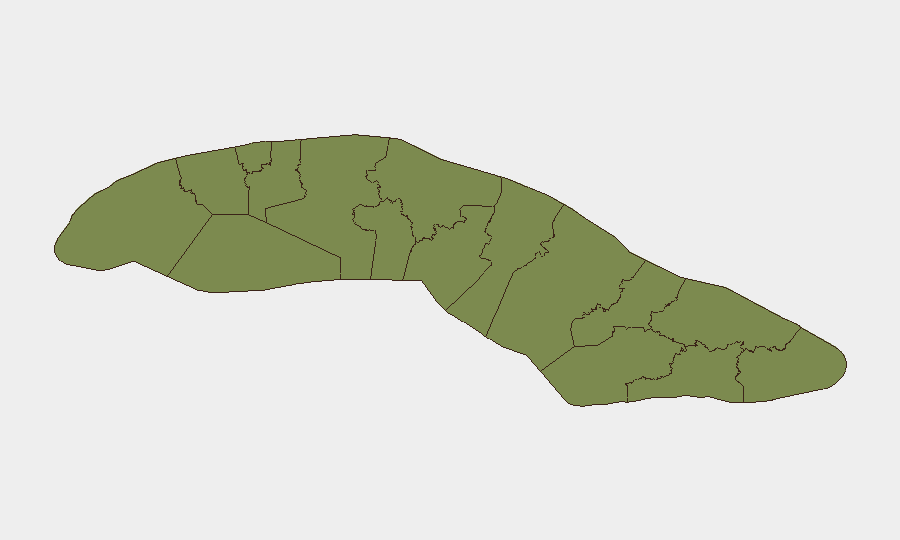
Sancti Spiritus (35.2) and Havana (29.2) are the dominant drivers of national risk, with Havana's score reflecting active protest activity, security responses, and cascading infrastructure impacts from the grid collapse. Artemisa (10.0) also registers elevated risk. The gap between these three and lower-ranked provinces suggests that protest and security pressure is concentrated in and around Havana, while Sancti Spiritus—less visible in current event reporting—carries high risk designation likely tied to structural economic and political vulnerabilities or recent incident density not fully reflected in open reporting.
How GeoBit Would Assist
Security teams with personnel or assets in Cuba should employ AOI Monitoring & Early Warning to track Havana and Sancti Spiritus for protest escalation and security sweeps; Intel Sweep and multi-language OSINT to monitor local social media, activist channels, and civil-society reporting for detention patterns and unrest; and Regime-Stability Search to correlate energy infrastructure failures, sanctions impacts, and public discontent signals. Sentiment & Temporal Analysis on regional social feeds can provide early signals of escalating grievance before demonstrations materialize.
7-Day Outlook
Power-grid stabilization remains uncertain given the scale of the shortfall and recurring collapse pattern; if blackouts persist beyond the stated Saturday restoration target, protest frequency and geographic spread are likely to widen. US sanctions and official Cuban condemnation will sustain political friction. Security detentions are expected to continue as authorities move to preempt organized demonstrations, raising the risk of arbitrary detention or confrontation involving foreign nationals or company personnel in protest-affected areas.
Highest-Risk Areas — Ranked
| # | State / Region | Risk |
|---|---|---|
| 1 | Sancti Spiritus | 35.2 |
| 2 | Havana | 29.2 |
| 3 | Artemisa | 10 |
| 4 | Matanzas | 8.9 |
| 5 | Isle of Youth | 6.1 |
| 6 | Camagüey | 5.9 |
| 7 | Las Tunas | 5.9 |
| 8 | Santiago de Cuba | 5.9 |
| 9 | Pinar del Rio | 5.4 |
| 10 | Mayabeque | 5.4 |
| 11 | Cienfuegos | 5.2 |
| 12 | Villa Clara | 5.2 |
Sources
Previous Daily Briefs
A new Cuba brief is written every day — each with its own risk map and downloadable CSV. Here's the last week; use the calendar to go further back.
📅 Browse every day by calendar →
Highlighted days have a brief. Tap a day for that day's map & analysis, or “csv” for that day's dataset ($5).
Atlas — our AI intelligence desk — emails them this snapshot personally. Nothing else, no list.