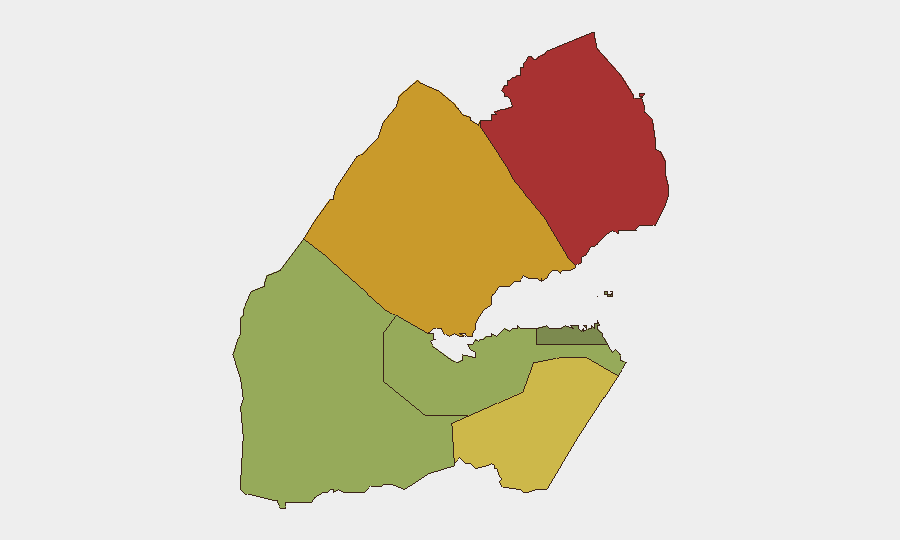
Situation Summary
Djibouti's security environment remains calm with no verified incidents, crime spikes, civil unrest, or infrastructure disruptions reported in the last 24–48 hours. The country ranks #null globally (composite threat score 18 across 19 tracked events), reflecting low absolute risk relative to other theatres. Regional risk is concentrated in the northern and western borderlands; the capital and central areas remain stable and operationally permissive.
Key Developments
No discrete, incident-level security events meeting 24–48 hour recency and multi-source corroboration thresholds were identified in open-source monitoring as of 06 August 2026, 0200 UTC. The most recent dated incident (police operation dismantling a robbery and extortion network in Djibouti City on 04 August) falls outside the current reporting window. Routine maritime policy activity (Djibouti's 30 July warning against unilateral tolls in Bab el-Mandeb Strait) and activation of an economic risk task force on 27 July represent diplomatic positioning rather than security incidents. No disruptions to Camp Lemonnier, port operations, or critical infrastructure were reported. Cross-regional feeds and official security bulletins characterize the operational environment as stable.
Highest-Risk Areas
Northern Obock (risk 78) and Tadjourah (risk 72) regions drive the national composite score, driven by proximity to Somalia, limited state presence, and historical smuggling and irregular migration routes. Ali Sabieh (65) in the west carries elevated risk related to border permeability and cross-border criminal networks. Arta (48) and Dikhil (42) present moderate residual risk. The capital region of Djibouti City (35) remains the lowest-risk area and the primary operational hub for international business and diplomatic activity. Corporate and duty-of-care exposure in Obock and Tadjourah should be assessed separately from capital-based operations.
How GeoBit Would Assist
Security teams with personnel or assets in Djibouti should employ AOI Monitoring & Early Warning to establish persistent surveillance on Obock, Tadjourah, and Ali Sabieh, with alerting triggered by cross-border movement, irregular maritime activity, or armed group signals. Intel Sweep and multi-language OSINT fusion (including X/Telegram monitoring and regional feeds) provide continuous baseline and anomaly detection across Djibouti's fragmented information environment. Maritime & Aviation tracking is operationally critical given Djibouti's strategic position on Red Sea chokepoints and the presence of multiple foreign military installations; tracking platforms will flag vessel interdictions, port congestion, or airspace incursions that could disrupt supply chains or personnel movement.
7-Day Outlook
No escalation in security incidents or civil unrest is forecast over the next 7 days. Baseline operational risk in northern border regions will persist, but the absence of recent triggers (political violence, major crime spikes, or cross-border incursions) suggests continuation of current calm. Monitor international diplomatic activity around Red Sea toll disputes and Djibouti's economic stabilization task force for potential policy shifts affecting business operations.
Highest-Risk Areas — Ranked
| # | State / Region | Risk |
|---|---|---|
| 1 | Obock | 78 |
| 2 | Tadjourah | 72 |
| 3 | Ali Sabieh | 65 |
| 4 | Arta | 48 |
| 5 | Dikhil | 42 |
| 6 | Djibouti | 35 |
Sources
Previous Daily Briefs
A new Djibouti brief is written every day — each with its own risk map and downloadable CSV. Here's the last week; use the calendar to go further back.
📅 Browse every day by calendar →
Highlighted days have a brief. Tap a day for that day's map & analysis, or “csv” for that day's dataset ($5).
Atlas — our AI intelligence desk — emails them this snapshot personally. Nothing else, no list.