Situation Summary
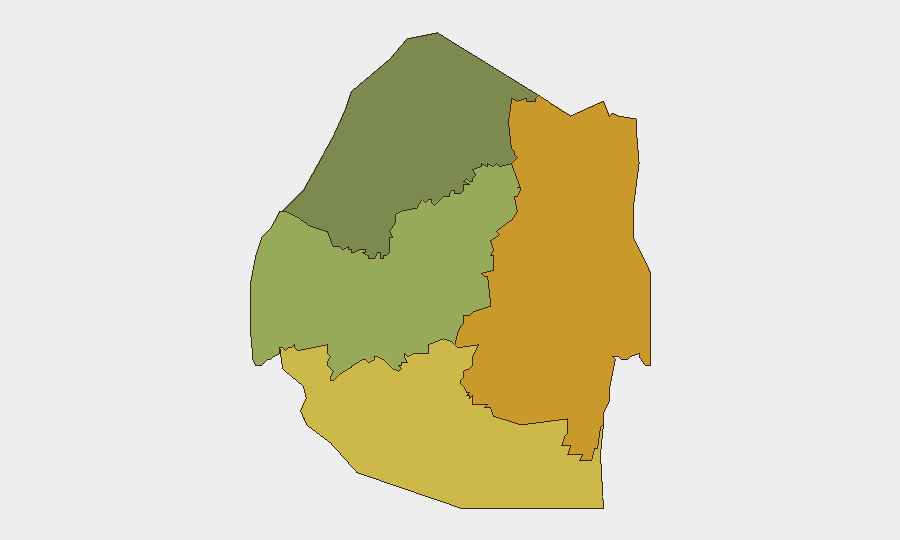
Eswatini remains at a low-to-moderate composite threat level globally (rank #129; score 9/100) with no significant security incidents reported in the past 24–48 hours. Open-source reporting shows no corroborated protests, civil unrest, terrorism, infrastructure failures, or major crime events within this window. The country's risk profile is regionally concentrated, with border and southern zones (Lubombo, Shiselweni) significantly outpacing central and northern regions in composite threat indicators.
Key Developments
No discrete security incidents meeting multi-source corroboration and 24–48-hour recency criteria were identified in current reporting for Eswatini.
Open-source monitoring over the past 24–48 hours yielded diplomatic and cultural items (e.g., US health-funding cooperation announcement; regional sports results; entertainment-venue promotions) but no acute security, unrest, crime, or infrastructure events in the country. Routine crime and low-level incidents may occur but do not appear in national or international coverage thresholds. This absence of reported incidents should not be interpreted as zero risk; rather, it reflects current reporting visibility. Stakeholders should maintain baseline awareness of Eswatini's structural vulnerabilities (see risk areas below) and rely on continuous monitoring for early signal detection.
Highest-Risk Areas
Lubombo (risk score 72) and Shiselweni (68) regions drive the country's overall threat profile, likely reflecting proximity to South African borders, cross-border smuggling networks, and historical trafficking corridors. Manzini Region (55) presents moderate risk, while Hhohho (35) remains relatively lower-risk. Border zones typically concentrate customs violations, informal commerce disruptions, and opportunistic crime; southern regions' elevated scores suggest persistent vulnerabilities in law-enforcement capacity, informal-settlement density, or regional dynamics extending from South African instability. Corporate assets and personnel in Lubombo and Shiselweni warrant heightened situational awareness and contingency planning.
How GeoBit Would Assist
Security teams operating in or transiting Eswatini should activate Area-of-Interest (AOI) Monitoring & Early Warning on Lubombo and Shiselweni regions to detect emerging unrest, border incidents, or supply-chain disruptions before they escalate. Intel Sweep and multi-language OSINT fusion (X/Twitter, Telegram, local radio) would provide daily signal ingestion and sentiment analysis to catch early indicators of labor action, political mobilization, or crime spikes. Routing & Network Analysis can help security and logistics teams pre-plan alternative routes and safe corridors if checkpoint disruptions or border-crossing congestion occur.
7-Day Outlook
No imminent triggers for acute escalation are visible in the current 7-day horizon. Eswatini's baseline risk remains stable and geographically concentrated in southern border zones. Continued passive monitoring of Lubombo and Shiselweni, combined with real-time alerting on open-source signals (protests, transport disruptions, unrest keywords), is appropriate for duty-of-care compliance.
Report Date: 2026-08-22 | Data Currency: 2026-08-21 to 2026-08-22 (last 24–48h) | Confidence: Routine updates; no high-salience current incidents.
Highest-Risk Areas — Ranked
| # | State / Region | Risk |
|---|---|---|
| 1 | Lubombo | 72 |
| 2 | Shiselweni | 68 |
| 3 | Manzini Region | 55 |
| 4 | Hhohho Region | 35 |
Sources
Previous Daily Briefs
A new Eswatini brief is written every day — each with its own risk map and downloadable CSV. Here's the last week; use the calendar to go further back.
- August 20, 2026
- August 17, 2026
- August 15, 2026
- August 13, 2026
- August 11, 2026
- August 9, 2026
- August 8, 2026
📅 Browse every day by calendar →
Highlighted days have a brief. Tap a day for that day's map & analysis, or “csv” for that day's dataset ($5).
Atlas — our AI intelligence desk — emails them this snapshot personally. Nothing else, no list.