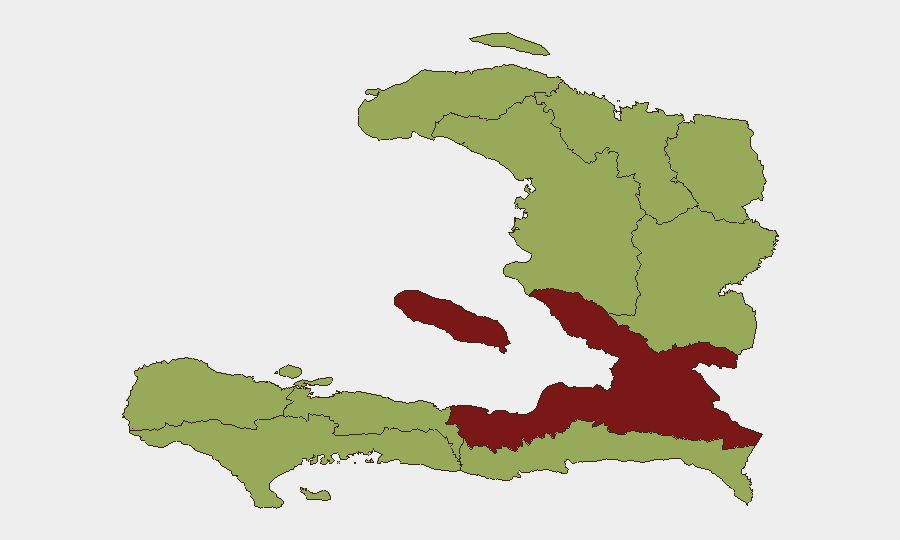
Situation Summary
Haiti remains the 17th-highest global threat environment, driven primarily by intensifying gang violence and civil unrest across Port-au-Prince and surrounding regions. Multiple armed factions are engaged in active combat with state security forces, and kidnapping for ransom continues as a systematic threat vector targeting both civilian and official targets. The security picture has deteriorated measurably over the past 72 hours, with armed clashes, ministerial-staff abductions, and attempted attacks on protected individuals all reported. The trajectory points toward continued volatility in de l'Ouest Department and Port-au-Prince metro areas through at least early August.
Key Developments
- Delmas 31, Port-au-Prince — 24 July 2026: Armed individuals kidnapped Ecclésiaste Thélémaque, chief of staff to Haiti's education minister, while he was en route home. The abduction underscores continued targeting of high-profile civilian officials.
- Delmas 33, Port-au-Prince — 25 July 2026: Clifford Handal and his father came under sustained gunfire near Peace Hospital while traveling in an armored vehicle; both escaped. The incident reflects the operational reach of armed groups into secured zones and increased lethality against protected movement.
- Port-au-Prince — 25 July 2026: Multiple public statements attributed to Colombian actors and Haitian regime figures emerged, alongside military mobilization signals and a disapproval announcement. These suggest escalating diplomatic and command-level tensions coinciding with operational tempo increases.
- Tabarre — 22 July 2026: Gang Suppression Force (FRG) elements exchanged fire with Kraze Baryè gang members near an illegal checkpoint; three gang members were reportedly killed with no civilian casualties reported.
- Kenscoff, Godet, Furcy, Bois d'Avril — 22 July 2026: Haitian National Police executed a large-scale operation employing armored vehicles, rotary-wing assets, and unmanned systems; multiple bandits were reported killed.
- Jérémie, Grande-Anse Department — 21 July 2026: Fire damaged part of the Departmental Electoral Bureau building; damage extent and cause remain officially unconfirmed.
- Port-au-Prince — 20–21 July 2026: Two Haitian National Police officers were found dead within 24 hours; both deaths were initially described as suspected suicides pending investigation.
Highest-Risk Areas
De l'Ouest Department (risk score 83.7) remains the dominant driver of national threat, substantially outpacing all other regions and concentrating active gang territorial conflict, kidnapping infrastructure, and armed clashes. Port-au-Prince, the capital and seat of government, sits within de l'Ouest and has become the primary battleground between fragmented criminal networks and state security forces. Sud, Grande-Anse, Nippes, and Nord-Ouest departments all register identical risk scores (53.7) and collectively represent a secondary tier of active instability. The concentration of high risk in de l'Ouest reflects both population density and the organizational capacity of dominant criminal actors, while secondary departments present dispersed but sustained threats to supply lines, tourism infrastructure, and rural stability.
How GeoBit Would Assist
Security teams should deploy persistent area-of-interest monitoring with alerting on Port-au-Prince metro, Delmas corridors, and de l'Ouest Department supply routes to enable real-time notification of clashes and checkpoint activity. Conflict mapping and force-structure analysis would provide updated positions of FRG, National Police, and named gang territories to inform movement planning. Multi-language OSINT and sentiment analysis of Telegram, X, and local media sources capture operational intent and rhetoric shifts among armed factions before tactical escalation.
7-Day Outlook
Gang territorial disputes and state-led suppression operations are expected to continue through early August with no immediate de-escalation catalysts visible. Kidnapping tempo may spike further if criminal groups perceive enforcement pressure; official movement, diplomatic activity, and NGO logistics should assume heightened interception risk. Monitor Colombian actor statements and Haitian regime communication channels for signals of external intervention or shift in force authorization.
Highest-Risk Areas — Ranked
| # | State / Region | Risk |
|---|---|---|
| 1 | de l'Ouest Department | 83.7 |
| 2 | Sud Department | 54.8 |
| 3 | Grande-Anse Department | 53.7 |
| 4 | Nippes Department | 53.7 |
| 5 | Nord-Ouest Department | 53.7 |
| 6 | Artibonite Department | 53.7 |
| 7 | Nord Department | 53.7 |
| 8 | Nord-Est Department | 53.7 |
| 9 | Centre Department | 53.7 |
| 10 | Sud-Est Department | 53.7 |
Sources
Previous Daily Briefs
A new Haiti brief is written every day — each with its own risk map and downloadable CSV. Here's the last week; use the calendar to go further back.
📅 Browse every day by calendar →
Highlighted days have a brief. Tap a day for that day's map & analysis, or “csv” for that day's dataset ($5).
Atlas — our AI intelligence desk — emails them this snapshot personally. Nothing else, no list.