Situation Summary
Haiti remains in acute crisis, with gangs controlling an estimated 80–90% of Port-au-Prince and continuing coordinated kidnappings, armed attacks, and extortion targeting civilians, business figures, and government officials. The assassination of the president on 2026-07-28, coupled with ongoing gang warfare and a concurrent U.S. deportation surge as TPS protections end, has created a volatile security and political environment with no clear near-term stabilization. The Gang Suppression Force (GSF) is expanding operations nationwide, but territorial gains remain contested and localized. Overall threat ranking places Haiti at #29 globally, with de l'Ouest Department at substantially higher risk (72.6) than all other regions.
Key Developments
- Port-au-Prince, Delmas 31 (2026-07-24, morning): Ecclésiaste Thélémaque, Chief of Staff to the Minister of National Education, was kidnapped by unidentified armed men; no public ransom demand issued. Reinforces targeting of senior officials in the capital's residential corridors.
- Port-au-Prince, Delmas 33 (2026-07-25, morning): Businessman Clifford Handal and his father were targeted in a sustained armed attack on their armored vehicle near Hôpital de la Paix; attack thwarted by vehicle armor. Demonstrates daytime, high-firepower assaults on protected convoys in medical and commercial zones.
- National (2026-07-28): Presidential assassination reported; multiple threat signals include public statements, arrests of gang figures by authorities, and threats issued by Haitian actors and toward the United States. Creates acute political uncertainty and potential for retaliatory violence or factional clashes.
- Nippes Department (2026-07-26/27 timeline): Haitian National Police deployed 30 new officers from the 36th graduating class to departmental stations. Short-term indicator of checkpoint and patrol increases affecting civilian movement and transit routes.
- Nationwide ports and airports (2026-07-27 current): U.S. State Department reiterates "Do Not Travel" advisory as TPS for Haitians ends and deportation operations commence. Gang control of airport and port infrastructure creates risk of civil unrest, congestion, and potential armed confrontation around transit hubs.
- Multi-departmental (late July, ongoing): Haiti's Foreign Minister briefed the UN Security Council on GSF expansion into remaining departments to retake gang-held territory. Indicates sustained armed operations with collateral-damage and checkpoint-proliferation risk along key corridors.
Highest-Risk Areas
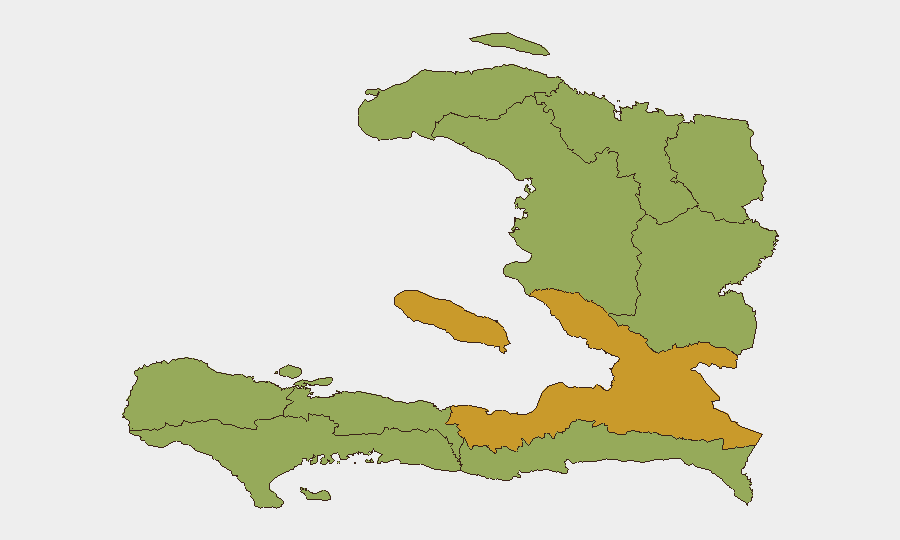
De l'Ouest Department (Port-au-Prince and surroundings) dominates the risk profile at 72.6, driven by gang-controlled territory, kidnappings, and armed clashes. All other departments cluster at 42.6, indicating a more distributed but still-significant baseline threat. The concentration of recent kidnappings and armed attacks in Port-au-Prince's Delmas area, combined with gang control of escape routes and checkpoints, makes the capital substantially higher-risk than remote regions despite the nominal ranking equality. Sud Department (49.2) shows secondary concern, likely reflecting spillover gang activity and GSF operations. Travel within or near Port-au-Prince, and transit corridors linking the capital to other departments, carry the highest kidnap, armed-robbery, and casualty risk.
How GeoBit Would Assist
Security teams should deploy AOI Monitoring & Early Warning to track Port-au-Prince's Delmas corridor and key transit routes in real time, with alerts triggered by armed-group activity, checkpoint proliferation, or hostage-related intelligence. Routing & Network Analysis can identify lower-risk alternative routes and safe-haven planning around the capital and to provincial destinations. Network & Actor Analysis combined with OSINT fusion (X/Telegram intelligence, radio SIGINT) would enable continuous tracking of gang movements, GSF operations, and political-factional developments post-assassination, informing duty-of-care decisions and evacuation triggers.
7-Day Outlook
Political volatility is likely to peak in the immediate aftermath of the presidential assassination, with potential for factional clashes, retaliatory kidnappings, and increased armed-gang activity as power-succession disputes unfold. GSF operations will intensify checkpoints and armed patrols, elevating both collateral-risk to civilians and gang counter-attacks. No meaningful security improvement is anticipated within seven days; organizations should assume current threat levels and heightened kidnap/armed-robbery risk persist, with travel severely restricted.
Highest-Risk Areas — Ranked
| # | State / Region | Risk |
|---|---|---|
| 1 | de l'Ouest Department | 72.6 |
| 2 | Sud Department | 49.2 |
| 3 | Grande-Anse Department | 42.6 |
| 4 | Nippes Department | 42.6 |
| 5 | Nord-Ouest Department | 42.6 |
| 6 | Artibonite Department | 42.6 |
| 7 | Nord Department | 42.6 |
| 8 | Nord-Est Department | 42.6 |
| 9 | Centre Department | 42.6 |
| 10 | Sud-Est Department | 42.6 |
Sources
Previous Daily Briefs
A new Haiti brief is written every day — each with its own risk map and downloadable CSV. Here's the last week; use the calendar to go further back.
📅 Browse every day by calendar →
Highlighted days have a brief. Tap a day for that day's map & analysis, or “csv” for that day's dataset ($5).
Atlas — our AI intelligence desk — emails them this snapshot personally. Nothing else, no list.