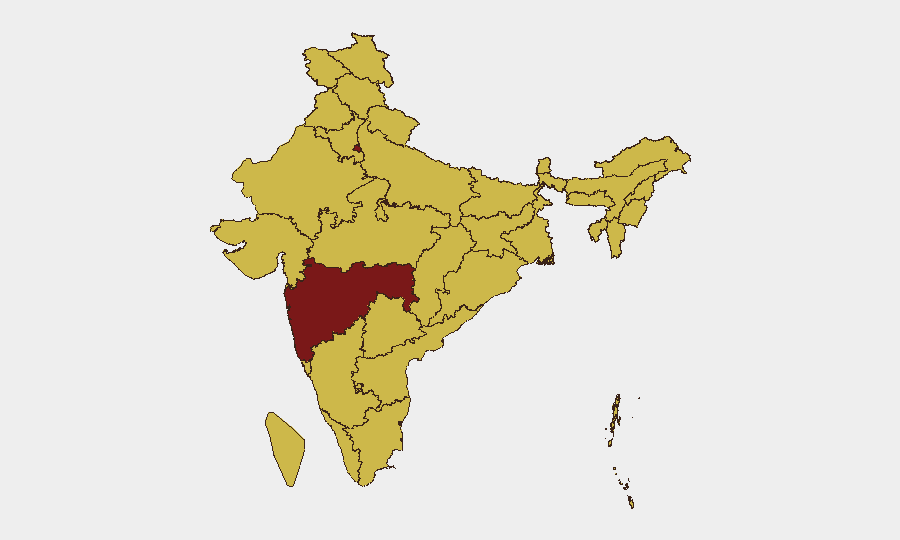
Situation Summary
India's composite threat environment remains elevated at global rank #16 (score 86), with 628 tracked security events reflecting a volatile mix of communal tensions, counter-terrorism operations, infrastructure vulnerabilities, and maritime security incidents affecting Indian nationals. The past 48 hours have surfaced multiple simultaneous crises—a fatal missile strike on Indian seafarers in the Strait of Hormuz, industrial accidents, bomb threats to high-profile civilian targets, and fresh communal violence in the Northeast—signaling dispersed rather than centralized threat pressure. Trajectory is deteriorating incrementally; recent inter-state counter-insurgency raids and political activity suggest sustained underlying instability beneath surface calm in major metros.
Key Developments
- Strait of Hormuz (offshore, international waters) – 14 July 2026
Two UAE-flagged oil tankers struck by Iranian cruise missiles; one Indian crew member killed, six to eight Indian sailors injured. India has formally protested to Tehran. This represents direct casualty impact on Indian nationals in a critical global trade chokepoint.
- Gummidipoondi SIPCOT industrial complex, Tiruvallur, Tamil Nadu – 14 July 2026
Boiler explosion and fire at metal smelting facility; one worker (24, from Bihar) killed, multiple injured. Emergency response ongoing; highlights sub-standard safety compliance and migrant-worker vulnerability in industrial zones.
- Taj Mahal Palace Hotel, Colaba, Mumbai, Maharashtra – 12 July 2026
Credible bomb threat call; Mumbai Police initiated major investigation and security surge. No device found as of last report, but demonstrates targeting of iconic hospitality/tourism infrastructure in India's financial capital.
- Kanto Sabal area, Imphal West, Manipur – 12 July 2026
Six abandoned Meitei houses deliberately set alight during rally; group reportedly from neighboring Kangpokpi. Fresh escalation in ongoing Meitei-Kuki communal conflict; local leaders arrested to contain spread. Communal flashpoint remains volatile.
- Mayur Vihar Phase 3, East Delhi – Late night 12 July 2026
Armed group stormed housing society; at least seven injured including 13-year-old. Criminal investigation underway. Indicates street-level organized violence capability in NCR's residential zones.
- Multi-state counter-terrorism raids – 8 July 2026 (background)
National Investigation Agency, state police, and central forces conducted 20 simultaneous raids across nine states (UP, AP, Maharashtra, Delhi, Bihar, Rajasthan, Karnataka, Gujarat, Telangana, West Bengal) targeting terror/extremist networks. Demonstrates inter-state coordination of militant activity and ongoing NIA operational tempo.
Highest-Risk Areas
Delhi (90) and Maharashtra (83.5) dominate the sub-national ranking, reflecting concentration of high-profile targets, organized crime, and communal flashpoints in India's two largest metros. Tamil Nadu (70.9) and Uttar Pradesh (70.1) follow, driven by industrial accidents, migrant worker issues, and communal undercurrents. The Northeast cluster—Manipur, Assam periphery—though lower in absolute ranking, exhibits acute and recurring communal/ethnic violence with rapid escalation cycles. Jammu & Kashmir (66.1) and Ladakh (63.1) maintain elevated scores reflecting residual militancy and border proximity, while Haryana (63.3) proximity to NCR amplifies metro-region instability.
How GeoBit Would Assist
Corporate teams should deploy AOI Monitoring & Early Warning on Delhi, Mumbai, and Imphal districts to detect protest/violence precursors in real-time; Intel Sweep and multi-language OSINT (X, Telegram, local media) to track emerging communal rhetoric and organizational calls-to-action; and Maritime & Aviation tracking combined with economic/trade intelligence to monitor Indian crew exposure on regional shipping routes (Hormuz, Gulf of Aden). GIS & Spatial Analysis of industrial zones (Tamil Nadu, UP) can identify recurring accident/compliance hotspots for duty-of-care audits.
7-Day Outlook
Immediate risk remains elevated but non-systemic. Manipur communal tensions may reignite around localized rallies; counter-terrorism operations will likely continue at current tempo across UP and Maharashtra. The Hormuz incident may trigger temporary port/maritime insurance volatility but no imminent India-Iran escalation is signaled. Monitoring intensity should remain high on Delhi, Mumbai, and industrial corridors through mid-week.
Highest-Risk Areas — Ranked
| # | State / Region | Risk |
|---|---|---|
| 1 | Delhi | 90 |
| 2 | Maharashtra | 83.5 |
| 3 | Tamil Nadu | 70.9 |
| 4 | Uttar Pradesh | 70.1 |
| 5 | Madhya Pradesh | 68.7 |
| 6 | Jammu and Kashmir | 66.1 |
| 7 | West Bengal | 65.9 |
| 8 | Telangana | 64.4 |
| 9 | Haryana | 63.3 |
| 10 | Ladakh | 63.1 |
| 11 | Uttarakhand | 62.8 |
| 12 | Bihar | 61.9 |
Sources
Previous Daily Briefs
A new India brief is written every day — each with its own risk map and downloadable CSV. Here's the last week; use the calendar to go further back.
📅 Browse every day by calendar →
Highlighted days have a brief. Tap a day for that day's map & analysis, or “csv” for that day's dataset ($5).
Atlas — our AI intelligence desk — emails them this snapshot personally. Nothing else, no list.