Situation Summary
Israel faces a composite threat score of 100 (ranked #7 globally) driven by acute military escalation across multiple theaters in the past 48 hours: sustained cross-border strikes with Lebanon and Hezbollah, Israeli operations against Iranian targets, and continued high-intensity activity in the South District bordering Gaza. Domestic civil unrest, settler-military incidents in the West Bank, and U.S. diplomatic engagement signal a volatile environment where tactical de-escalation attempts are being undercut by operational tempo on the ground. The trajectory remains unstable, with no clear ceiling on escalation.
Key Developments
- Southern Lebanon (Nabatieh), June 26, 2026: Israeli airstrikes on Nabatieh town and surrounding villages following Hezbollah rocket fire; Lebanese sources report civilian casualties. Part of sustained 48-hour cross-border exchange cycle.
- Southern Lebanon (Al-Mansouri / Yellow Line), June 26–27, 2026: Israeli drones dropped evacuation leaflets ordering civilian evacuation from areas adjacent to Israeli security zone; ongoing shelling and airstrikes confirmed in same period.
- Southern Lebanon, June 27, 2026: Israeli military struck multiple locations one day after reported U.S.-brokered Israel–Lebanon deal; international media and regional feeds confirm fatalities, infrastructure damage, and civilian displacement.
- Northern Israel (Lebanon border), June 26–27, 2026: Hezbollah claimed ~20 attacks on Israeli troops and positions over the past week, with multiple occurring in the last 48 hours; IDF reported reciprocal artillery and air responses. North District and Galilee border communities experiencing repeated rocket and mortar fire.
- Israel–Iran theater, June 26–27, 2026: Israeli strikes on Iranian territory and Iranian drone/rocket activity linked to Israel reported over the last 24–48 hours; intelligence aggregators log multiple conventional military force events in the same timeframe.
- South District / Gaza perimeter, June 26–27, 2026: Continued Israeli military operations, artillery exchanges, and air activity; broadcast sources show Israeli strikes on Gaza including areas previously designated "safe zones," indicating persistent travel and collateral-damage risk.
- West Bank (Hebron), June 26–27, 2026: Reports of Israeli settlers and at least one masked soldier entering a mosque, disrupting prayer, and hanging Israeli flags; cited as part of pattern of settler activity driving localized civil-unrest risk.
- Domestic (Israel), June 25–27, 2026: Arrests, detentions, and investigations involving Israeli individuals and companies; activity interpreted as related to internal security operations and protest-linked activity.
Highest-Risk Areas
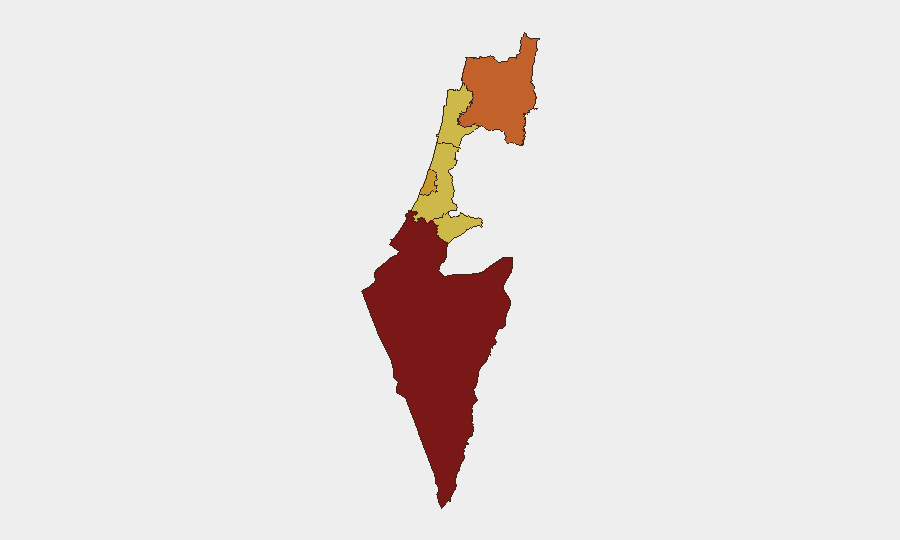
The South District (risk score 100) remains the critical flashpoint, driven by unrelenting Gaza operations, artillery exchanges, and air activity with persistent risk to civilian movement and asset protection. The North District (73.9) and Tel-Aviv District (72.9) rank second and third due to Hezbollah cross-border attacks on border communities, rocket fire affecting northern settlements, and broader air-defense strain. Center, Haifa, and Jerusalem Districts (70–70.1) are elevated due to secondary effects of the northern conflict, domestic unrest, and localized settler-military tensions in the West Bank, which carry civil-unrest and protest spillover risk.
How GeoBit Would Assist
Security teams should deploy AOI Monitoring & Early Warning on the South District, North District, and Lebanon border to receive real-time alerting on military operations, rocket fire, and displacement events. Battle Mapping and Satellite & Imagery Analysis enable rapid asset-location verification and route hazard assessment in high-risk zones. OSINT Fusion (X/Twitter, Telegram, regional media, video intelligence) and Network & Actor Analysis provide continuous tracking of Hezbollah, Iranian proxy, and settler-activity signals to anticipate escalation windows and inform duty-of-care decisions.
7-Day Outlook
Escalation is likely to continue or intensify over the next week absent a major diplomatic breakthrough; the reported U.S.-brokered deal has not yet halted operational activity. Key variables include Iranian response timing, Hezbollah attack cadence, and Israeli operational decisions in Gaza and Lebanon. Companies with personnel or assets in the South, North, and Tel-Aviv Districts should maintain heightened readiness and consider contingency movement plans.
Highest-Risk Areas — Ranked
| # | State / Region | Risk |
|---|---|---|
| 1 | South District | 100 |
| 2 | North District | 73.9 |
| 3 | Tel-Aviv District | 72.9 |
| 4 | Center District | 70.1 |
| 5 | Haifa District | 70 |
| 6 | Jerusalem District | 70 |
Sources
Previous Daily Briefs
A new Israel brief is written every day — each with its own risk map and downloadable CSV. Here's the last week; use the calendar to go further back.
📅 Browse every day by calendar →
Highlighted days have a brief. Tap a day for that day's map & analysis, or “csv” for that day's dataset ($5).