Situation Summary
Italy remains a mid-range threat environment (global rank #105, composite score 7) with geographically concentrated risks and mixed incident types spanning protest activity, organized crime, and cyber operations. The most significant near-term developments include police follow-up to late-July anti-TAV riots in Piedmont and an attempted explosive ATM robbery in Campania, alongside persistent ransomware targeting of Italian industry. The threat picture is stable but fragmented, with no nation-wide escalation signals, though localized volatility continues in high-risk regions.
Key Developments
- Limatola, Benevento (Campania) – 30 July, 02:30 local time: A criminal gang deployed explosives against an Intesa Sanpaolo ATM on Via San Rocco using the "marmot" (shaped-charge) technique; the blast caused severe structural damage to the bank branch but the robbery attempt failed. This signals continued use of dangerous explosive methods in property crime targeting banking infrastructure in smaller provincial towns, with collateral blast risk to adjacent structures and residents.
- Val di Susa, Chiomonte/San Didero (Piedmont) – 30–31 July: Four suspected "Blocco Nero" (Black Bloc) members, identified as foreign nationals, were arrested by Turin police in connection with the storming of TAV construction sites on 25 July; investigations into roles and charges are ongoing. Prime Minister Meloni and Interior Minister Piantedosi conducted high-level site visits to signal policy response and likely continued enforcement operations.
- National – Cyber-extortion threat update (30–31 July circulation): Italian cybersecurity outlets and OSINT sources reported 148 confirmed ransomware attacks on Italian organizations in H1 2026, with North-West Italy accounting for 42.6% of victims and manufacturing as the primary target sector. This represents a continued, widespread cyber-crime operational picture rather than a single incident, but underscores persistent exposure across the industrial base.
- No immediate large-scale protest escalation reported in the 24–48h window: Most prominent civil unrest references remain tied to the 25–26 July Val di Susa clashes; no fresh major demonstrations or blockades are documented within the strict reporting window, though surveillance of activist networks remains elevated.
Highest-Risk Areas
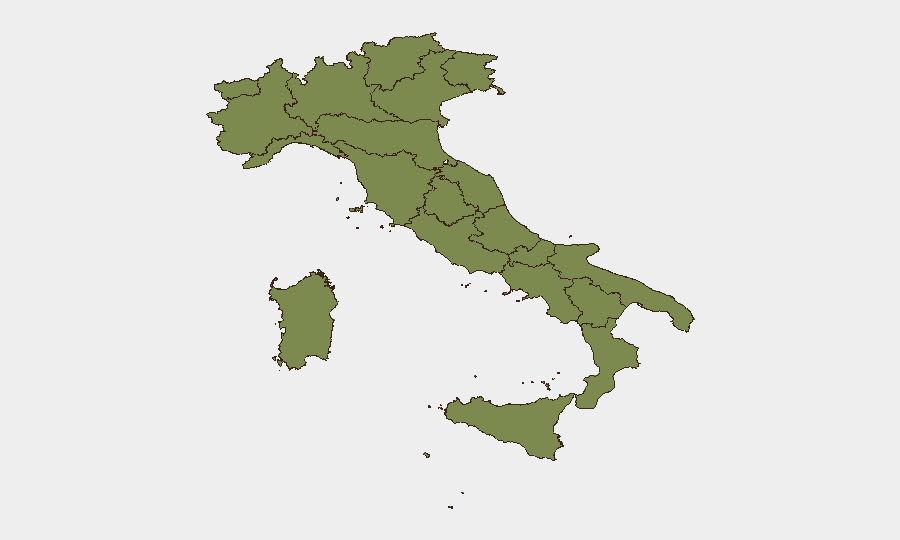
Lazio (Rome and surrounds) dominates the sub-national ranking with a composite risk score of 32.2—more than 1.8× higher than the second-ranked region—driven by concentrated organized crime, political volatility, and multi-actor protest activity in the capital. Lombardy (risk 18) and Sardinia (risk 11.4) follow as secondary concern zones, with Lombardy reflecting Milan's role as a financial and logistics hub vulnerable to organized theft and cyber operations, and Sardinia showing elevated organized-crime and inter-clan violence signals. The remaining nine regions score between 2.2 and 6.3, indicating that risk is heavily front-loaded: roughly 60% of tracked threat events are concentrated in Lazio, Lombardy, and Sardinia combined.
How GeoBit Would Assist
Corporate security and duty-of-care teams would deploy Intel Sweep and multi-language OSINT fusion to track emerging protest, criminal, and cyber campaigns in real time across Italian regions and adjacent borders. AOI Monitoring & Early Warning on Lazio, Lombardy, and key financial districts would flag escalation in organized crime, activism, or infrastructure targeting before broad-based impact. Cyber threat and ransomware search linked to Network & Actor Analysis would enable teams to assess vulnerability of Italian supply-chain partners and subsidiaries and to correlate attack patterns with sector and geography.
7-Day Outlook
Law-enforcement follow-up to the Val di Susa riots is likely to continue with further arrests and prosecutions through early August, keeping Piedmont at elevated operational visibility. No immediate spike in national unrest or large-scale violence is signaled; however, ransomware targeting of Italian industry and localized organized-crime incidents (explosives theft, ATM attacks) are expected to persist at current baseline, particularly in Campania and the North-West industrial belt.
Highest-Risk Areas — Ranked
| # | State / Region | Risk |
|---|---|---|
| 1 | Lazio | 32.2 |
| 2 | Lombardy | 18 |
| 3 | Sardinia | 11.4 |
| 4 | Trentino – Alto Adige/Südtirol | 6.3 |
| 5 | Sicily | 3.2 |
| 6 | Calabria | 2.9 |
| 7 | Liguria | 2.7 |
| 8 | Veneto | 2.5 |
| 9 | Umbria | 2.5 |
| 10 | Apulia | 2.5 |
| 11 | Emilia-Romagna | 2.2 |
| 12 | Tuscany | 2.2 |
Sources
Previous Daily Briefs
A new Italy brief is written every day — each with its own risk map and downloadable CSV. Here's the last week; use the calendar to go further back.
📅 Browse every day by calendar →
Highlighted days have a brief. Tap a day for that day's map & analysis, or “csv” for that day's dataset ($5).
Atlas — our AI intelligence desk — emails them this snapshot personally. Nothing else, no list.