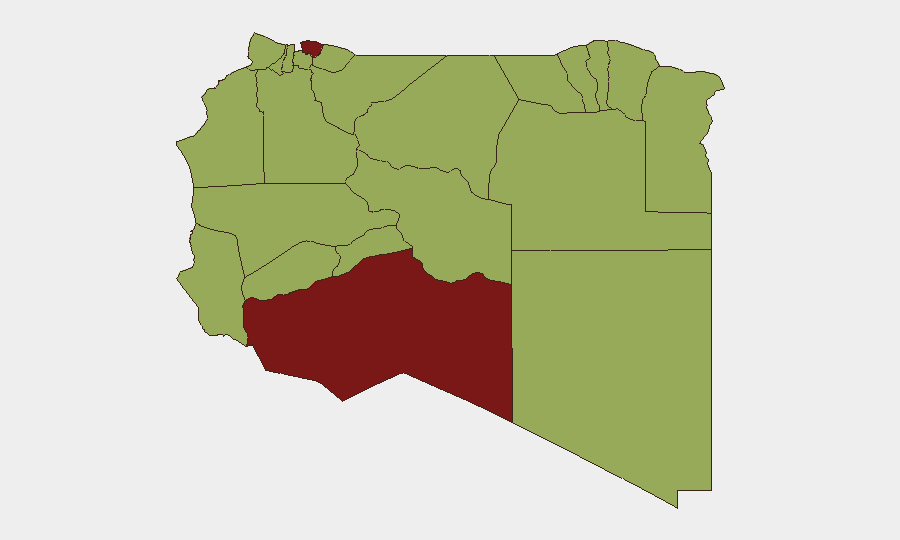
Situation Summary
Libya remains fragmented along political and geographic lines, with the composite threat score of 80 placing it as the #21 global risk. Civil conflict continues as the primary driver of instability. Recent diplomatic activity—including political talks in Misurata and Malta, and U.S.–Libya security cooperation discussions—suggests ongoing efforts to de-escalate, but field-level violence and criminal activity persist. The security environment remains volatile and unpredictable for international personnel and operations.
Key Developments
- Misurata, 2026-07-11: Political settlement discussions held, indicating continued intra-Libyan diplomatic engagement in a traditionally contested city.
- Malta / Libya diplomacy, 2026-07-11: Boulos and Al-Koni reviewed Libya's political developments in third-country talks, reflecting efforts to advance consensus outside the primary conflict zones.
- Libya-wide, 2026-07-11: U.S. and Libyan authorities discussed strengthening security cooperation, signaling potential shifts in international military or law-enforcement support.
- Libya-wide, 2026-07-11: Libyan authorities dismantled a cyber-fraud ring; specific location and operational scope remain unclear from available reporting.
- Libya-wide, 2026-07-10–11: Multiple government investigations and embassy relations reductions recorded; international scrutiny of Libyan governance institutions is intensifying.
- Tripoli / national, 2026-07-09–11: Series of rejection, disapproval, and arrest/detention signals indicate heightened internal tensions and potential security force activity against civilian or criminal actors.
Highest-Risk Areas
Tripoli (risk 86) dominates the threat landscape and remains the critical vulnerability point for international operations. Murzuq (81.7) follows as the second-highest-risk location, reflecting ongoing militia and criminal activity in southern Libya's remote regions. Nine additional districts cluster at risk score 56, including Az Zawiya, Ghat, and Kufra, indicating a secondary band of persistent instability across the western desert, northern coastal, and remote southern areas. This geographic spread suggests that risk is not confined to the capital but endemic across multiple supply routes, border regions, and oil/resource zones critical to international business.
How GeoBit Would Assist
Security teams with personnel or assets in Libya would benefit from AOI Monitoring & Early Warning to establish persistent watch on Tripoli, Murzuq, and secondary risk areas, with automated alerting on civil unrest, checkpoint activity, or criminal incidents. Multi-language OSINT & X/Twitter intelligence combined with event feed analysis and sentiment tracking would surface emerging political fractures, diplomatic shifts (such as the current U.S. cooperation talks), and localized security threats faster than open-source news cycles. Conflict & Military mapping and Network & Actor Analysis would enable teams to track factional movements, affiliate relationships, and control-line shifts affecting route safety and asset positioning.
7-Day Outlook
Diplomatic momentum—evidenced by ongoing political talks and international engagement—may temporarily reduce large-scale active violence but is unlikely to resolve underlying factional divisions. Criminal activity, including fraud rings, cyber operations, and street-level armed crime, will likely persist and may intensify in ungoverned or weakly governed zones. Duty-of-care teams should anticipate continued checkpoint delays, periodic curfews in Tripoli, and elevated risk in remote southern and western districts over the next seven days.
Highest-Risk Areas — Ranked
| # | State / Region | Risk |
|---|---|---|
| 1 | Tripoli | 86 |
| 2 | Murzuq | 81.7 |
| 3 | Nalut | 56 |
| 4 | Ghat | 56 |
| 5 | Baladiyah Surman | 56 |
| 6 | Az Zawiya District | 56 |
| 7 | Wadi al Shatii | 56 |
| 8 | Wadi al Hayaa | 56 |
| 9 | Kufra | 56 |
| 10 | Nuqat al Khams | 56 |
| 11 | Jafara | 56 |
| 12 | Murqub | 56 |
Previous Daily Briefs
A new Libya brief is written every day — each with its own risk map and downloadable CSV. Here's the last week; use the calendar to go further back.
📅 Browse every day by calendar →
Highlighted days have a brief. Tap a day for that day's map & analysis, or “csv” for that day's dataset ($5).
Atlas — our AI intelligence desk — emails them this snapshot personally. Nothing else, no list.