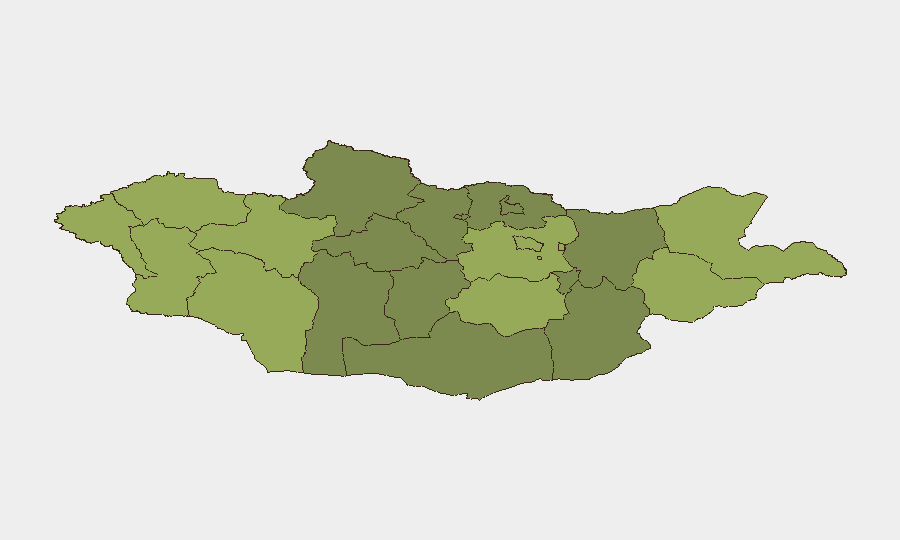
Situation Summary
Mongolia remains a low-threat environment globally (rank #124, composite score 10) with no tracked security events in the current reporting window. The country's primary security profile reflects border vulnerabilities, regional smuggling corridors, and routine organized-crime activity rather than active instability or civil unrest. As of 17 August 2026, Ulaanbaatar is hosting UNCCD COP17 (UN Conference on Desertification), which introduces routine diplomatic security measures and localized traffic controls but no reported disruptions to the overall threat picture.
Key Developments
- Ulaanbaatar, 17–28 August 2026: Opening of UNCCD COP17 brings heightened diplomatic presence, foreign delegations, and enhanced security posture around conference venues. Standard event-security protocols are expected; no incidents reported as of 17 August.
- No major incidents reported in the last 24–48 hours across Mongolia. Live web and social-media monitoring has not surfaced confirmed reports of protests, armed clashes, terrorist activity, or large-scale crime events in this window.
- Border regions remain under routine monitoring: Eastern aimags (particularly Dornod and Sükhbaatar) continue to experience elevated baseline risk related to cross-border smuggling and organized-crime networks, consistent with historical patterns rather than recent escalation.
Highest-Risk Areas
Dornod, Sükhbaatar, Uvs, and Khovd aimags drive Mongolia's sub-national risk profile, reflecting geographic proximity to Russian and Chinese borders, limited state capacity in remote regions, and active smuggling corridors (narcotics, wildlife, contraband fuel). Dornod (risk 58) and Sükhbaatar (risk 55) face the highest composite scores, tied to cross-border criminal networks and weaker law-enforcement presence. Ulaanbaatar (risk 45) remains the capital and primary locus of urban crime, though absolute incident density remains low by regional standards. Border-zone vulnerabilities are structural rather than acute; no sudden deterioration is evident in the current reporting cycle.
How GeoBit Would Assist
Security and risk teams operating in Mongolia should deploy AOI (Area-of-Interest) Monitoring & Early Warning on key border crossings and regional hubs (Dornod, Sükhbaatar) to detect smuggling-route disruptions or sudden enforcement activity. Intel Sweep and multi-language OSINT targeting local and Chinese/Russian media, alongside network and actor analysis of known organized-crime nodes, provide ongoing visibility into cross-border criminal flows and regime-stability trends. GIS & Spatial Analysis layered with satellite imagery supports asset-protection routing and persistent monitoring of remote operations zones, particularly in aimags ranked 46–58.
7-Day Outlook
COP17 will sustain diplomatic activity and event-related security measures in Ulaanbaatar through 28 August; no escalation is anticipated beyond standard conference-hosting protocols. Border-region risk remains stable at elevated baseline, with no indicators of sudden criminal escalation, political instability, or armed activity in the near term. Routine monitoring of smuggling corridors and organized-crime networks should continue; the threat environment is unlikely to shift materially in the next seven days absent a triggering incident (which has not materialized in the current window).
Highest-Risk Areas — Ranked
| # | State / Region | Risk |
|---|---|---|
| 1 | Dornod | 58 |
| 2 | Sükhbaatar | 55 |
| 3 | Uvs | 52 |
| 4 | Khovd | 50 |
| 5 | Bayan-Ölgii | 48 |
| 6 | Govi-Altai | 46 |
| 7 | Ulaanbaatar | 45 |
| 8 | Zavkhan | 44 |
| 9 | Töv | 42 |
| 10 | Dundgovi | 40 |
| 11 | Darkhan-Uul | 38 |
| 12 | Ömnögovi | 37 |
Sources
Previous Daily Briefs
A new Mongolia brief is written every day — each with its own risk map and downloadable CSV. Here's the last week; use the calendar to go further back.
- August 15, 2026
- August 13, 2026
- August 11, 2026
- August 9, 2026
- August 8, 2026
- August 6, 2026
- August 5, 2026
📅 Browse every day by calendar →
Highlighted days have a brief. Tap a day for that day's map & analysis, or “csv” for that day's dataset ($5).
Atlas — our AI intelligence desk — emails them this snapshot personally. Nothing else, no list.