Situation Summary
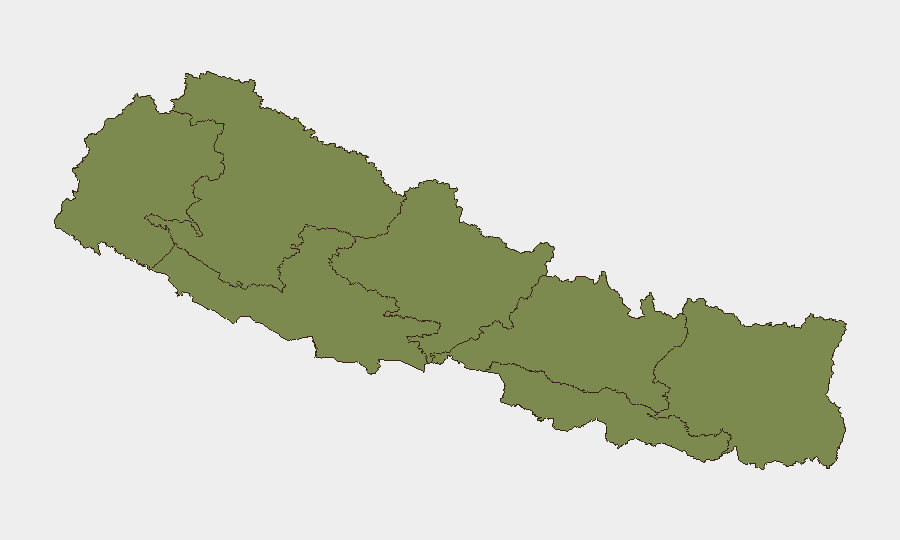
Nepal remains a low-to-moderate global threat environment (rank #94, composite score 11), but internal security dynamics have tightened sharply around Kathmandu in the past 48 hours. A blanket administrative ban on Dalai Lama–related demonstrations, imposed 6 July, has triggered heightened police deployments across the capital's government and diplomatic zones and has intensified political rhetoric. Bagamati Province—home to Kathmandu—accounts for the vast majority of measurable risk (score 31.5 vs. 1.5–2.3 across all other provinces), reflecting concentrated civil-unrest and administrative-control signals.
Key Developments
- Kathmandu (citywide) – 6 July 2026 – Kathmandu District Administration issued a blanket prohibition on public demonstrations linked to Dalai Lama birthday observances, with penalties up to 500,000 NPR and explicit police orders to pre-empt assemblies. This is the most restrictive measure in the current protest cycle.
- Kathmandu (central government and diplomatic zones) – 6 July 2026 – Visible increase in police presence around key government buildings and diplomatic compounds, signaling pre-emptive operational security posture to forestall civil unrest or politically sensitive gatherings.
- Lapchi border area, Dolakha District (Nepal–China frontier) – 6 July 2026 – Two Nepali youths detained by Chinese security forces after alleged unauthorized crossing into Chinese territory. Classified as border-control and diplomatic-sensitivity issue with potential for bilateral friction.
- Kathmandu (political discourse) – 4–5 July 2026 – Sustained escalation in public statements by government, administration, and activist/citizen groups regarding protest restrictions, creating a polarized political environment that underpins current administrative tightening.
- Kathmandu – 4 July 2026 – Police deployments and confrontations with residents, including arrests and administrative sanctions against civil-service actors, formed the immediate precursor to the 6 July ban.
Highest-Risk Areas
Bagamati Province (containing Kathmandu) dominates risk dynamics with a composite score of 31.5—approximately 13–21 times higher than any other province. All remaining six provinces score between 1.5 and 2.3, indicating that civil unrest, police action, and administrative control measures are geographically concentrated in and around the capital. Risk in Bagamati is driven by ongoing protest activity, police presence, and administrative restrictions tied to politically sensitive observances. Companies and personnel in Kathmandu should treat this as the primary operational constraint; travel to peripheral provinces carries substantially lower civil-unrest risk.
How GeoBit Would Assist
Security and risk teams should employ AOI Monitoring & Early Warning to maintain persistent watch on Kathmandu's central administrative, diplomatic, and commercial zones, with alerting configured for police deployments, crowd assembly, and administrative announcements. Intel Sweep and multi-language OSINT (X/Twitter, Telegram, Nepali-language news) will capture political rhetoric and administrative directives 24–48 hours before formal restrictions take effect. Routing & Network Analysis can identify alternative movement corridors around heavily policed areas, enabling safer staff transit and supply logistics during periods of heightened administrative control.
7-Day Outlook
The blanket demonstration ban and heightened police presence are expected to suppress large-scale street gatherings through at least mid-July, but do not eliminate underlying political tensions. Bilateral friction at the Nepal–China border may escalate if detention incidents recur. Companies should expect continued administrative restrictions on movement and assembly in Kathmandu, with periodic pre-emptive police cordons around government and diplomatic zones.
Highest-Risk Areas — Ranked
| # | State / Region | Risk |
|---|---|---|
| 1 | Bagamati Province | 31.5 |
| 2 | Gandaki Province | 2.3 |
| 3 | Sudurpashchim Province | 1.9 |
| 4 | Karnali Province | 1.9 |
| 5 | Lumbini Province | 1.5 |
| 6 | Koshi Province | 1.5 |
| 7 | Madhesh Province | 1.5 |
Sources
Previous Daily Briefs
A new Nepal brief is written every day — each with its own risk map and downloadable CSV. Here's the last week; use the calendar to go further back.
📅 Browse every day by calendar →
Highlighted days have a brief. Tap a day for that day's map & analysis, or “csv” for that day's dataset ($5).
Atlas — our AI intelligence desk — emails them this snapshot personally. Nothing else, no list.