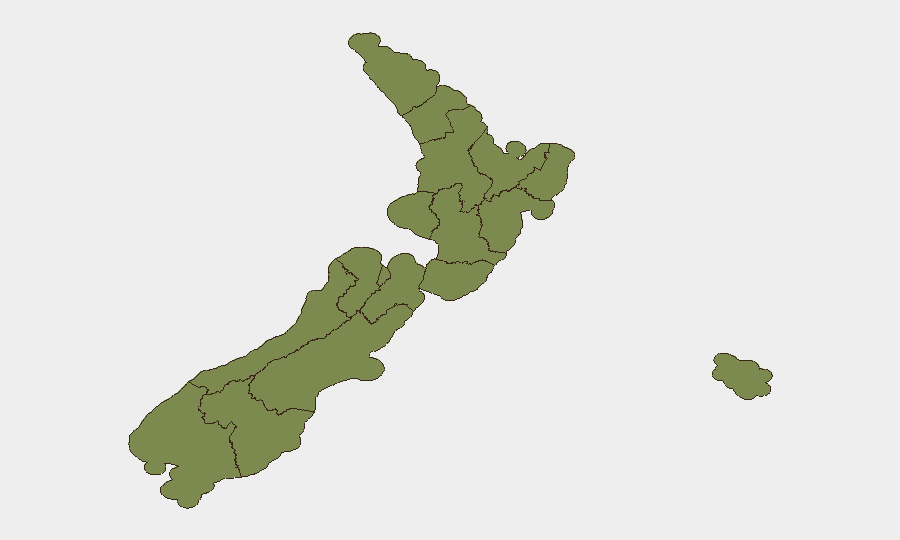
Situation Summary
New Zealand maintains a stable security posture with no major unrest, large-scale infrastructure disruption, or terrorism incidents reported in the last 24–48 hours. The country ranks #153 globally in composite threat score (5/100) and remains well below regional peers. However, a significant data-breach incident affecting fleet GPS and driver-licence information for nearly 3,000 New Zealand and Australian companies has been publicly disclosed and is now circulating in hacker forums, creating ongoing operational security and crime-enablement risk for affected organisations.
Key Developments
- Teletrac Navman GPS data breach – disclosed early July 2026. A hacker forum post (4 July UTC) advertised exfiltration of real-time GPS tracking data and personal information for 2,988 companies across Australia and New Zealand, including vehicle registrations and driver-licence details. The dataset covers a 48-hour window in late June; the breach and public advertisement are current. New Zealand organisations across fleet, logistics, and transport sectors are confirmed as affected.
- Routine emergency incidents, South Island (Christchurch, Wainoni) – 5 July 2026. Fire and Emergency New Zealand logged multiple standard emergency responses across the South region, including a Wainoni incident. No escalation into civil unrest or infrastructure disruption; no travel advisories issued.
- No major civil, political, or security incidents confirmed in the last 24–48 hours. Open-source and social-media coverage for New Zealand remains sparse; national-level reporting in this window focuses on routine services and regional/international matters rather than domestic security crises.
Highest-Risk Areas
Wellington and Canterbury account for the majority of GeoBit's tracked risk in New Zealand (composite scores 31.8 and 19.3 respectively), driven by concentration of government, diplomatic, and critical infrastructure in Wellington, and a mix of urban, transport, and economic activity in Christchurch and the Canterbury region. Auckland's risk score (17.6) reflects population and commercial density; all three account for over 80% of the country's composite threat score. Remaining regions (Northland, Tasman, Waikato, and others) carry minimal tracked risk, indicating New Zealand's threat landscape is highly concentrated in its three largest metropolitan and administrative centres.
How GeoBit Would Assist
Security and risk teams with exposure in New Zealand should employ AOI Monitoring & Early Warning to track Wellington, Canterbury, and Auckland for emerging civil, cyber, or infrastructure incidents; Intel Sweep and OSINT fusion to correlate intelligence from government, diplomatic, and corporate sources with real-time event feeds; and Cyber threat and network analysis to cross-reference publicly disclosed data breaches (such as Teletrac Navman) against organisational fleet, personnel, and logistics operations to assess exposure and inform incident-response and duty-of-care protocols.
7-Day Outlook
No major security escalation is anticipated in the next seven days based on current open-source and event-signal data. Organisations with affected fleet-management or personnel-tracking systems should prioritise breach-impact assessment and password/credential rotation protocols. Continued monitoring of Wellington political and diplomatic activities, and Canterbury urban-security developments, remains warranted as routine baseline vigilance.
Highest-Risk Areas — Ranked
| # | State / Region | Risk |
|---|---|---|
| 1 | Wellington | 31.8 |
| 2 | Canterbury | 19.3 |
| 3 | Auckland | 17.6 |
| 4 | Northland | 3.8 |
| 5 | Tasman | 3.4 |
| 6 | Waikato | 2.6 |
| 7 | Chatham Islands | 2.2 |
| 8 | West Coast | 2.2 |
| 9 | Southland | 2.2 |
| 10 | Taranaki | 1.8 |
| 11 | Bay of Plenty | 1.8 |
| 12 | Manawatū-Whanganui | 1.8 |
Sources
Previous Daily Briefs
A new New Zealand brief is written every day — each with its own risk map and downloadable CSV. Here's the last week; use the calendar to go further back.
📅 Browse every day by calendar →
Highlighted days have a brief. Tap a day for that day's map & analysis, or “csv” for that day's dataset ($5).
Atlas — our AI intelligence desk — emails them this snapshot personally. Nothing else, no list.