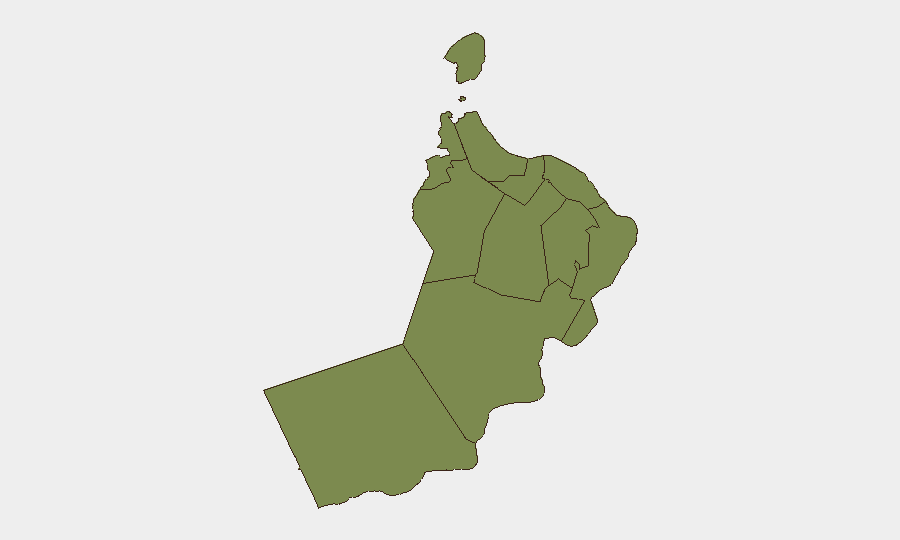
Situation Summary
Oman faces acute maritime and territorial security escalation following Iranian military strikes on commercial shipping and infrastructure in and near Omani waters over July 13–14, 2026, with at least three vessels struck by missile fire. The last 48 hours have seen a cluster of at least three serious incidents involving tankers in sea corridors near Oman, including strikes off Duqm and near Khasab in Musandam, prompting the U.S. Embassy and French Ministry of Foreign Affairs to issue travel restrictions and elevated warnings. Regional military activity involving Iran, UK, and U.S. forces continues in proximity to Omani territorial waters and maritime approaches. The composite threat score remains moderate (rank #161 globally), but sub-national volatility is extreme, with Al Wusta Governorate carrying a risk score of 31.8—more than seven times higher than any other governorate.
Key Developments
- Off Duqm, Arabian Sea – July 18, 2026: Commercial tanker involved in military incident approximately 100 nautical miles east of Duqm; UKMTO issued security advisory citing ongoing military activity; damage and parties under investigation.
- Near Khasab, Musandam Governorate – July 17, 2026: Commercial tanker deliberately struck by unidentified projectile roughly 19 nautical miles east of Khasab; vessel sustained minor structural damage but remained seaworthy; crew safe; investigation opened.
- Musandam and Duqm – July 17, 2026: U.S. Embassy in Muscat issued security alert imposing travel restrictions for U.S. government personnel to Musandam and Duqm; alert advises U.S. citizens to avoid both zones and reconsider travel to Oman due to escalating regional security environment and risk of isolation.
- Salalah, Duqm, Musandam, Yemen border – July 18, 2026: French Ministry of Foreign Affairs issued updated travel advisory imposing "greatest vigilance" in Oman and discouraging travel to Salalah, Duqm, Musandam, and Yemen border except for imperative reasons, citing recent Iranian strikes on Omani territory.
- Northern and central maritime zones – July 17–18, 2026: Multiple incidents reported in 48-hour window; at least three tankers struck by missiles or shells in southern and central sea corridors near Oman; UKMTO alerts indicate cluster of attacks and hostile interactions with commercial shipping.
- Regional military activity – July 17–19, 2026: Conventional military force events recorded involving Iran, UK, U.S., and unidentified military actors in or near Omani airspace and territorial waters; ongoing investigations by U.S. officials and Marines indicate heightened foreign military engagement.
Highest-Risk Areas
Al Wusta Governorate (risk 4.3–31.8 depending on methodology) dominates the risk landscape; it encompasses Duqm and the central maritime approaches where the last 48 hours have produced the majority of incident clusters. Musandam Governorate (risk 2.0) ranks fourth overall but has hosted at least one confirmed strike (near Khasab, July 17) and is now subject to U.S. government travel restrictions, signaling acute volatility. Dhofar Governorate (risk 2.4, includes Salalah) is now restricted by French authorities. All other governorates carry baseline risk scores of 1.8–4.3 and do not feature in current incident reporting or advisory updates.
How GeoBit Would Assist
AOI Monitoring & Early Warning with persistent watch on Al Wusta, Musandam, and Dhofar maritime zones would provide real-time alerting on vessel incidents, military activity, and weapons launches. Maritime & Aviation Tracking coupled with Conflict & Military (force structure, weapons-capability tracking) would enable security teams to map hostile actor positions, weapon ranges, and safe routing corridors. Routing & Network Analysis would support alternative journey planning for personnel and asset movements avoiding high-risk corridors and chokepoints near Duqm and Khasab.
7-Day Outlook
Regional military escalation is likely to persist through the coming week; Iranian, UK, and U.S. forces remain engaged in or proximate to Omani waters, and no de-escalation signals have been issued. Commercial maritime traffic should expect heightened interdiction risk in Al Wusta and Musandam approaches. Personnel and asset movements to southern (Dhofar) and northern (Musandam) regions should be deferred pending stabilization; central Oman (Muscat, Ad Dakhiliyah) remains lower-risk but contingent on non-escalation of regional conflict.
Highest-Risk Areas — Ranked
| # | State / Region | Risk |
|---|---|---|
| 1 | Al Wusta Governorate | 31.8 |
| 2 | Muscat Governorate | 4.3 |
| 3 | Dhofar Governorate | 2.4 |
| 4 | Musandam Governorate | 2 |
| 5 | Al Buraymi Governorate | 1.8 |
| 6 | Ad Dhahirah Governorate | 1.8 |
| 7 | Al Batinah North Governorate | 1.8 |
| 8 | Al Batinah South Governorate | 1.8 |
| 9 | Ad Dakhiliyah Governorate | 1.8 |
| 10 | Ash Sharqiyah North Governorate | 1.8 |
| 11 | Ash Sharqiyah South Governorate | 1.8 |
Sources
Previous Daily Briefs
A new Oman brief is written every day — each with its own risk map and downloadable CSV. Here's the last week; use the calendar to go further back.
📅 Browse every day by calendar →
Highlighted days have a brief. Tap a day for that day's map & analysis, or “csv” for that day's dataset ($5).
Atlas — our AI intelligence desk — emails them this snapshot personally. Nothing else, no list.