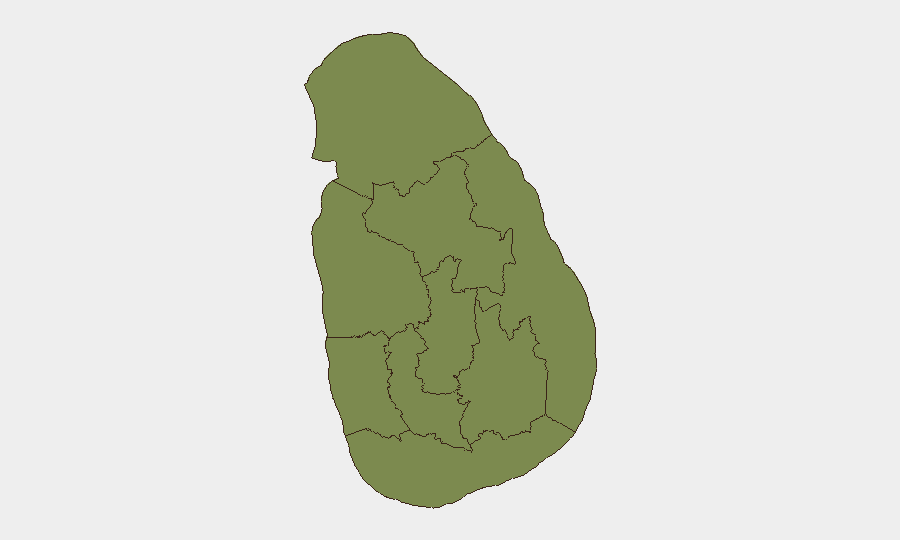
Situation Summary
Sri Lanka's security environment remains fragmented, with institutional instability and localized violent crime dominating the threat picture rather than coordinated civil unrest or armed conflict. The composite threat score (8/100, rank #115 globally) reflects deep governance tensions—judiciary, military, and police factions have issued conflicting public statements in the past 48 hours—overlaid on active criminal violence in urban and port zones. Western Province accounts for nearly 40% of tracked risk; no countrywide violence or infrastructure collapse is imminent, but rapid political developments and law-enforcement shifts warrant close monitoring. Dengue prevalence and sanitation issues in Colombo add secondary health risk.
Key Developments
- Negombo Prison rioting, Monday 27 July (morning): Two prison officers and one other individual killed in fresh unrest; security operations ongoing to restore control. Heightened police presence and access restrictions in place; potential for spillover unrest in surrounding Negombo town.
- Colombo Port City homicide, Thursday 23–24 July: One Chinese national killed during reported confrontation between organized crime groups (~20 individuals involved); body recovered in forested area near Eheliyagoda (Karadana) on 24 July. Two suspects arrested at Bandaranaike International Airport attempting departure; intensive multi-agency interrogations active over past 48 hours. Increased law-enforcement screening at port and airport facilities.
- Palliyawatta shooting, Wattala (Thursday 23 July; investigation active 26–27 July): Armed gunman opened fire at function hall near Mattakkuliya Bridge during child's birthday party; one dead, shooter fled. Police search operations and checkpoints ongoing in mixed residential–commercial zone north of Colombo.
- Institutional governance tensions, clustered signals over 48 hours: Chief Justice, ministerial offices, police leadership, and military factions have engaged in public disputes and conflicting statements. No single violent incident tied to these signals, but pattern suggests judiciary-executive-security apparatus fracturing; elevated risk of sudden protests, enforcement-posture shifts, and public-sector disruptions.
- Western Province dengue surge and sanitation concerns: Approximately 50% of national dengue cases concentrated in Western Province; garbage accumulation in Colombo Municipal Council areas cited as vector-breeding factor. Defence and health agencies conducting vector-control and waste-clearance operations; short-notice public-health interventions likely.
Highest-Risk Areas
Western Province (score 34.7) is by far the primary concentration, driven by crime (Colombo Port City, urban gang activity), institutional presence, and health vector density. Southern and Central Provinces (23.4 and 21.7 respectively) reflect secondary crime and civil unrest signals. The remaining provinces fall substantially below this tier, indicating risk is highly concentrated in the western coastal belt and central highlands rather than distributed nationally. Kandy (Central Province) and Negombo (Western Province) emerge as specific flashpoints from recent events.
How GeoBit Would Assist
Intel Sweep and X/Twitter & Telegram OSINT would deliver real-time tracking of institutional disputes, protest organization, and criminal network movements across Colombo and port facilities. AOI Monitoring & Early Warning with persistent watch on Negombo Prison, Colombo Port City, and key police/judiciary facilities would provide 24-hour alerting for escalations or security posture changes. Routing & Network Analysis would enable duty-of-care teams to plan movement around active police operations (Wattala, Eheliyagoda) and identify alternative routes during fluid governance periods.
7-Day Outlook
Immediate risk remains localized and reactive—prison unrest resolution, criminal investigation outcomes, and institutional dispute rhetoric will likely dominate rather than trigger nationwide instability. Expect elevated police visibility and short-notice checkpoints in Western and Central Provinces through early August. Political developments and any further judiciary-executive confrontations could accelerate institutional fracturing; monitor official statements and media for signs of broader public mobilization.
Highest-Risk Areas — Ranked
| # | State / Region | Risk |
|---|---|---|
| 1 | Western Province | 34.7 |
| 2 | Southern Province | 23.4 |
| 3 | Central Province | 21.7 |
| 4 | Sabaragamuwa Province | 7.3 |
| 5 | Eastern Province | 6.5 |
| 6 | North Western Province | 5.1 |
| 7 | Northern Province | 4.7 |
| 8 | North Central Province | 4.7 |
| 9 | Uva Province | 4.7 |
Sources
Previous Daily Briefs
A new Sri Lanka brief is written every day — each with its own risk map and downloadable CSV. Here's the last week; use the calendar to go further back.
📅 Browse every day by calendar →
Highlighted days have a brief. Tap a day for that day's map & analysis, or “csv” for that day's dataset ($5).
Atlas — our AI intelligence desk — emails them this snapshot personally. Nothing else, no list.