Situation Summary
Turkmenistan presents a stable security environment as of 15 July 2026, with no reported incidents of civil unrest, significant crime, or infrastructure disruption in the past 24–48 hours. Routine diplomatic activity continues (Deputy Foreign Minister consultations in Jakarta on 14 July), and government media focus remains on economic activity. The country's closed information environment limits visibility into lower-level incidents, but open-source monitoring across official channels, independent media, and social platforms shows no acute security alerts.
Key Developments
- Ashgabat, 14 July 2026 – Deputy Foreign Minister Ahmet Gurbanov conducted political consultations with the ASEAN Secretary-General in Jakarta; no security incidents or travel disruptions reported in the capital or elsewhere in Turkmenistan linked to this activity.
- Balkan Region, 13–14 July 2026 – Government media reports routine agricultural harvest operations (melons and watermelons); no civil unrest, infrastructure failures, or labour-related incidents mentioned in official coverage.
- Countrywide, 13–14 July 2026 – Open-source social-media monitoring (X/Twitter, Telegram) shows no corroborated posts on protests, transport shutdowns, accidents, or security incidents; available posts align with official economic and diplomatic messaging.
- Countrywide, 13–14 July 2026 – Regional security and independent media outlets carry no new Turkmenistan-specific incident alerts; broader Central Asia coverage focuses on historical fuel vulnerabilities and past operations, not current instability.
- PETRONAS statements, 15 July 2026 – Public statements issued by PETRONAS and referenced in relation to Turkmenistan; details of commercial or operational context not independently confirmed in current open sources.
Highest-Risk Areas
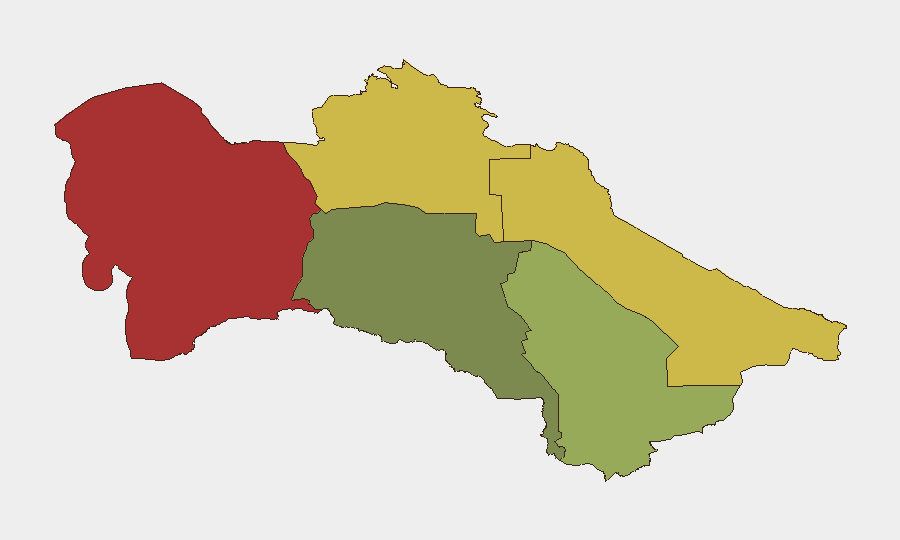
Balkan Region (risk 78) and Lebap Region (risk 68) drive the country's composite threat score, likely reflecting historical border sensitivity, remote infrastructure, and limited state oversight in western areas. Dashoguz Region (risk 62) in the north carries elevated but secondary risk. By contrast, Ashgabat City (risk 18) and Ahal Region (risk 35) remain substantially lower-risk, reflecting capital-city security presence and relative stability in the south and east. For corporate operations, asset concentration in or travel through Balkan and Lebap regions warrants enhanced monitoring and contingency planning, particularly for energy and extraction sectors operating in remote areas.
How GeoBit Would Assist
Security teams with personnel or assets in Turkmenistan should employ AOI Monitoring & Early Warning on high-risk sub-national regions (Balkan, Lebap, Dashoguz) to detect early signals of unrest, infrastructure disruption, or access restrictions. Multi-language OSINT fusion (Intel Sweep, Telegram and social monitoring, government media tracking) helps parse the closed information environment and identify incidents before they escalate. Routing & Network Analysis supports duty-of-care planning by identifying alternative transport corridors and border crossings if primary routes are disrupted, particularly critical for remote energy operations in western regions.
7-Day Outlook
No acute trajectory shift is evident. Barring external shocks (regional escalation, significant commodity-price volatility affecting energy operations), Turkmenistan is expected to remain stable over the next week. Monitoring of PETRONAS activities and any follow-on commercial or regulatory statements should continue, as energy-sector developments carry downstream implications for workforce safety, supply chains, and foreign-national presence in high-risk regions.
Highest-Risk Areas — Ranked
| # | State / Region | Risk |
|---|---|---|
| 1 | Balkan Region | 78 |
| 2 | Lebap Region | 68 |
| 3 | Dashoguz Region | 62 |
| 4 | Mary Region | 42 |
| 5 | Ahal Region | 35 |
| 6 | Ashgabat City | 18 |
Sources
Previous Daily Briefs
A new Turkmenistan brief is written every day — each with its own risk map and downloadable CSV. Here's the last week; use the calendar to go further back.
📅 Browse every day by calendar →
Highlighted days have a brief. Tap a day for that day's map & analysis, or “csv” for that day's dataset ($5).
Atlas — our AI intelligence desk — emails them this snapshot personally. Nothing else, no list.