Situation Summary
Venezuela is experiencing a severe, fast-evolving humanitarian and security crisis following multiple earthquakes on 24 June 2026 that have killed over 1,700 people and left tens of thousands missing across northern regions. The country remains under a state of emergency with elevated military deployments and security posture, while rescue operations continue at critical intensity in heavily damaged areas. The combination of earthquake-driven infrastructure collapse, mass displacement, and pre-existing urban crime and political tensions has created a compound threat environment with acute near-term risks to movement, services, and public order.
Key Developments
- La Guaira (Vargas State), 4–5 July: Intensive search-and-rescue operations continue for survivors in collapsed structures; rescue teams report operating at capacity limits amid high heat and difficult conditions, with international medical teams (MedGlobal, volunteer groups) deploying critical supplies and field medical support to overwhelmed local responders.
- Nationwide, 4–5 July: Updated casualty figures circulating across media and NGO channels report over 1,700 confirmed deaths, with rescue organizations flagging the next 24–48 hours as critical for survivor location. Tens of thousands remain unaccounted for.
- Northern Venezuela (multiple states), 4–5 July: Reports describe expanding humanitarian disaster across Vargas, Carabobo, and adjoining regions, with widespread destruction, homelessness, and disruption to water, health, and shelter services; local infrastructure remains severely strained.
- Caracas and nationwide, 4–5 July: State of emergency remains active with multiple military strikes and deployments confirmed across the capital and other urban centers; travel advisories continue to flag heightened restrictions and potential curfews in affected zones.
- Urban crime compounding crisis, 4–5 July: Foreign travel guidance reiterates ongoing risks of homicide, armed robbery, kidnapping, and carjacking in Caracas and major cities, now amplified by earthquake-related service disruption, infrastructure stress, and limited emergency response capacity.
- Grassroots mobilization, 4–5 July: Tens of thousands of volunteers and civil-society organizations reported working alongside state responders and international rescue teams, creating mass movement patterns and logistics pressure in disaster zones with implications for access and security management.
Highest-Risk Areas
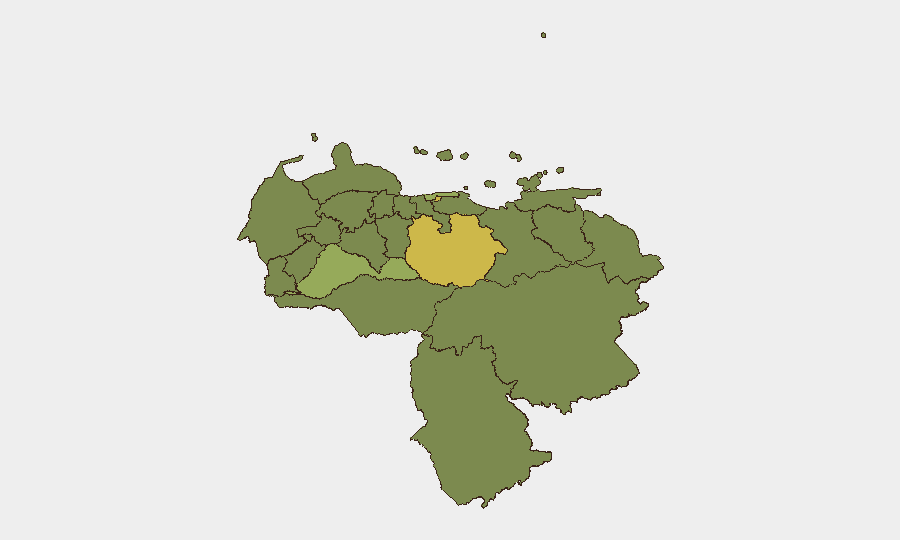
Guarico State (68.2) and the Federal District/Caracas (62.3) rank as highest-risk sub-national zones, driven by a combination of earthquake-related humanitarian emergency, infrastructure collapse, and pre-existing urban crime and political tensions. Barinas (43.1) and Vargas (41.9) follow, with Vargas notably the epicenter of active rescue operations and therefore experiencing acute short-term security and logistical strain. The concentration of risk in the northern tier—Vargas, Carabobo, and Aragua—reflects both earthquake damage and baseline vulnerability, while Guarico's elevation reflects either pre-existing instability or emerging secondary effects from the crisis.
How GeoBit Would Assist
Security teams with personnel or assets in Venezuela should deploy AOI Monitoring & Early Warning on Caracas, La Guaira, and key supply routes to track real-time movement, curfew changes, and access restrictions. OSINT Fusion (X/Twitter, Telegram, YouTube, and multi-language search) provides continuous situational awareness of rescue operations, military posture, and crime patterns, while Routing & Network Analysis enables alternative journey planning around affected zones and security cordons. Humanitarian & NGO data access offers validated field reports on infrastructure status, service availability, and displacement patterns to inform duty-of-care decisions.
7-Day Outlook
Rescue operations will remain the dominant security driver through 10 July, sustaining elevated military presence, movement restrictions, and civilian mobilization in affected zones. Crime risk in Caracas and secondary cities is likely to remain elevated due to stretched police capacity and ongoing economic strain. Unless major aftershocks or infrastructure failures occur, the acute phase is expected to shift toward longer-term recovery and political management by mid-July, but security volatility will persist.
Highest-Risk Areas — Ranked
| # | State / Region | Risk |
|---|---|---|
| 1 | Guarico State | 68.2 |
| 2 | Federal District | 62.3 |
| 3 | Barinas State | 43.1 |
| 4 | Vargas State | 41.9 |
| 5 | Carabobo State | 39.8 |
| 6 | Lara State | 39.4 |
| 7 | Nueva Esparta State | 38.6 |
| 8 | Zulia State | 38.1 |
| 9 | Falcon State | 38.1 |
| 10 | Federal Dependencies | 38.1 |
| 11 | Apure State | 38.1 |
| 12 | Aragua State | 38.1 |
Sources
Previous Daily Briefs
A new Venezuela brief is written every day — each with its own risk map and downloadable CSV. Here's the last week; use the calendar to go further back.
📅 Browse every day by calendar →
Highlighted days have a brief. Tap a day for that day's map & analysis, or “csv” for that day's dataset ($5).
Atlas — our AI intelligence desk — emails them this snapshot personally. Nothing else, no list.