Situation Summary
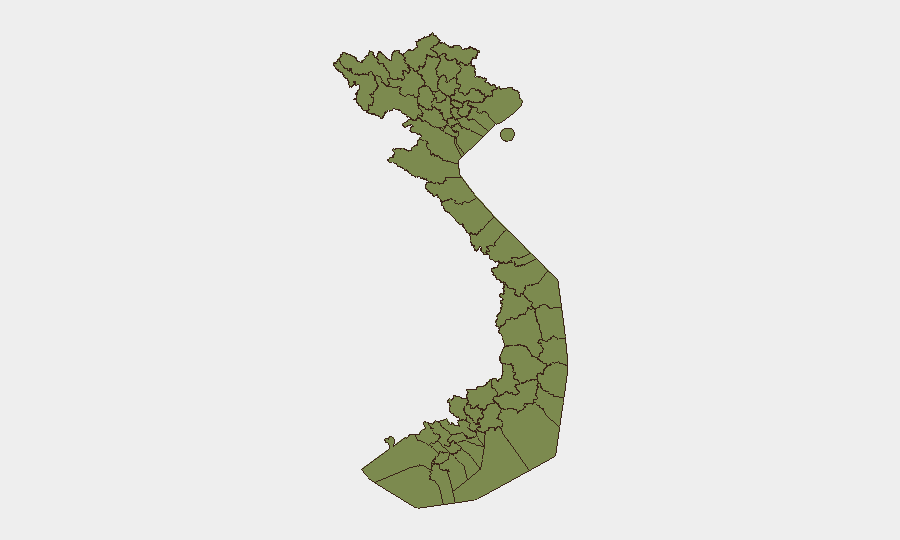
Vietnam maintains a composite threat score of 3 (rank #145 globally) with 82 tracked events, reflecting a stable security environment with localized concentration of risk. Ho Chi Minh City dominates the threat picture with a composite risk score of 32.4—more than four times higher than Hà Nội—driven by urban crime, commercial fraud, and trafficking activity. Recent event signals (27–28 July) indicate diplomatic tensions, public statements on contested issues, and routine military operations, but no confirmed security incidents or civil unrest in the last 48 hours have met corroboration standards. The trajectory remains low-intensity and predictable, with risk heavily weighted to the southern economic hub and northern border provinces.
Key Developments
- No independently verified security incidents, unrest, crime, or infrastructure disruptions — Vietnam (countrywide) — 27–29 July 2026 — Open-source monitoring and GeoBit event feeds did not yield corroborated incidents meeting time-stamp and source standards in the last 48 hours. Routine public statements and diplomatic activity (Australia–Vietnam, Vietnam–US) were recorded but do not constitute operational security developments for corporate duty-of-care purposes.
- Diplomatic and public-statement activity — Hà Nội and Saigon — 27–28 July 2026 — Multiple public statements attributed to Vietnamese government, university, and authority sources on unspecified contested issues; no security incident underlying these statements has been confirmed. Assessment: Standard political communication, not an indicator of imminent instability.
- Military-exercise or routine-operations signal — Vietnam (national) — 27 July 2026 — Conventional military force activity logged in event feeds; consistent with known periodic exercises and border-region patrols. No escalation indicators detected.
Highest-Risk Areas
Ho Chi Minh City's risk score of 32.4 reflects its role as Vietnam's largest commercial and financial center, concentrating organized crime, counterfeit goods trafficking, financial fraud, and petty street crime. The gap between HCMC (32.4) and Hà Nội (7.2) is exceptional and suggests corporate assets, expatriate populations, and supply chains in the south face materially higher exposure to theft, extortion, and organized-crime targeting than northern locations. Northern border provinces (Sơn La, Lai Châu, Lào Cai, Hà Giang, and others, all scoring 2.4–3.6) carry secondary risk from cross-border smuggling networks, sporadic ethnic tensions, and limited state security infrastructure—relevant primarily to operations in remote areas or supply routes involving China. Mid-level cities and central provinces show negligible tracked threat.
How GeoBit Would Assist
Intel Sweep and OSINT fusion can establish persistent monitoring of HCMC commercial districts, ports, and expatriate neighborhoods for emerging crime networks or trafficking activity, integrating X/Telegram feeds, local media, and entity-extraction analysis to flag early warnings before incidents affect personnel or cargo. AOI Monitoring & Early Warning with customizable alerting on Ho Chi Minh City and northern border provinces enables security teams to detect civil unrest, protest activity, or military escalation within minutes, triggering duty-of-care response before travel or asset movement becomes unsafe. Network & Actor Analysis maps organized-crime and smuggling actors in high-risk zones, supporting supply-chain risk assessment and staff-movement route planning to avoid known concentration areas.
7-Day Outlook
No significant escalation is anticipated in the next seven days. The diplomatic activity and public statements of 27–28 July appear consistent with routine government communication on longstanding bilateral issues and do not signal imminent policy shifts, unrest, or security deterioration. Corporate risk in Vietnam remains geographically concentrated (HCMC) and threat-category focused (crime, fraud, trafficking) rather than systemic or emergency-level, supporting normal operations under baseline security protocols.
Highest-Risk Areas — Ranked
| # | State / Region | Risk |
|---|---|---|
| 1 | Ho Chi Minh City | 32.4 |
| 2 | Hà Nội | 7.2 |
| 3 | Sơn La Province | 3.6 |
| 4 | Lai Châu Province | 2.4 |
| 5 | Lào Cai Province | 2.4 |
| 6 | Hà Giang Province | 2.4 |
| 7 | Tuyên Quang Province | 2.4 |
| 8 | Cao Bằng Province | 2.4 |
| 9 | Bắc Kạn Province | 2.4 |
| 10 | Điện Biên Province | 2.4 |
| 11 | Yên Bái Province | 2.4 |
| 12 | Thái Nguyên Province | 2.4 |
Sources
Previous Daily Briefs
A new Vietnam brief is written every day — each with its own risk map and downloadable CSV. Here's the last week; use the calendar to go further back.
📅 Browse every day by calendar →
Highlighted days have a brief. Tap a day for that day's map & analysis, or “csv” for that day's dataset ($5).
Atlas — our AI intelligence desk — emails them this snapshot personally. Nothing else, no list.