Résumé de la situation
L'environnement sécuritaire du Bénin reste modérément élevé, avec un indice de menace nationale composite de 37 (classé #52 mondialement) principalement entraîné par une activité persistante de l'insurrection et du terrorisme dans les départements du nord. Aucun incident de sécurité majeur n'a été enregistré au cours de la semaine du 13–19 octobre, bien que la criminalité localisée et les tensions communautaires continuent de poser un risque aux populations civiles et aux opérations commerciales. Le profil de risque du pays est fortement concentré dans le nord, où l'activité des groupes armés et les pressions transfrontalières du Mali et du Burkina Faso créent des risques opérationnels soutenus.
Développements clés
- Djougou, quartier de Kilir — 16 octobre 2026 : La police a démantelé un dépôt pharmaceutique clandestin et saisi 243,4 kg de médicaments contrefaits et informels. Un couple suspecté a été détenu ; un troisième suspect reste en fuite. L'opération signale un trafic organisé persistant de fournitures médicales falsifiées affectant la santé publique et l'intégrité potentielle de la chaîne d'approvisionnement des entreprises.
- Angaradébou, commune de Kandi — 13 octobre 2026 : Un agriculteur a été mortellement attaqué à la machette au retour des champs. Les résidents ont mené des violences de représailles contre un membre suspecté de la communauté peule, brûlant plusieurs maisons. La police a évacué le père du suspect et a rétabli le calme. L'incident souligne les tensions communautaires persistantes et le risque d'escalade par l'action de vigilance dans les zones rurales du nord.
Zones à plus haut risque
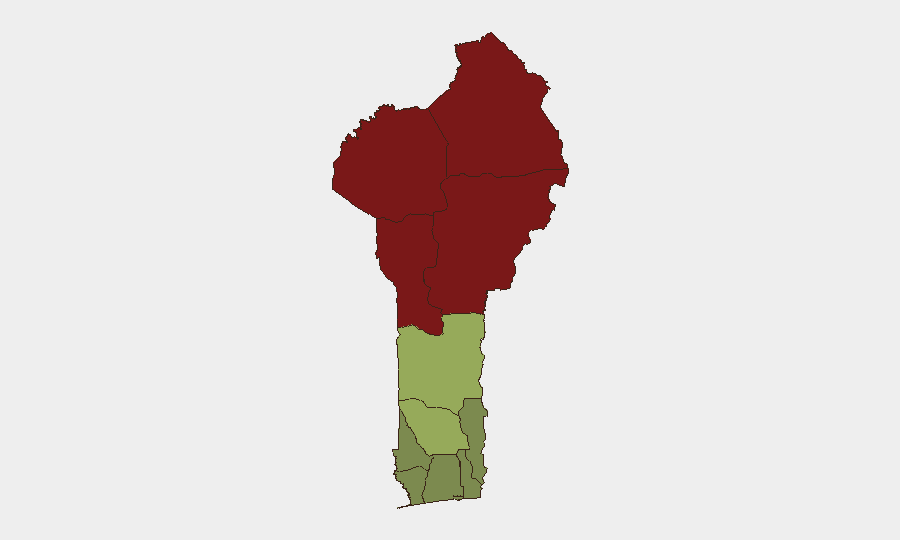
Les départements du nord d'Alibori (risque 92), Atakora (88), Donga (85) et Borgou (83) constituent l'écrasante majorité du profil de menace du Bénin. Ces zones se caractérisent par une présence insurgée active ou résiduelle, une infiltration transfrontalière de groupes djihadistes opérant au Mali et au Burkina Faso, et une capacité d'État limitée pour des opérations de sécurité soutenus. Les départements centraux et méridionaux—Zou, Collines, Plateau et Kouffo (scores de risque 45–35)—connaissent des niveaux secondaires de criminalité organisée et de violence petite délinquance mais demeurent substantiellement plus sûrs pour les opérations commerciales et diplomatiques. Les départements du Littoral, Ouémé et Atlantique (risque 22–28) sont les zones à plus faible risque et incluent la capitale Cotonou et les infrastructures portuaires primaires.
Comment GeoBit pourrait aider
Les équipes de sécurité et de gestion des risques opérant au Bénin bénéficieraient de la surveillance des AOI et d'alerte précoce sur les quatre départements du nord à plus haut risque pour suivre l'activité émergente des groupes armés et les incursions transfrontalières avec des alertes en temps réel. L'Intel Sweep et la fusion OSINT multilingue permettraient un suivi continu de la couverture médiatique locale sur la violence communautaire, les réseaux criminels (comme le démontrent les cas de trafic pharmaceutique) et les développements de la capacité de l'État qui signalent une détérioration ou une stabilisation. L'analyse des itinéraires et des réseaux soutiendrait les équipes de devoir de diligence dans l'identification d'itinéraires alternatifs sécurisés pour les mouvements de personnel et d'approvisionnement, en particulier en transit entre les centres commerciaux du sud et toute opération du nord.
Perspectives pour 7 jours
Aucune détérioration majeure imminente de la sécurité n'est indiquée pour la semaine à venir ; cependant, la nature localisée des incidents récents (trafic de pharmacie, homicide d'agriculteur, représailles communautaires) reflète des vulnérabilités structurelles dans l'État de droit et les relations intercommunautaires plutôt que des indicateurs de crise aiguë. Les départements du nord resteront sous une pression de suivi soutenue, et toute escalade de l'activité des groupes armés au-delà des frontières du Burkina Faso ou du Mali pourrait se transmettre rapidement à Alibori et Atakora. Le personnel des entreprises et des diplomaties doit maintenir une vigilance accrue dans les opérations du nord et s'appuyer sur l'intelligence d'itinéraire mise à jour pour tous les déplacements essentiels.
Zones les Plus à Risque — Classées
| # | État / Région | Risque |
|---|---|---|
| 1 | Alibori Department | 92 |
| 2 | Atakora Department | 88 |
| 3 | Donga Department | 85 |
| 4 | Borgou Department | 83 |
| 5 | Zou Department | 45 |
| 6 | Collines Department | 42 |
| 7 | Plateau Department | 38 |
| 8 | Kouffo Department | 35 |
| 9 | Mono Department | 32 |
| 10 | Atlantique Department | 28 |
| 11 | Littoral | 25 |
| 12 | Ouémé Department | 22 |
Sources
Bulletins Hebdomadaires Précédents
Un nouveau bulletin Benin est publié chaque lundi, couvrant la semaine — chacun avec sa carte de risque et son CSV téléchargeable. Voici la dernière semaine ; utilisez le calendrier pour remonter plus loin.
- October 12, 2026
- October 5, 2026
- September 28, 2026
- September 21, 2026
- September 14, 2026
- September 7, 2026
- September 1, 2026
📅 Browse past briefs by calendar →
Highlighted days have a brief. Tap a day for that day's map & analysis, or “csv” for that day's dataset ($5).
Atlas — our AI intelligence desk — emails them this snapshot personally. Nothing else, no list.